
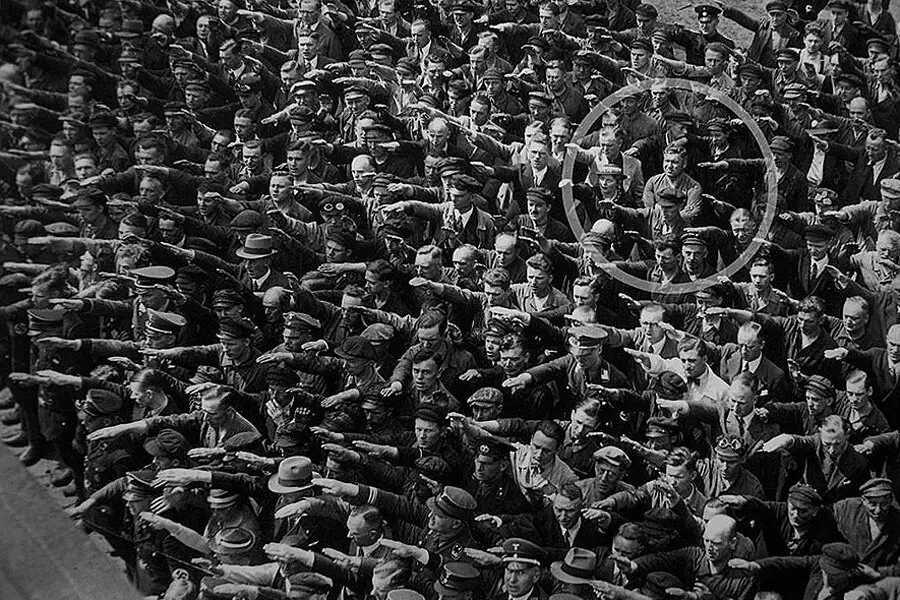
A paradox haunts contemporary intellectual life, one that demands we examine ourselves with uncomfortable honesty. Here stands a senior scholar in the humanities—trained in textual analysis, ethics, even mysticism—whose political views are so flawed, so deeply troubling, that we find ourselves asking: where did the critical thinking go? And more disturbingly: how did these very people convince themselves they are more rigorous, more radical, more intellectually honest than those who disagree with them?
The pattern is consistent and observable. In seminars on epistemology, these figures demonstrate relentless criticality. They deconstruct texts, interrogate assumptions, demand proof for every claim. But turn the discussion to politics—to matters of lasting consequence for generations not yet born—and something breaks. A numbness descends. The intellectual apparatus shuts down. Why?
One possibility haunts many observers: that these scholars have genuinely grasped something the rest of us have missed. That they stand on the right side of history. That those of us who disagree—the dissidents, the unconvinced, the methodologically cautious—are either collaborators, stooges, or simply insufficiently radical. This narrative is seductive precisely because it requires no further interrogation. Once you have identified the correct position, intellectual work stops. Certainty replaces rigour.
But there is another explanation, one far more troubling because it implicates all of us: the problem is methodological. It is psychological. It is political.
Consider the framework these scholars employ: the binary of greater evil and lesser evil. It is a structure that appears to permit moral clarity while actually erasing it. “We must eliminate the greater evil first,” they argue, “and reckon with the lesser evil later.” But this equation contains a catastrophic flaw. It assumes that the elimination of one evil creates the political space for addressing the other. History offers no evidence for this assumption. Far more often, the destruction of one tyrant creates the conditions for a worse one. The lesser evil left unaccounted becomes the greater evil of tomorrow.
Yet this framework persists, not because the evidence supports it, but because it permits the intellectual to avoid the real work: the simultaneous criticism of multiple systems, the holding of competing truths, the refusal of clean narratives. That work is exhausting. It offers no tribe, no certainty, no permission to sleep at night.
What exactly is missing, then? Not intellect—these are intelligent people. Not information—they read voraciously. What is missing is a willingness to think politically about thought itself. To ask: what psychological investment keeps me attached to this particular binary? What community reinforces my certainty? What professional or emotional cost would I pay for admitting the possibility that I have been wrong?
These are not comfortable questions. Nor should they be. Intellectual integrity demands we ask them—of ourselves first, always.
The case of Iran makes this urgently concrete. The situation is genuinely complex: a nation under invasion, a regime with a history of violence, diaspora communities with incompatible lived realities, geopolitical forces intent on exploitation. A rigorous analysis must hold all of this in tension without collapsing into either apologetics or destruction-as-salvation. It requires us to distinguish between the Islamic Republic and Iran itself, between necessary criticism and justifications for obliteration, between the voice of those inside the burning building and the claims of those monitoring it from across the ocean.
This is the intellectual challenge before us. Not the comfort of choosing sides, but the far more demanding work of seeing clearly. Until we do—until we subject our own certainties to the same rigorous scrutiny we demand of others—we remain complicit in the very abdication of critical thinking we claim to oppose.
P. S. You may wish to try this survey: Political Media Literacy
Leave a Reply