
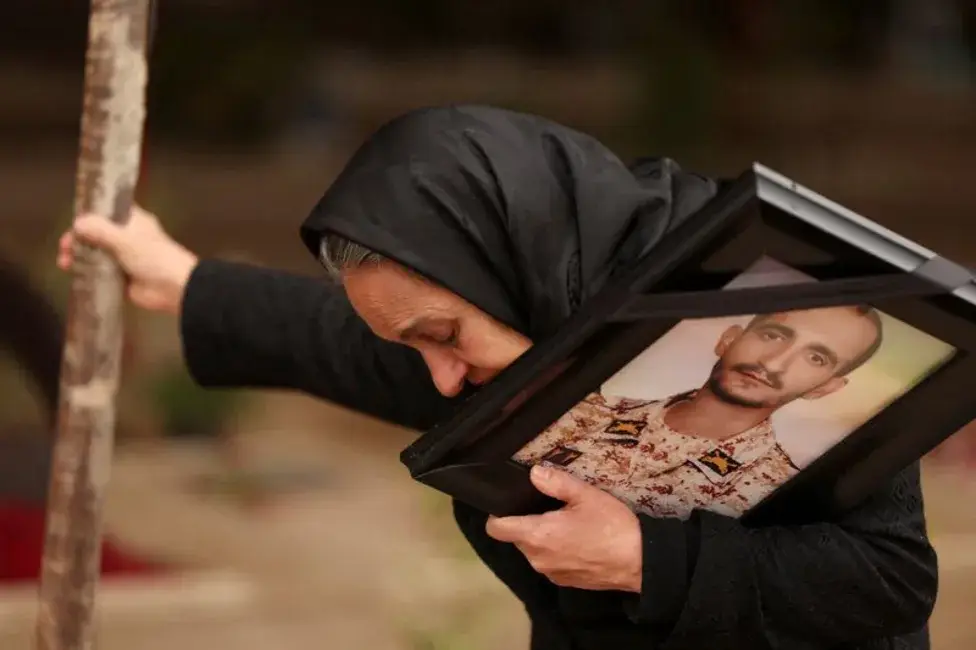
 On Reza Pahlavi’s sudden mourning for the conscripts of Bampour, and the children of Minab he was willing to call a price
This week you asked Iran’s soldiers not to die for the Islamic Republic. You mourned the conscripts killed at the Bampour garrison. You told their parents to keep their sons at home. You thanked the people of Iranshahr and Zahedan who queued to give blood for the wounded. And you said the regime imposed this war on the nation, so the blood is on the regime’s hands.
Some of that is true. The Islamic Republic does hide its commanders and leave its conscripts exposed. But you are the last man entitled to say it, because the war you now place at the regime’s door is the war you asked for.
Let me be precise, since the record is. At Munich you told the world that American military intervention could save Iranian lives. You urged foreign governments to join the protesters ‘fully’ and to strike the Guards’ command. When the bombs arrived – on the first morning of the war – you called them a ‘humanitarian intervention’. You did not accept this war reluctantly. You campaigned for it from a podium abroad, far from any garrison. You wanted it. The soldiers of Bampour were killed by the same campaign you cheered. Now you weep for them as though a different hand had fired the missile.
Here is what makes the grief hard to credit. When this campaign killed the children of Minab – some hundred and seventy people at the Shajareh Tayyebeh school, most of them children, the youngest barely seven – you said nothing. Your movement filed them, along with the neonatal unit at Gandhi Hospital and some ninety thousand ruined homes, under three tidy words: the regime’s infrastructure. Condolences came quickly enough for foreign soldiers. For the girls of Minab you had a filing category. You have said, more or less plainly, that such deaths were a necessary cost of liberation. They were seven years old.
Notice what has changed. The dead are conscripts now, and conscripts are useful. A dead child is an embarrassment to a war you endorsed; a dead soldier is a recruit for the defection you are trying to engineer. So the grief appears this week, on cue, addressed to precisely the audience you need. That is not mourning. It is bookkeeping.
There is a third matter, and it is the one a king who loved his country could never wave away. Throughout this war your closest allies have taught Iranians to applaud the ruin of their own inheritance. When Golestan Palace, Tehran’s only UNESCO World Heritage site, was cracked open by a nearby strike, when Chehel Sotoun and Ali Qapu in Isfahan shook with the blasts, this too became ‘the regime’s’ property, a phrase stretched wide enough to file four hundred years of Qajar and Safavid workmanship under the heading of enemy assets. Bridges, hospitals, universities, a synagogue emptied at Passover: each reclassified as government real estate, so its destruction could be sold as freedom. Damaging a World Heritage site is a war crime. Your circle called it a fresh start. In Odesa – of all places, a city that knows exactly what a foreign bomb does to a home – you assured your hosts that Iranians celebrated the wreckage. Nobody asked the three million driven from their houses.
So let me say what a serious claimant to Iran’s future actually owes it. You cannot bomb a country into your keeping and present the rubble as a gift. You cannot grieve the soldiers of one week while dismissing the children of another, and expect anyone still living in Iran to mistake the difference for principle. The oath you keep quoting, to Iran and not to a regime, is a good sentence. The trouble is that you invoke it selectively, and an oath honoured selectively is just a slogan with better manners.
Iran does need its children alive. All of them. The conscript at Bampour and the seven-year-old at Minab, weighed on the same scale, grieved in the same voice, counted by nobody as an acceptable loss. On the day you can hold both without first asking which death serves your case, the throne you imagine might be worth discussing. Until then, spare the families of Bampour the sermon. You helped write the arithmetic that put their sons in the ground.
Leave a Reply