
On Reza Pahlavi’s Odesa narrative and the laundering of a war’s human cost
In Odesa last week — at a forum convened on the principle that bombing a nation’s grid, ports and apartment blocks is a crime against that nation — Reza Pahlavi reportedly told his hosts that the Iranian people celebrated when “the regime’s infrastructure” was struck by the United States and Israel. Three innocuous words are made to carry an enormous burden. They deserve to be unpacked, because beneath them sits a documented record that international bodies, human-rights organisations and Western newspapers — not the Islamic Republic’s propagandists — established months ago.
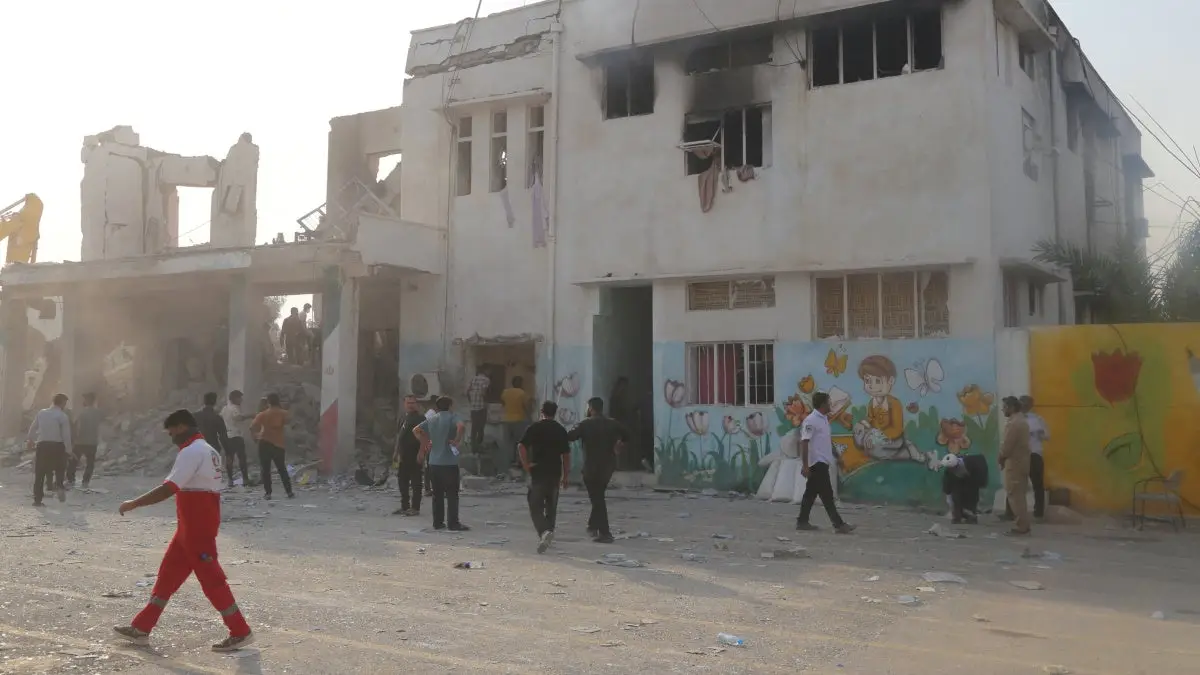
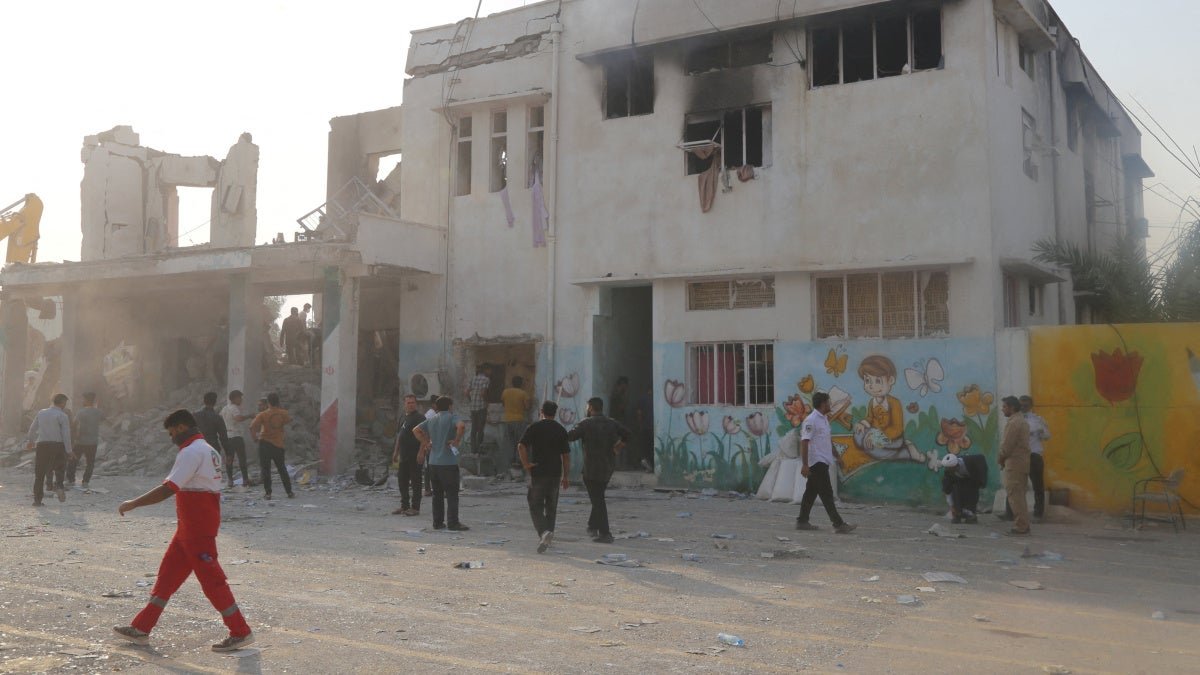
Consider what “the regime’s infrastructure” actually denoted. On the war’s first day a strike on the Shajareh Tayyebeh girls’ school in Minab killed roughly a hundred and seventy people, most of them children between seven and twelve; Amnesty International and Human Rights Watch treated it as a probable war crime. Over the forty days that followed, Gandhi Hospital in Tehran lost its neonatal unit; the century-old Pasteur Institute was hit; a pharmaceutical plant was destroyed, triggering nationwide shortages of insulin and cancer medicines; the Red Crescent counted some ninety thousand damaged or destroyed homes; water and power stations were struck; a Tehran synagogue was razed during Passover, its Torah scrolls lost. A neonatal incubator is not a centrifuge. A primary-school classroom is not a command bunker. To file all of this under “the regime” is not analysis; it is a euphemism doing the work that the facts will not.
The claim also performs a quieter sleight of hand. It is true — and well attested — that some Iranians celebrated: at the killing of Khamenei, at the sudden vulnerability of an apparatus that had been shooting their children in the streets only weeks earlier during the winter protests. That jubilation was real, and one need not pretend otherwise. But Pahlavi slides from “some rejoiced that the tyrant was dead” to “the people celebrated the destruction of infrastructure.” The first is a fact; the second is a fallacy of composition dressed as reportage — the diaspora’s relief and a genuine hatred of Khamenei projected onto ninety million people, more than three million of whom had by then been driven from their homes.
The disconfirming evidence is not obscure, and it does not come from Tehran’s spokesmen. It comes from his own former supporters. By mid-March, Iranians who had once looked to him were telling reporters that his call to “celebrate in the streets” was grotesque — that they went to sleep unsure they would wake, that they flinched at every step outdoors lest the next missile land nearby. A claim elastic enough to absorb the dead of Minab and the displaced of Tehran and still emerge as “the people celebrated” is not a description of anything. It is a belief immunised against refutation — which is to say, propaganda rather than testimony. Whatever evidence arrives, the conclusion is already fixed.
The venue sharpens the hypocrisy to a point. On 28 February, Pahlavi assured the world that the target was “the Islamic Republic… not the country and great nation of Iran,” and christened the bombardment a “humanitarian intervention.” Eight weeks and some two thousand civilian dead later, the euphemism has hardened into a boast — delivered, of all places, in a city that knows exactly what it is to have your infrastructure turned to rubble by a foreign power insisting it strikes only the “regime.” The moral grammar Pahlavi rightly applies to Russia in Ukraine he inverts the instant the bombs fall on Iran. Attacks on civilian infrastructure are atrocities in Odesa and liberation in Tehran. One cannot hold both positions in the same week, in the same building, without forfeiting the claim to either.
None of this is a slip of phrasing. It is the recurring substitution at the heart of the restorationist project: unable to demonstrate a constituency at home, it manufactures one rhetorically. The people are with us; the people rejoice; the people celebrate the ruins. The celebration narrative is a stand-in for legitimacy — far easier to assert from a podium abroad than to earn on Iranian soil. A movement that needs the destruction of its own country’s hospitals and schools recast as a festival has already confessed that it has no serious plan for the country that must be rebuilt from the rubble.
The honest sentence is short and unflattering. A foreign campaign killed thousands of Iranian civilians, displaced millions, and flattened the schools, clinics and homes of the nation Pahlavi claims to lead — and he called it aid, and the survivors’ grief he reportedly called celebration. To say so is not to defend the Islamic Republic, whose crimes are real and catalogued. It is only to refuse the euphemism. The children of Minab were not infrastructure, and the silence of three million displaced is not applause.
Sources are linked inline above. Principal references: Encyclopædia Britannica (war overview); Amnesty International and Human Rights Watch (the Minab school strike as a probable war crime); The Guardian and Al Jazeera, citing the WHO (attacks on hospitals and healthcare facilities); Bloomberg, citing the Iranian Red Crescent (homes and medical facilities destroyed); Al Jazeera (civilian targets, the c. 2,000 dead, and the Tehran synagogue); The Times of Israel (celebration at Khamenei’s death); CBS News (the winter protests); UN OCHA (displacement); Middle East Eye (Iranian reactions to the call to celebrate); Fox News (Pahlavi’s “humanitarian intervention” framing); and Kyiv Post (the Odesa interview, 30 May 2026).
Leave a Reply