
Ali Khamenei held the office of Supreme Leader for thirty-six years. He inherited a republic that was bruised, broke, and at war, and he left behind a state whose legitimacy had been hollowed from within – by his own hand, and often against his own stated interests. The record is long enough to sort.
He began by surviving. Khomeini had filled the office by force of personality; Khamenei, a mid-ranking cleric with a thin scholarly reputation, could only fill it by institutional manoeuvre. He built a network of appointees across the judiciary, the Guardian Council, the security apparatus, and the Friday prayer rostrums. He played factions against one another – reformists against conservatives, the Guards against the regular military, elected presidents against unelected supervisory bodies – and presented himself as the indispensable arbiter. For a time, this worked.
The serial murders of dissident intellectuals in 1998 were the first clear signal that the security state had slipped, or been let off, its leash. The investigation pointed upward; the trail was cut short. Saeed Emami died in custody. The judiciary, by then packed with Khamenei’s appointees, ensured that the affair ended without a reckoning. The message was registered: accountability ran in one direction only.
The attack on the Tehran University dormitory in July 1999 confirmed it. Students beaten in their beds by plainclothes paramilitaries. No senior commander held to account. The pattern was set for every subsequent confrontation between the state and its citizens – force first, impunity after, and a judiciary that functioned as an instrument of political discipline.
The press followed. Khamenei presided over the systematic closure of reformist newspapers in the early 2000s, a campaign so thorough that it created the very thing it sought to prevent: a Persian-language media sphere headquartered in London, Washington, and Prague, funded by hostile governments, and consumed by millions who no longer trusted domestic outlets. The state did not eliminate critical journalism. It exported it – and lost control of the narrative permanently.
Domestic politics calcified accordingly. The Guardian Council’s vetting power narrowed the electoral field until elections became competitions among pre-approved candidates. The judiciary prosecuted political opponents on national-security charges. The intelligence services surveilled, detained, and intimidated civil society. Politics ceased to be a contest of programmes and became a managed performance whose outcome was largely determined before the vote. The public understood this. Trust eroded quietly, then all at once.
The one area where Khamenei’s strategic instinct may have served the country is the missile programme. Iran’s ballistic and cruise missile capability, developed under sanctions and without a nuclear warhead, became the credible conventional deterrent that air power and a weakened conscript army could not provide. In a region where three of Iran’s neighbours were invaded or bombed by foreign coalitions within two decades, the argument for a survivable retaliatory capability is not trivial. It is, on balance, the strongest entry on his side of the ledger.
It is dwarfed by the Ahmadinejad catastrophe.
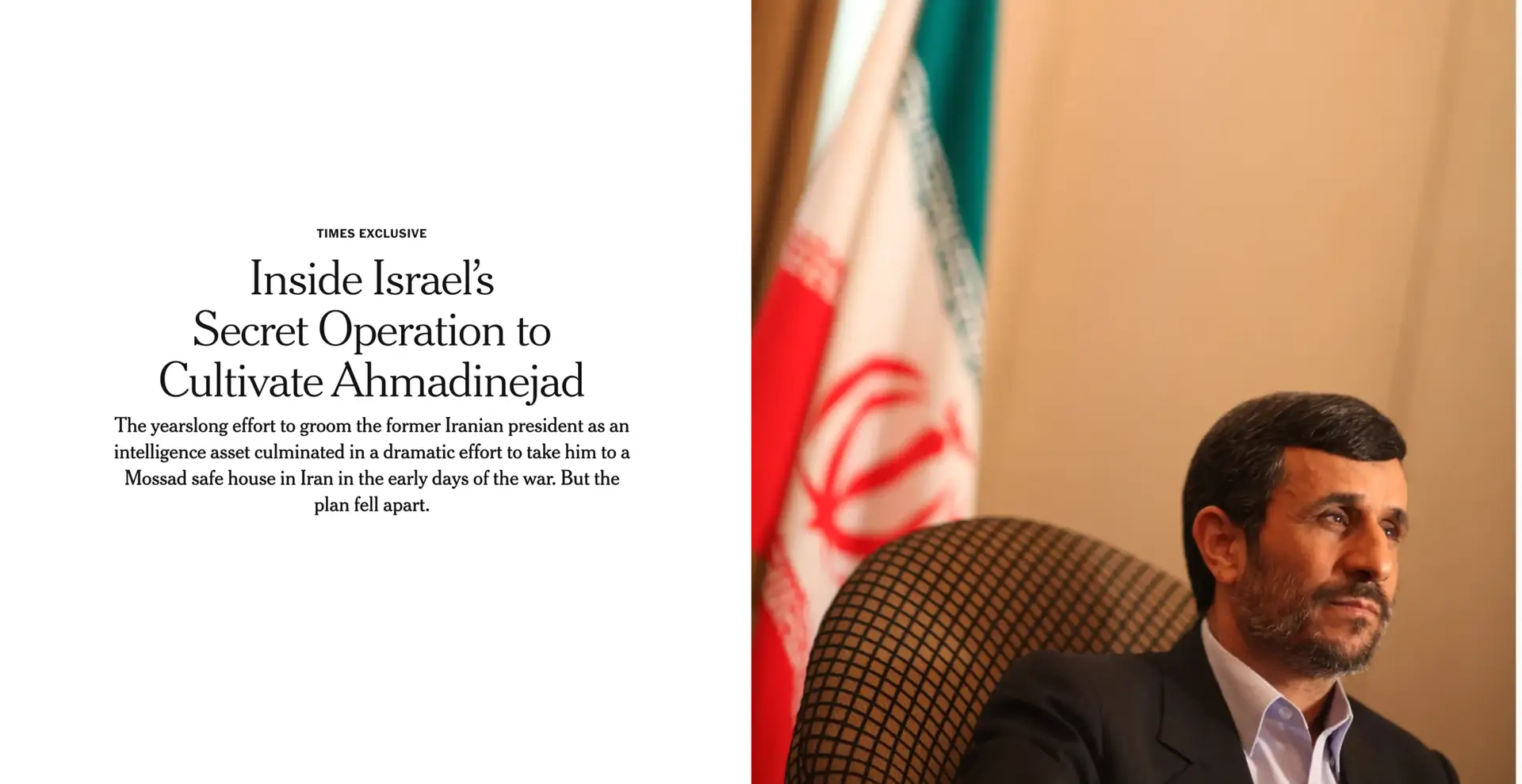
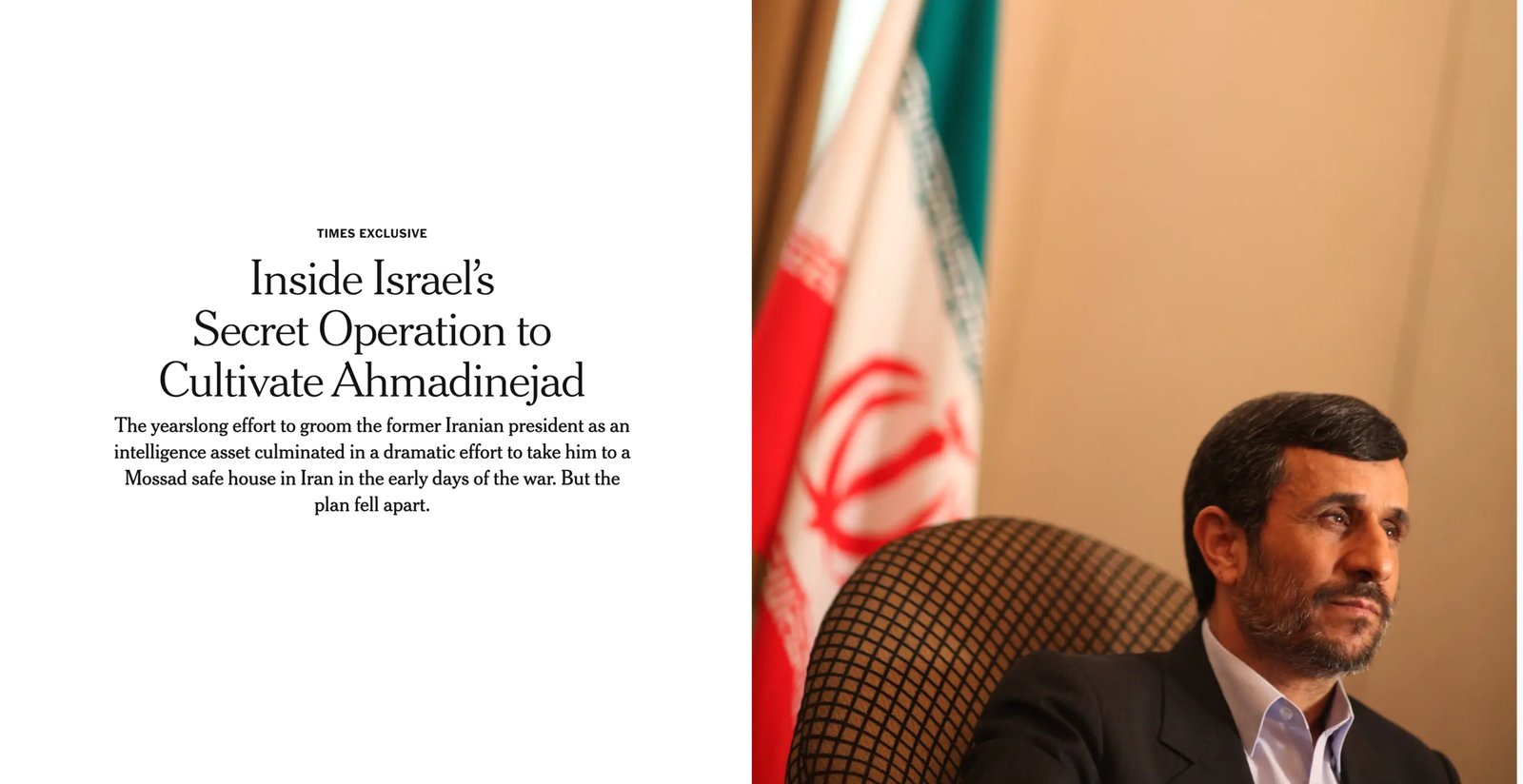
Khamenei did not merely tolerate Mahmoud Ahmadinejad. He sponsored him, shielded him, and in June 2009 certified a fraudulent election to keep him. The Green Movement was crushed; the two contesting candidates placed under house arrest without charge. Judicial killings reached levels unseen since 1988. The nuclear file was escalated to international confrontation, and the domestic legitimacy required to negotiate a resolution had been destroyed by the very fraud that secured the presidency. Ahmadinejad spent the largest oil windfall in the Republic’s history and left the economy weaker than he found it. He dismantled planning capacity, transferred productive assets to institutions answerable to no electorate, and hollowed out the technocratic competence of the state.
Khamenei paid more than his client. He set aside the founding generation of the Republic – Rafsanjani sidelined, Mousavi and Karroubi imprisoned, reformists purged – to protect a president who defied him within two years, whose faction he then had to dismantle, whom he barred from three subsequent elections, and who now stands accused of having been cultivated by the intelligence service of the state against which Khamenei had defined the Republic’s identity. The patron’s judgement was worse than the client’s ambition.
He was killed on 28 February 2026 in a strike on his own residence (not in an underground bunker). The office passed to his son by a process no Iranian was invited to observe. The republican element of the Islamic Republic – already diminished – did not survive the transition in any recognisable form.
The ledger is not complicated. Khamenei kept the state intact and kept himself in power. He did so by stripping the state of the internal mechanisms – a free press, an independent judiciary, competitive elections, public trust – that might have made it durable. He optimised for control and achieved fragility. That is his legacy.
Leave a Reply