
On what Imam Ali asked of a governor, the rules an institution writes and then steps around, and why a charitable intention repairs nothing.
An institution that will not keep the rules it wrote for itself is not being flexible. It is taking itself apart, quietly, with its own hands, and it will not notice until the work is done.
Start with the puzzle rather than the outrage. Regulations, policies, processes, procedures: an institution instituted every one of them as its own framework of operation. Then somebody at the head of it decides that this case is different. Not out of malice, usually. Out of impatience, or affection, or a conviction that the outcome matters too much to wait for the form. Why? Ego, perhaps. A dysfunctional system. A failure of communication. Whatever the cause, the effect is unvarying, and it runs in the direction nobody expects. The rule that gets waived was there to protect the person waiving it. A procedure followed is the only complete answer to an accusation. Step round it once and you have no answer left, only your word, and your word is now the thing in question.
Teach yourself first
ʿAlī has a maxim for anyone who puts himself at the head of others. He should teach himself, in Tahera Qutbuddin’s translation, ‘before teaching others’, and should ‘discipline with his behavior ahead of his tongue’.[1] The Arabic is taʾdīb, and it does not mean manners. It means formation: the shaping of a person until conduct and principle stop arguing with each other. ʿAlī locates it in sīra and sulūk, in the life lived and the way of walking through it, before he locates it anywhere near speech.
Read that against any institution you like. The policy circulated to all staff is not the teaching. The values painted on the wall are not the teaching. The teaching is what people watch the leadership do on the first morning the rule is inconvenient, and they learn it faster, and keep it longer, than anything in the induction pack.
There is always someone above the chair
The second passage comes from the letter to Mālik al-Ashtar on his appointment to Egypt, which is not a sermon but a charter. ʿAlī tells his governor exactly where he stands: ‘You are above them in rank, but the one who appointed you is above you, and God is above him.’[2]
Look at the engineering in that sentence. It is a chain, and the entire point of it is that no link may imagine itself the last. Authority at every level is held from somewhere, on terms, and answerable upward. Then the warning: ‘Do not set yourself up to be at war with God.’ And then the sentence ʿAlī forbids a governor to utter. Never say, ‘I have been given command’; never say, ‘I command, and I shall be obeyed’. That, he says, will ‘make hearts fester, weaken religion, and draw calamities close’.[3]
This is not only a moral caution. It is a clinical account of institutional decay, and it is in the right order. Hearts first: the people inside stop believing. Then the framework that held them. Then the catastrophe nobody thinks to trace back to a memo.
A charitable intention is no defence
Here is the part least often said, and it needs saying hardest. It does not matter that your intentions were charitable. It does not matter that the exception was kind, that the person deserved it, that the delay would have been cruel. Every exception in the history of administration was granted by somebody who believed the case warranted one. That belief is not the exculpation. It is the mechanism.
What follows is not a scandal. It is erosion. Transparency let go of by degrees. Procedures that turn murky rather than wrong. A small class of people who know the rule bends, and a much larger one that suspects it. Credibility drains inside and outside at the same time, and it does not return on request. The damage is irreparable in the exact sense of the word: nobody can unsee that the exception was available.
The half I left out
On 13 September I ended an essay with a line I still hold. Ego is not contained by the humility of those who warn us about themselves; it is contained by arrangements that do not require them to be humble.[4] Popper’s question stands behind it. Not who should rule, but how institutions might be organised so that bad or incompetent rulers are prevented from doing too much damage.[5]
ʿAlī supplies the half I left out. An arrangement is not self-starting. Somebody has to run the procedure against the person with the power to stop it being run, and no clause drafts its own enforcement. So the design question carries a test, and the test is embarrassingly simple. Has this rule ever been applied upward? Not published upward. Applied. If the answer is no, the institution does not have that rule. It has a courtesy, extended downward, and a courtesy can be withdrawn.
That is where ʿAlī’s two passages meet, and why they belong in one essay. The chain of accountability is the arrangement. Teaching yourself first is what makes the arrangement turn.
This week, in London
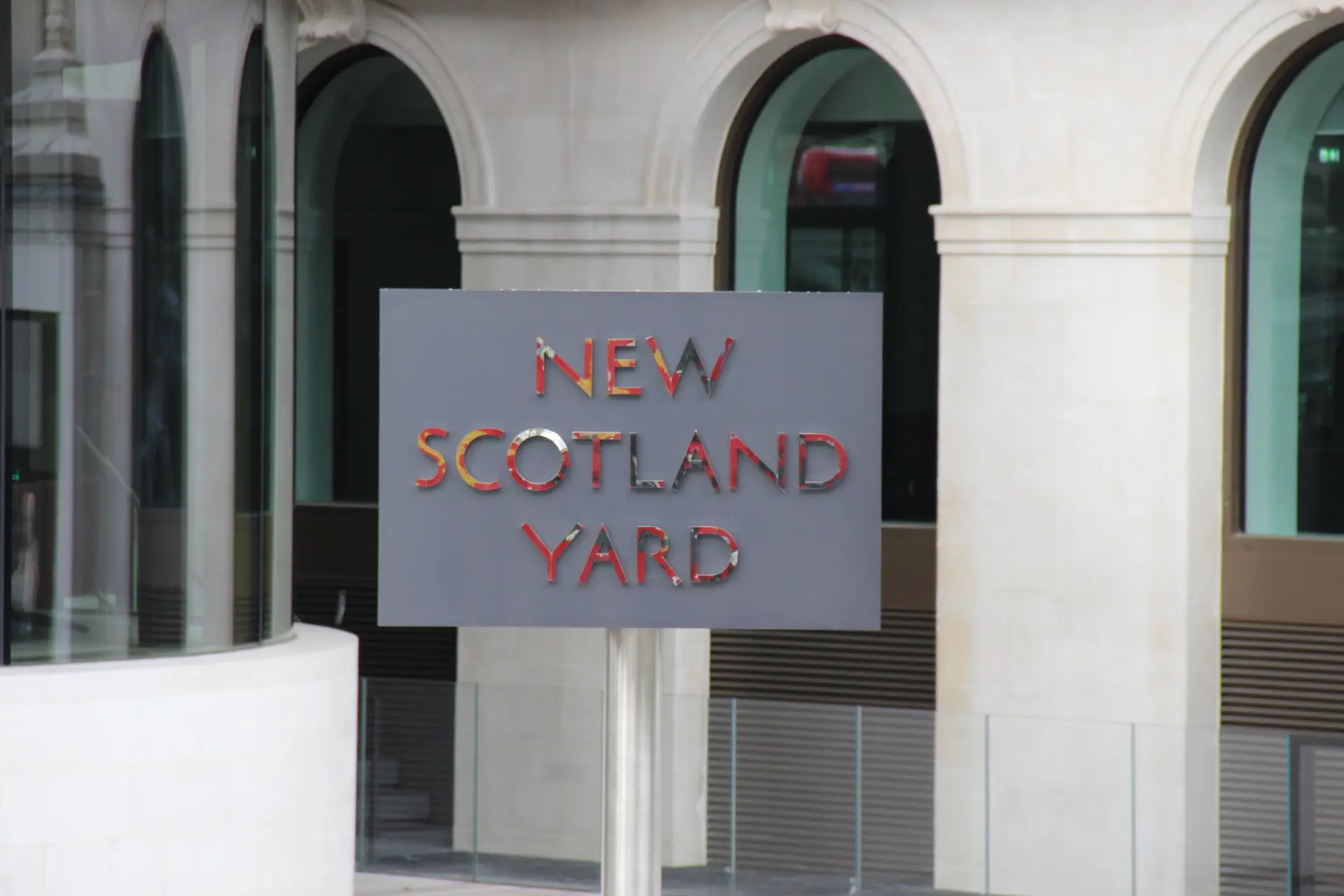
On 3 September 2026 Channel 4 News broadcast an undercover investigation by Verbatim Media in which senior Reform UK figures discussed routing money for political polling through an American donor, foreign donations to parties being prohibited under electoral law. On 9 September the Metropolitan Police opened a criminal investigation; the party denied any wrongdoing and said it would cooperate fully.[6] I take no view on allegations that are now for others to test. The interest is in the shape of it. The machinery that moved first sat outside the organisation. That is an arrangement working, and it is a poor second to what ʿAlī was asking for, which is a body whose own rules bite at the top without a broadcast to make them.
Who pays
Not the leader. Rarely the leader.
The people who pay are the ones who filled in the form, waited their turn, took the refusal, and then watched somebody skip the queue with a smile and a reason. They do not resign in protest. They stay. They stop believing. And an institution full of people who have stopped believing can hold its shape for years before anyone notices that it is hollow.
That is why this is the test of leadership rather than a footnote to it. Anyone can keep a rule that suits them. Character is what is left when the rule costs you something, and everybody is watching to see which one you let go.
[1]al-Sharīf al-Raḍī, Nahj al-Balāghah: The Wisdom and Eloquence of ʿAlī, ed. and trans. Tahera Qutbuddin (Leiden: Brill, 2024), §3.65.
[2]Ibid., §2.53.3, from the letter of appointment to Mālik al-Ashtar as governor of Egypt.
[3]Ibid., §2.53.3.
[4]Daryoush Mohammad Poor, ‘Riding on the Shoulders of the Machine’, The Twin Wisdoms, 13 September 2026.
[5]Karl R. Popper, The Open Society and Its Enemies, 2 vols. (London: Routledge, 1945), vol. 1, ch. 7.
[6]‘Police will investigate Reform UK over donations’, ITV News, 9 September 2026; ‘Met Police Launch Investigation Into Reform Donations’, Novara Media, 9 September 2026.
Leave a Reply