
On Saturday, 19 September, supporters of the restoration of monarchy held a large gathering at Meridian Hall in Toronto, billed as ‘Cyrus the Great II’, to hear Reza Pahlavi; its organisers had announced a crowd of more than three thousand. The veteran singer Nooshafarin sang Ey Iran and made a terrible mistake in misreading one line, a particularly important one. Where the poem sets the enemy’s granite, khāra, against the singer’s iron, she sang khār-e mīhan, the thorn of the homeland. By the next day the clip had set a great many people laughing – millions, I would guess, though I have seen no count. I confess I had never paid much attention to the line she read incorrectly. Singers fumble words on stage, and I would leave this one alone if the line she got wrong were not the line that the camp she was singing for has been getting wrong in its conduct, whatever it sings, since the bombs started falling.
The whole idea of the line is resisting aggression: when somebody attacks you, you fight them. The lines before it praise the land and the art that springs from its soil; here the song turns to face the enemy, and the next line offers the singer’s life for the homeland. However hard a stone the enemy may be, the singer will be iron. Who, then, is the enemy? The song’s own history answers that question.
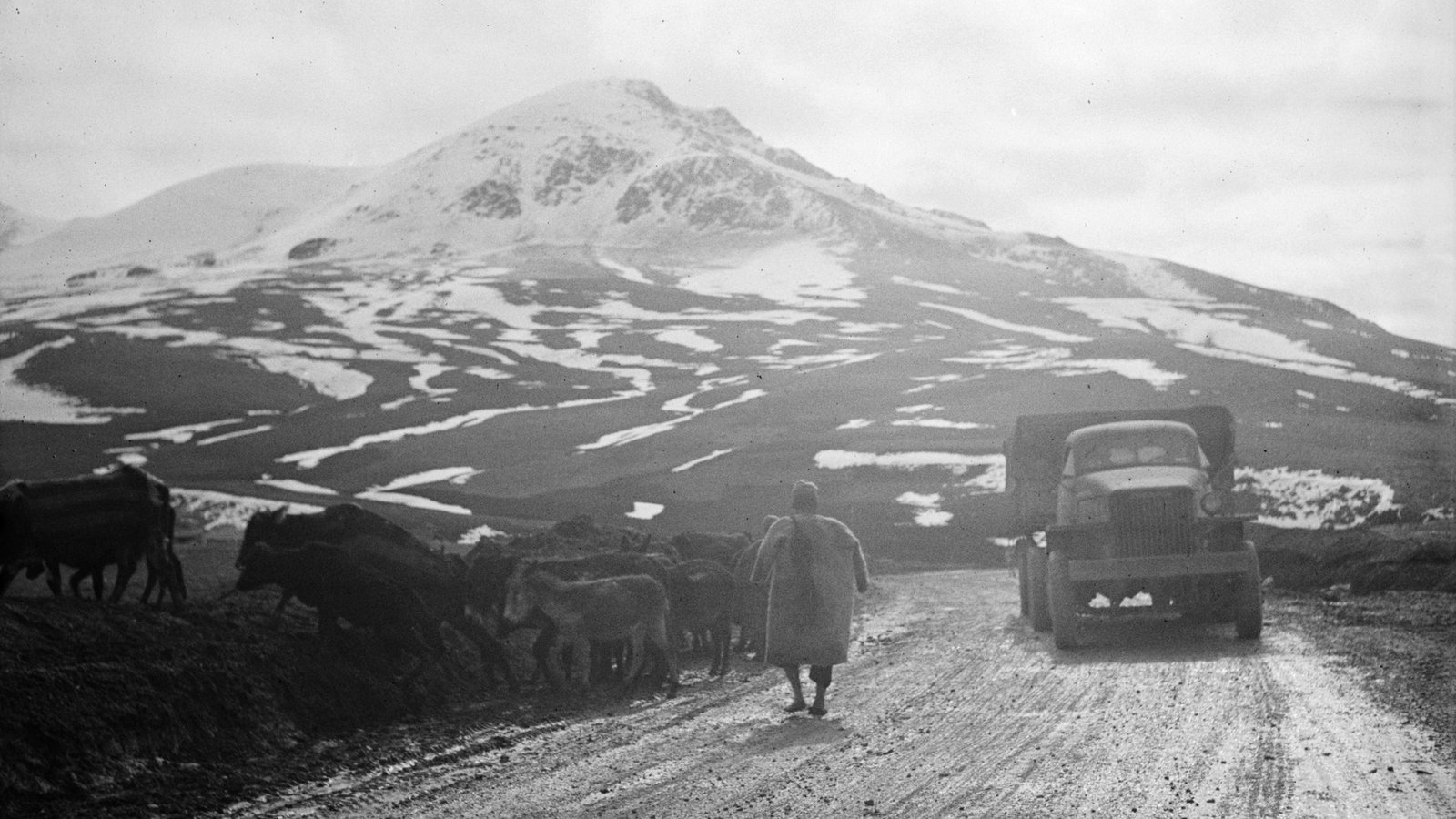
Ey Iran was made in 1944, while British, Soviet and American troops occupied the country. Rouhollah Khaleghi wrote the music and Hossein Gol-Golab the words. When Gholamhossein Banan first sang it, on 19 October 1944 in a hall of the officers’ college on Istanbul Street in Tehran, the audience demanded it three times over. Khaleghi later wrote, in his history of Iranian music, that foreigners were in the hall that night, that the Iranians made their feelings all the plainer for it, and that the song was the first blow, however indirect, against a foreign army of ‘uninvited guests’. Gol-Golab, for his part, remembered the poem coming to him when the boots of the occupying forces set every patriot trembling. I should say that there are other stories about its making. The composer’s daughter traces it to an argument between her father and a fellow musician over whether a mournful mode of Persian music could carry a heroic tune, and she and the poet’s daughter have dismissed the more colourful anecdotes as rumour. Yet on the question that concerns us here the composer and the poet speak with one voice. The enemy in this song was a foreign army standing on Iranian soil.
After the revolution of 1979 several people were imprisoned for their part in producing it; singing it was treated as a crime. During the war with Iraq, however, the state that had jailed people over Ey Iran reached for it to rouse its soldiers, and singing it became lawful again. Monarchist readers will say I am crediting the Islamic Republic. I am crediting the song, whose meaning was plain enough that a state which had punished people for singing it could read it when a foreign army crossed the border. That plainness, I think, is why it grew so popular among Iranians after the revolution and found a political life of its own. It belongs to whoever stands between the country and those who attack it, crown or no crown.
Over the past year or so Iran has been under attack. Israel bombed it in June 2025, with the United States joining in; on 28 February 2026 the two began a war that ceasefires have interrupted without ending. A quarter of a century ago, politicians bent on invading a country illegally still thought they had to make it look good. Before the invasion of Iraq in 2003 they went to the United Nations Security Council with evidence fabricated to make the case stick, even though after a while everyone would know it for a complete and total lie. What has changed? They have now set aside even the courtesy of pretending, and with it any appearance of abiding by the legal norms of the international community. The Charter of the United Nations permits force only in self-defence or with the Security Council’s authority, and I do not think any sensible person, in any part of the world, could find in it a licence for what the United States and Israel have done to Iran. It is called aggression. It is called a violation of international law.
And what does the song ask of an Iranian in a year like this one? It calls on every Iranian who cares about Iran, whatever their political differences, to turn into iron in the face of the rock of the Israelis and the Americans. One may loathe the Islamic Republic – many who read this do, and not without reason – and still see that it is the country that is being bombed, its cities and its people, and that the country is something larger than the state that governs it.
The monarchist camp has an answer to this, and it deserves to be put in its own terms. On 28 February, within hours of the first strikes, Reza Pahlavi told Iranians in a video on X that the help President Trump had promised had now arrived. He called the bombing a ‘humanitarian intervention’ aimed at the Islamic Republic, its apparatus of repression and its machinery of killing, not at the country and great nation of Iran. He also asked the American president to take the utmost care with civilian lives. On this reading the Islamic Republic is the granite and the monarchists are the iron. It is the strongest case the camp has. It fails on two counts. The first is the song itself, whose enemy was never a government in Tehran but an army of foreigners, Khaleghi’s uninvited guests; to hand the word ‘enemy’ to a government at home while foreign bombs fall on Iran is to keep the tune and reverse the meaning. The second is the dialect in which the camp speaks. To greet the first strikes with the news that the promised help has arrived is to talk like a man who has been waiting for the bombers; it is a long way from the dialect of an Iranian who wants to stand up to aggression.
The monarchists say the vow on their tongues and behave exactly on the contrary. Put their conduct into the shape of the line, in other words, and it comes out reversed: if you are a solid rock, I will hand you the iron to tear apart my own homeland. The camp that sang Ey Iran in Toronto on Saturday has been sending Iranians that message since the bombs started falling. The singer’s slip lasted a second. People laughed. There is nothing to laugh at in the other version, and what I find hardest to bear is that its singers cannot hear how dreadful, how chilling it is.
Caption: Somewhere in the Persian Corridor, 1943: an Iranian herder moves his livestock off the mountain road as a United States Army truck passes.
Leave a Reply