
I was there—present online—when Dr. Fatemeh Sadeghi and Hossein Hamdieh, speaking from London and Tehran respectively during Iran’s internet blackout, began discussing something that has haunted me for months. An interrogator assigned to question young protesters arrested during the Woman, Life, Freedom uprising had confessed his bewilderment. He could not understand what they were saying. Not their demands—those were simple enough. He meant something more unsettling: their words, spoken in Persian, had become incomprehensible to him. The language itself had fractured.
Sadeghi crystallised what this meant. When the shared medium of language collapses, politics becomes impossible. What remains is not debate but violence dressed in words. The proliferation of profanity we are witnessing—from state enforcers and from segments of the diaspora opposition alike—is not just crude speech. It is the audible sound of a linguistic space imploding. As Mehdi Jami put it, profanity becomes “the language of those who have lost language.” When you can no longer persuade, you wound. When argument fails, obscenity substitutes for agency.
The Profanity Trap
The diagnosis matters because the response matters. Some will say: the regime debased language first, so we are entitled to debase it back. The Islamic Republic spent four decades emptying moral vocabulary of meaning, turning piety into brutality, justice into revenge. Why should the opposition perform civility when faced with systematic degradation? The logic is seductive. But it conceals a trap.
Profanity is not transgressive. It is mimetic. When you adopt the language of dehumanisation, you do not escape the power structure—you replicate it. The insult, the slur, the sexualised humiliation: these are not tools of liberation. They are the linguistic equivalent of the interrogation room. They work by reducing the other person to an object, something beneath argument, unworthy of speech. The revolutionary who curses becomes structurally identical to the torturer who curses. Both have exited the realm where politics is possible.
I have watched this unfold in real time. The comment sections have become laboratories of linguistic violence. The Telegram channels, the exile television programs, the social media ecosystems—these spaces no longer host political discourse. They host its disintegration. People do not respond to arguments; they excavate motives. They do not engage claims; they assign tribal affiliations. Reformist. Regime agent. Traitor. The words function as terminal judgments, not as openings for thought. Once you have been labelled, you have been expelled from the conversation. What follows is not refutation but elimination.
The Emergency Mind
I am asked, when I write for non-Iranian audiences, to explain something that appears inexplicable: why do so many Iranians abroad celebrate violence against their own country? Why do they wave flags of states bombing Iranian cities? Why has their political vocabulary contracted into a lexicon so obscene that even sympathetic journalists cannot quote it? The question is posed carefully, as though the questioner fears discovering that Iranians are somehow collectively damaged, predisposed to self-destruction.
My answer is this: they are not damaged. They are trapped. Trapped in what I would call the emergency mind—a psychological state where normal ethical reasoning suspends because the crisis feels so total that any action, no matter how destructive, appears justified if it promises resolution. The emergency mind cannot think in gradations. It cannot weigh harms against harms. It knows only: this must end, by any means necessary. And once you enter that state, bombing becomes deliverance, sanctions become surgery, civilian death becomes unfortunate but necessary collateral.
The tragedy is that the emergency mind is both comprehensible and catastrophic. I understand the rage. I understand the desperation. I understand the decades of humiliation, the repeated cycles of hope crushed, the exhaustion of waiting for change that never arrives. But understanding the source of a delusion does not make it less delusional. Those who cheer for external intervention, who fantasise that foreign powers will deliver Iranian freedom, are not seeing clearly. They are seeing through the distortion of trauma. And that distortion has convinced them that destruction is construction, that rubble is the foundation for something new.
Woman, Life, Freedom—and What Came After
Sadeghi described the Woman, Life, Freedom movement as a “narrative revolution,” and she was right. For the first time in modern Iranian political discourse, the movement refused to treat human life as negotiable. It insisted on a foundational principle: no political goal justifies the deliberate sacrifice of civilians. Not regime change, not national sovereignty, not ideological purity. This was not pacifism. It was a refusal of the logic that makes bodies into currency.
But the movement’s linguistic achievement has been betrayed by some who claim to speak in its name. I remember those early weeks clearly. I thought, briefly, that certain opposition figures might play constructive roles. That illusion lasted days. What followed was instructive. A close friend—someone I had trusted—turned on me for criticising prominent diaspora activists and their alliances with foreign policy hawks. I was accused of being a regime agent. The accusation was absurd, but the fury behind it was real. No amount of evidence mattered. The more carefully I argued, the deeper the other person retreated into fantasy.
Then the fantasy collapsed on its own. The Georgetown coalition fell apart. The movement became toxic in monarchist circles. And those who had been dining with warmongers, who had been genuflecting to the architects of Middle Eastern devastation, suddenly found themselves abandoned by the very forces they had courted. The lesson was straightforward: you cannot champion “woman, life, freedom” while embracing the most misogynistic, life-destroying policies imaginable. The contradiction was not ideological. It was moral. And it was unsustainable.
Testing Arguments, Not Loyalties
One sign that a society’s capacity for rational discourse is failing: people stop listening to what is said and become obsessed with who is saying it. I have written about this principle before, and I will keep writing about it because it is foundational. If an argument is sound, it remains sound whether voiced by a friend or an enemy. If a claim is false, it remains false whether uttered by a reformist or a revolutionary. The content of speech must be separable from the identity of the speaker. Without that separation, there is no reasoning—only loyalty tests.
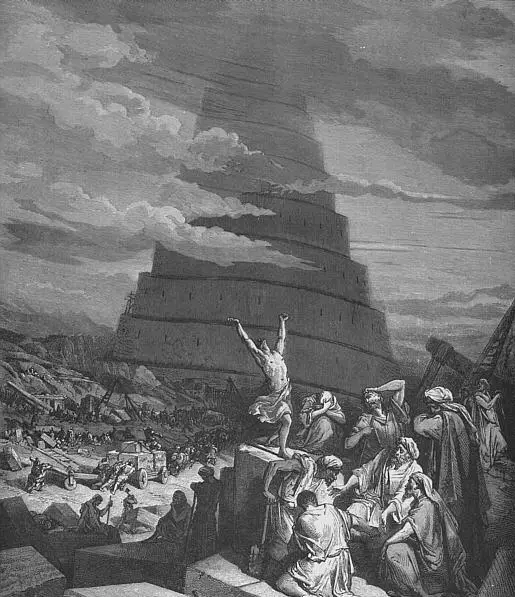
This principle is under siege from every direction. The state rejects it because it cannot permit citizens to evaluate claims independently. The opposition rejects it because it has constructed a narrative where any criticism is, by definition, a betrayal. The result is a Tower of Babel rebuilt: everyone speaking, no one hearing, the cacophony mistaken for politics.
The cost of this collapse has been personal. The sheer volume of slander I have endured over these years—not only from adversaries but from people I once called friends—has been staggering. It has required a kind of fortitude I did not know I possessed. But it has also clarified something essential: standing in the path of truth, refusing to be intimidated by the mob, refusing to surrender to the dust-storm of accusation and rage—this is not martyrdom. It is simply the minimum requirement for intellectual honesty. And it confers something invaluable: the knowledge that your positions are yours, not the product of fear or tribal pressure.
What Comes Next
The task, as I see it, is neither to despair nor to pretend. The linguistic space necessary for politics has not been destroyed completely. It has been damaged, badly, but fragments remain. They exist in the quiet conversations that happen away from social media, in the essays that circulate among small circles, in the moments when someone reads a sentence, finds it unclear, and says: “This doesn’t make sense. Fix it.” These are not dramatic acts. But they are the acts through which a common language is rebuilt.
Sadeghi and Hamdieh’s conversation was one such moment. Listening to them—Sadeghi in London, Hamdieh in Tehran, myself elsewhere—I felt something shift. Not hope, exactly. Clarity. The diagnosis they offered was unsparing, but it was also precise. Language has failed. Politics has collapsed into violence. Profanity is not rebellion; it is capitulation. The task now is reconstruction, and reconstruction requires patience, discipline, and the refusal of shortcuts.
This is not a strategy for victory. It is a refusal. A refusal to accept that the only language left is the language of force. A refusal to grant my adversaries the power to dictate who I become. When I choose argument over insult, when I insist that my interlocutor remains a potential participant in rational discourse rather than an irredeemable enemy, I am not being naive. I am being precise about the stakes. Because the moment I surrender that insistence, I have conceded the very thing worth defending: the possibility that human beings might still speak to one another as something other than instruments wrapped in competing slogans.
That possibility has no strategic value. It will not topple regimes. It will not restore anything. But without it, whatever emerges from the wreckage will replicate the structures we sought to escape. I have learned, through these years of standing firm while accusations flew, that there is a cost to this position. I accept that cost. I will not move from it.
Leave a Reply