
On the two machines that manufacture Iran, the eighteen years that keep me from checking, and what Yaser Mirdamadi found when he went back.
Fourth in the Narrating Iran series, drawn from Yaser Mirdamadi’s account of his return and argued by Daryoush Mohammad Poor
I write about Iran from a position that is not the state’s, not the opposition’s and not the diaspora’s. It is an awkward place to stand, and I am asked often enough why I bother. The answer is simple. Iran is existential to me. I care about the country and its people, all of it and all of them, including the parts I do not like and would not have chosen.
From that follows a claim which sounds sentimental and is not. Iran needs a future worth having, and getting one begins with being described accurately and addressed with dignity. The age in which Iranians could be spoken to in the colonial register, or the orientalist one, ended long ago. What survives is the reflex. The reflex is now strongest among people who would be insulted to hear it named.
Two machines
Most of the Iran that people carry in their heads is manufactured by two machines. The state’s machine needs a country that is orderly, devout and united behind it. The opposition’s machine needs a country that is ruined, hopeless and already finished, because a dystopia licenses whatever is proposed to end it. The machines are enemies. Their method is the same. Each requires Iran to be one thing, and no country is one thing.
I am not claiming the two are equivalent. The state’s version costs Iranians their liberty. The opposition’s version costs them their lives, because a ruin is what you produce evidence of before you bomb it. I weigh them differently. I refuse both.
What I cannot do is audit either of them myself. I have not been able to travel to Iran for eighteen years, and I hope one day to go and write down what I see with my own eyes. Until then I borrow other people’s. I publish accounts from the ground, from people who differ from one another, and I publish enough of them that no single temperament gets to set the record.
Hasan Aghamiri shouted his down a VPN line he could not afford, with an eight-year sentence waiting and missiles overhead. Ali Abdi walked a Tehran gone dark in the first days of Farvardin. Kazeroun crossed at Van by train and found the war’s most disorienting feature was how ordinary everything looked. All three filed under bombardment.
Yaser Mirdamadi is the fourth, and the first writing from after. He left in early 1387 and got back this summer for two months, arriving in Mashhad on the eve of Ashura. Eighteen years away, which happens to be my own number. He warns that a returnee’s account may read at home like a tourist’s. I take the warning as a credential. He stands closest to where I stand, and he went where I still cannot.[1] He also made the journey this site was weighing only days ago, and he came back.
What the ruin thesis has to leave out
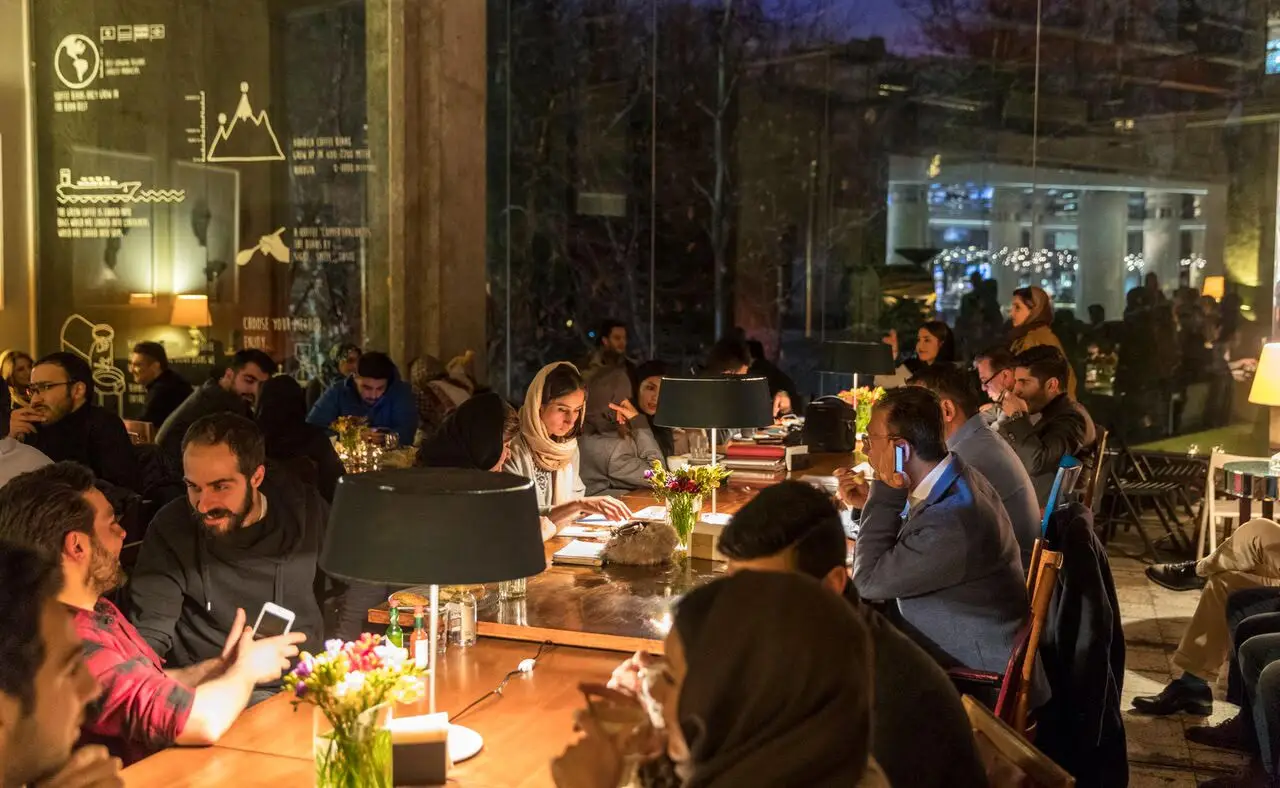
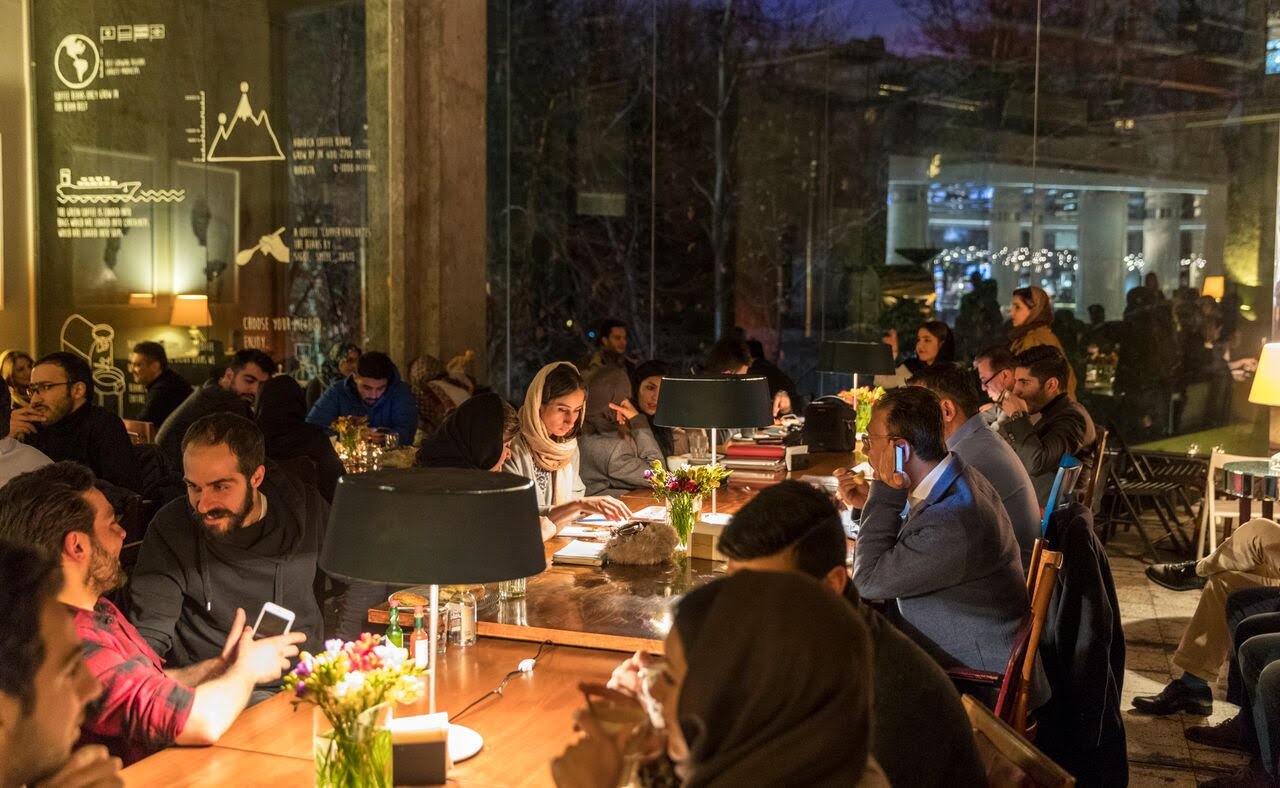
At sunset in Britain the parks empty. At sunset in Mashhad they fill, with families spreading cloths on the grass and eating together past midnight. Cafés have multiplied under a collapsing currency, so widely that Saeed Jalili denounced them in public for manufacturing a new way of living and breaking up families.[2] The intellectual monthlies still print and still sell. In one of the most conservative cities in the country Mirdamadi watched a sell-out production that ran the Shāhnāmah through The Godfather, with women dancing on stage.
None of that defends anything. It describes a society, and a society is precisely what the ruin thesis is built not to see. People who insist Iran is finished are not reporting. They are recruiting.
What the utopia thesis has to leave out
The other machine fails at the same address. Mashhad’s streets carry more revolutionary signage than they did twenty years ago, in a volume Mirdamadi reads as an instrument for producing collective depression. A prayer leader in an affluent district collected signatures to close a café that had held a birthday party on the night of Ashura; satellite dishes used to head that list. Around the shrine of Imam Reza uncovered heads are unremarkable, and inside it chador is compulsory, two rules twenty metres apart. A driver three months behind on rent and facing eviction keeps an Iranian flag in the car and goes to the nightly rallies. Destitute, and not without hope.
That last man is the whole difficulty. He fits neither machine, so neither one reports him.
The filter that builds its own opposition
The sharpest of Mirdamadi’s findings is where the two machines meet. Filtering has narrowed the political diet of Iranian teenagers to Iran International, with BBC Persian not even alongside it. Material arguing that Iran was not beaten in the recent wars is blocked inside the country. So the young people he spoke to had concluded that Iran lost. State censorship delivered them to the channel the state most fears, and to that channel’s account of the state’s defeat.
I have argued here that shutdowns guarantee strategic obsolescence. This is worse. The filter produces the belief it exists to prevent, and hands the rival machine its audience free of charge. Opening the internet would clear away an enormous quantity of manufactured discontent and raise national security instead of lowering it.
Who is actually thinking
Then the part my own constituency will like least. Manchester grows more Islamic every year, churches becoming mosques, while in Tehran and Mashhad a covered woman is hard to find. By that measure, Mirdamadi says, Manchester is the more Islamic city. At the Manchester march against the American and Israeli war, the organisers were pro-Palestinian groups with no Iranians among them; of roughly fifty marchers carrying Iranian flags, about fifteen were Iranian. The active political diaspora belongs to the monarchists and the Mojahedin, both hostile to intellectual work as such.
Inside the country, under every restriction, people are reading, arguing, staging and publishing. I have written about a part of Iran nobody counts. Mirdamadi’s report is that it is also the part doing the thinking, and that the exile which claims to speak for it has largely stopped.
Dignity is the argument
On his last day Mirdamadi walked Iran Mall in west Tehran, where the shops sit inside a re-created Persian garden, and then went to the rubble where Kamal Kharrazi’s house had been struck, a block flattened to reach one man.[3] The crater is a short drive from the garden. Both are Iran.
Dignity here is not politeness. It means describing people as they actually are, in their differences, including the differences that irritate me and the ones I would argue with all day. A country is owed that. Iranians are owed it in particular, after a century of being explained to themselves by others.
That is my whole position. A country that builds gardens under sanctions and buries its dead from airstrikes is owed an accurate description, and an accurate description is a form of respect. To call Iran a dystopia is not a hard truth bravely faced. It is a way of avoiding the look, and of licensing whatever is planned next.
I would sooner be shown wrong by someone who went than be right by agreeing with a machine. This is the fourth borrowed eye on this site, and there will be more, until the day I can stop borrowing.
Mirdamadi’s own closing sentence puts it better than mine would. What continues in Iran is a life rooted in Iranian experience that sometimes looks more modern than Manchester’s, even if you are living permanently beside the rubble of assassinations that stop the breath.
[1] Yaser Mirdamadi, ‘Az Manchistir-i Islāmī tā Mashhad-i kāfih-nishīn: tajribah-yi safar bih Īrān pas az du dahah’, talk delivered to the Ḥalqah-yi Guft u Shanūd, recording in five parts, Shahrīvar 1405/August 2026. All observations attributed to him here are drawn from that recording. The sleepers of the cave are his own figure for the return.
[2] Mihrdād Khadīr, ‘Chirā tafakkur-i Saʿīd Jalīlī bā kāfih va kāfih-nishīnī mushkil dārad?’, ʿAṣr-i Īrān, repr. Farārū, 27 Āẕar 1404/18 December 2025, fararu.com; see also Muṣṭafā Dānandah in Iṭṭilāʿāt, repr. Farārū, 29 Āẕar 1404/20 December 2025.
[3] ‘Iran’s chief foreign affairs strategist “gravely wounded” in US-Israeli attack’, Middle East Eye, 2 April 2026, middleeasteye.net. Kharrazi died of his wounds on 9 April 2026.
Leave a Reply