
On the declaration of qiyāma at Alamūt, the doctors who stopped seeing, and the one gift we cannot afford to hand over
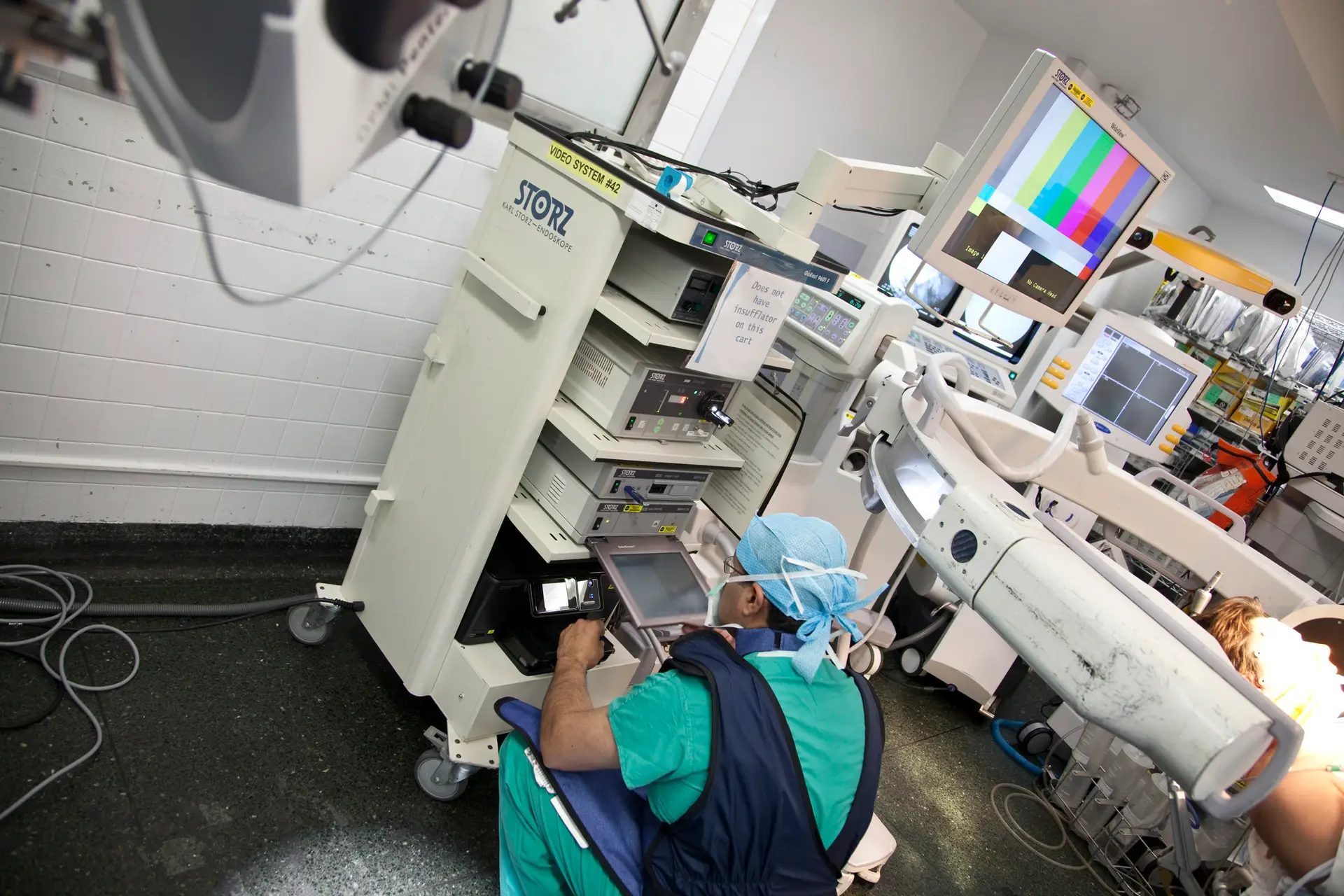
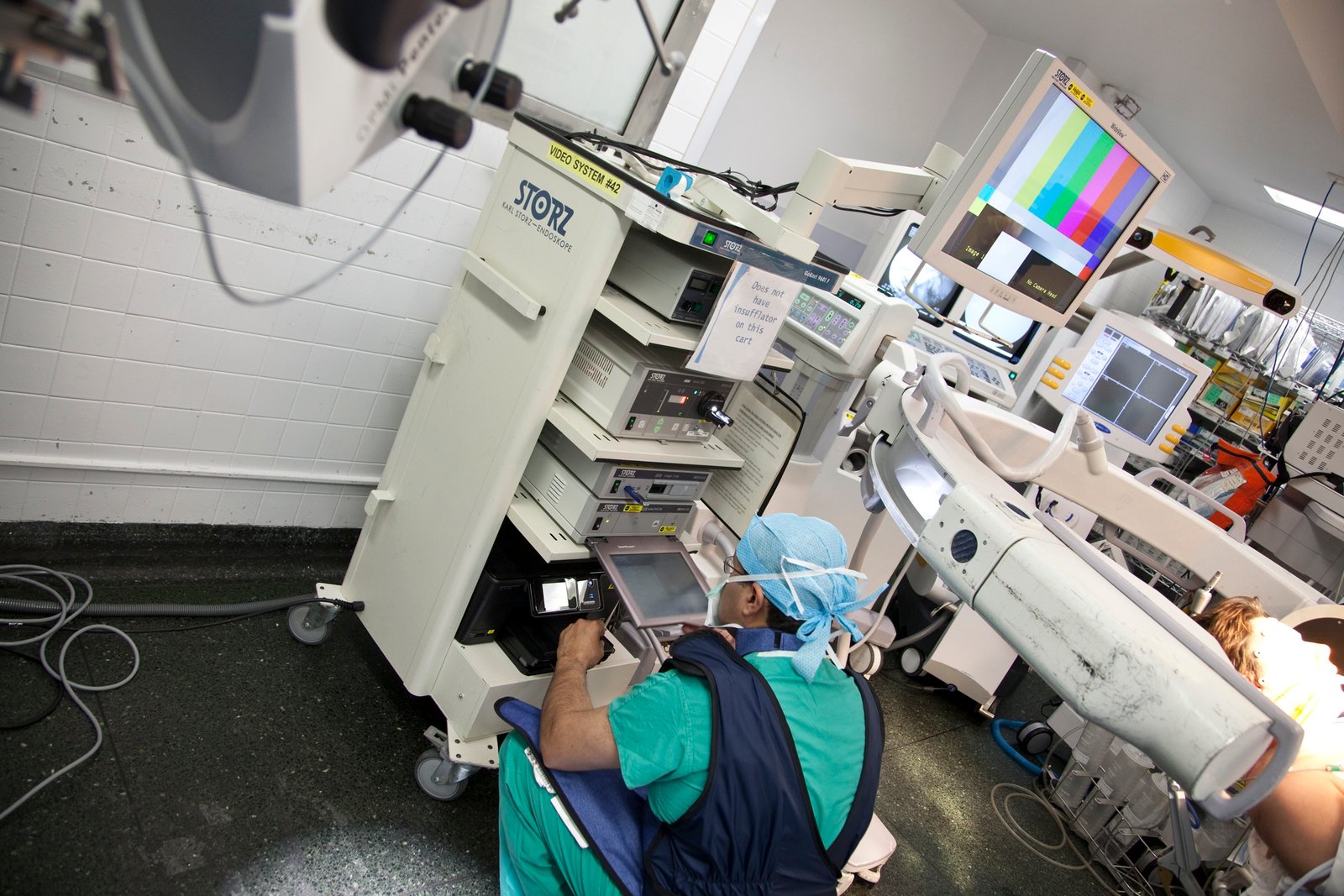
Across four endoscopy centres, a piece of software was switched on. It watched the live feed of a colonoscopy and drew a box around anything that looked like a polyp. It worked. Then the researchers looked at what happened when the same doctors worked without it. In the three months before the software arrived they were finding adenomas in roughly 28 per cent of standard examinations. Three months later, unassisted, the figure had fallen to about 22 per cent. Budzyń and colleagues reported this in The Lancet Gastroenterology & Hepatology on 12 August 2025, and the journal called it the first real-world evidence of deskilling by clinical AI.
Notice what did not happen. The tool did not malfunction. It did not invent a polyp or miss one. It did its job, and while it was there the patients were better off. What decayed was the looking. Six points of sight, gone in three months, from trained specialists who had done nothing wrong except get used to something.
That is not a story about machines. It is a story about habit, and it is very old.
What was declared at Alamūt
On 8 August 1164, at the fortress of Alamūt, the Nizārī Ismaili imam Ḥasan ʿalā dhikrihi al-salām gathered the community and proclaimed the qiyāma, the resurrection. In the flattened version that reached Europe through hostile chroniclers this was licence: the law abolished, the fast broken, Ramaḍān turned into a feast. That reading has had a long career and it is wrong.
What the declaration named was a disease, and the disease was habit. People had kept the sharīʿa so long and so well that they had stopped asking what it was for. The prayer was still performed. The fast was still kept. The form was intact and the orientation had drained out of it. A rite that no longer points anywhere is not neutral. It is worse than nothing, because it persuades the one performing it that something is being done.
So the declaration was not an abolition. It was a death, the death of a life lived by habit, and a revival by the light of the intellect and of the inner sense of the law. Nobody at Alamūt threw the ladder away. Ṭūsī, writing from inside that tradition, keeps the whole architecture standing: ẓāhir and bāṭin, sharīʿa and ḥaqīqa, the outer ordered wholly towards the inner. The error was never the ladder. The error was mistaking it for a home.
The same test, with a different stake
Now put artificial intelligence where the sharīʿa stood.
Did we abolish it? No. Should we? No. Should it be allowed to develop? Yes, and that is the point of it, exactly as the outer law was meant to develop the person keeping it. The question is never the instrument. The question is whether the instrument still points somewhere.
What differs is the stake. At Alamūt it was salvation, an account rendered in the next world. Here it is nearer and more concrete. In this tradition, as Sijistānī and Nāṣir-i Khusraw both hold, the universal intellect, ʿaql, is the first thing God originated, and the share of it lodged in each of us is the highest thing any of us is given. It is not one faculty among others. It is the gift. Letting it go slack is not a productivity problem. It is the one loss that cannot be delegated back, because the faculty you would need in order to notice the loss is the faculty that has gone.
Where it shows
It showed in the endoscopists. It shows in the student who hands in a competent essay and, asked a single question about it, cannot say whether the argument is any good, not because she cheated but because she never had to hold it. It shows in the caseworker who signs off the flag the system raised. In the driver who turns into the river because the map said turn. In the manager who reads the summary and never the document. In all of us who now reach for the machine before we reach for the thought.
Michael Gerlich surveyed 666 people in the United Kingdom for Societies in January 2025 and found heavier use of these tools tracking lower critical-thinking scores, with cognitive offloading doing the work in between.
The counterweight
That is one study, and a correlation is not the thing itself. The International AI Safety Report 2026 sets out the same evidence and adds, correctly, that the research is nascent.
There is also a finding that cuts the other way, and I think it is the most important thing in the literature. Writing in Frontiers in Psychology this month, J. Wang reports that offloading does not automatically damage learning at all. Its effects run through what she calls cognitive self-efficacy: whether the student still believes she can think. Where that belief holds, the tool helps. Where it collapses, the tool hollows.
Which is the whole argument. The damage is not in the instrument. It is in the posture towards it.
Mine to keep
I use these tools every day, and this site says so plainly on its own page about it. Three days ago, in ‘Riding on the Shoulders of the Machine’, I argued that the egos of the people building these systems will not be contained by their own humility but by arrangements that do not require them to be humble. I still think that. I also notice it was an answer about institutions.
This is the other half, and no arrangement reaches it. No regulator can legislate that I keep asking why. No audit can establish whether I read the document or only the summary. The failure has a name in the tradition. It is taqlīd, accepting a ruling because of who issued it rather than because it survived a question, and it is now available at the touch of a key.
The declaration at Alamūt was not permission to do less. It was a demand to know why.
Use the thing. Do not live on it.
Sources
Kacper Budzyń and colleagues, ‘Endoscopist deskilling risk after exposure to artificial intelligence in colonoscopy: a multicentre, observational study’, The Lancet Gastroenterology & Hepatology, 12 August 2025; and the accompanying journal commentary, ‘Endoscopist deskilling: an unintended consequence of AI-assisted colonoscopy?’.
Michael Gerlich, ‘AI Tools in Society: Impacts on Cognitive Offloading and the Future of Critical Thinking’, Societies, January 2025.
- Wang, ‘Cognitive offloading through digital tools and its relationship with critical thinking, task persistence, and learning depth’, Frontiers in Psychology, 2026.
International AI Safety Report 2026, on cognitive offloading and the state of the evidence.
Naṣīr al-Dīn Ṭūsī, Rawḍa-yi taslīm, ed. and trans. S. J. Badakhchani as Paradise of Submission (London: I.B. Tauris in association with the Institute of Ismaili Studies, 2005); Haft Bāb-i Bābā Sayyidnā; Ḥasan-i Maḥmūd-i Kātib, Dīwān-i qāʾimiyyāt, ed. S. J. Badakhchani.
Abū Yaʿqūb al-Sijistānī and Nāṣir-i Khusraw on ʿaql as the first originated being, read as set out in Daryoush Mohammad Poor, Authority without Territory: The Aga Khan Development Network and the Ismaili Imamate (New York: Palgrave Macmillan, 2014).
Daryoush Mohammad Poor, ‘Riding on the Shoulders of the Machine’, The Twin Wisdoms, 13 September 2026; ‘Neither Rogue Nor Obedient’, 2 August 2026; ‘Tools Don’t Flatter’, 27 May 2026.
Leave a Reply