
The charge turns up again and again: a scholar is not independent, because his faith enters his work. Behind it sits an old and appealing idea, that a mind stripped of its beliefs would simply see the truth laid bare. Karl Popper called this the doctrine of manifest truth: the notion that truth, once put before us plainly, announces itself.[1] Francis Bacon believed something close to it when he pictured nature as a book anyone could read, so long as the reader came to it without preconceptions. Descartes believed something close to it too, trusting that a truthful God would not let a properly cleared mind go wrong. Both were hopeful. Both were mistaken, for the same reason.
No Clean Mind to Start From
There is no clean mind to clear. Popper once opened a lecture to physics students with a single instruction: “Observe!” They asked what, exactly, they were meant to observe, and he told them that was the whole point. Looking at anything at all requires a question already in mind, an interest, a reason for looking there and not somewhere else.[2] Nobody arrives at a text, a tradition or an argument with no expectations already in place. Hans-Georg Gadamer made the same case from a different angle. He called these starting assumptions prejudices, not as an insult, but because naming them plainly is the only way to examine and correct them.[3] “Set your beliefs aside and look” sounds like rigour. It is not an instruction anyone can actually follow.
Same Starting Line
So the scholar who prays, the one trained in a laboratory to doubt everything, and the one who came up through a reading group arguing Marx line by line: none of them is looking at the evidence from nowhere. If nobody starts from nothing, then asking where somebody’s convictions came from cannot answer whether they are independent. Popper made this point about as plainly as a philosopher can: where a claim comes from tells us almost nothing about whether it is true.[4] A pedigree is not an argument. That an idea began in a mosque, a lecture hall or a childhood grudge says nothing yet about whether it survives being tested.
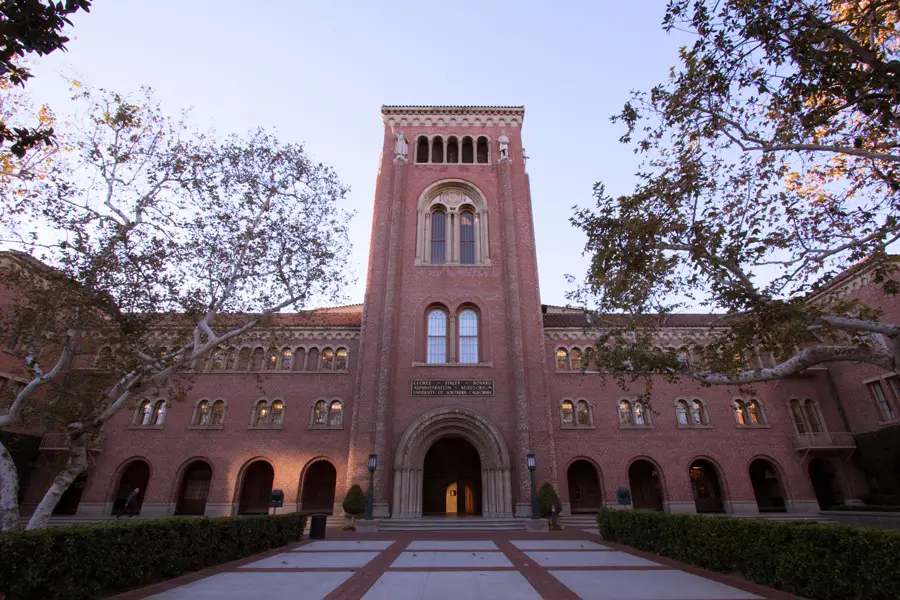
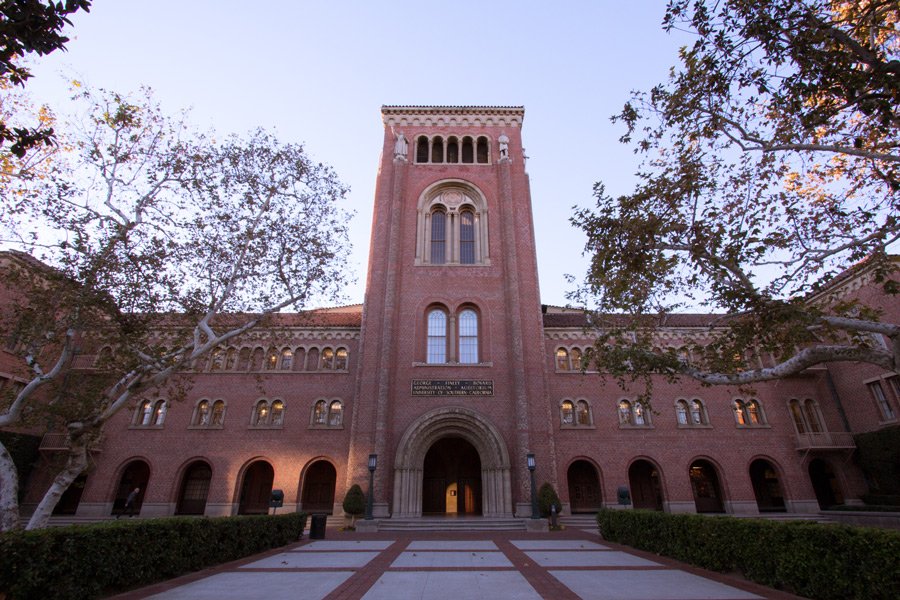
The pattern is not confined to seminar rooms. Earlier this year, a formula built by a political scientist to rank candidates for a televised debate in California drew exactly this move from both directions.[5] Critics said the ranking favoured some candidates over others, and pointed to the politics of the people involved. The university’s defence pointed the other way, to the scholar’s record and reputation, and called the criticism baseless. Neither side spent much time on the one question that actually mattered: was the formula built and applied the way it was described, or was it not? A name attached to a formula, whether the name belongs to an accuser or a defender, settles nothing about whether the formula itself holds up. A qualification has never been proof against bad judgement, as this publication found reason to note once before.
The Trap of ‘I’ve Moved Past It’
A better objection is available, and it deserves an actual answer. It runs like this: never mind the framework someone starts with, what matters is whether they can see past it and reach their own judgement. This is an improvement. It drops the fantasy of starting from zero. But look closely at what it is actually asking. “I have seen past my framework” is not something anyone can check from outside. It is a report on one’s own mind, and reports like that come from everybody with equal confidence. The believer says he has transcended his starting point. So does the secularist. So does the ideologue. As a way of telling captured thinking from independent thinking, “have you seen past your frame?” cannot fail, which means it cannot succeed either. It has simply moved the old myth indoors: from the facts announce themselves to the clean eye, to my own judgement announces itself as free to me. Both confuse the feeling of certainty with a reason to trust it.
What Actually Counts
If neither where a belief came from, nor how sure its holder feels, will settle anything, what will? Popper’s own answer does real work, because it gives a working method, not a slogan: look not at where a belief started but at how it is held. A conviction held dogmatically is protected from correction, the same shape this publication traced once before in the gap between an argument that can be tested and one that has walled itself off from testing. Pressed on it, its holder redefines terms, invents exceptions, or retreats to ground that cannot be tested at all. A conviction held critically is exposed on purpose. Its holder says in advance what would count against it, takes on the opposing case at its strongest, never its weakest, and has a record of actually changing specific positions when the argument went against him. That is not a mood. It is a record, and records can be checked, the same way a scientist’s readiness to risk a falsifiable prediction can be checked.
This is why the accusation this essay opened with fails as it stands. It names a source, faith, and infers a fault, captured thinking, without pointing to a single instance in the work itself where a counter-argument was raised and left unanswered. That is an assertion wearing the clothes of an argument. A charge like this only means something if it can point to a passage where the evidence against a position was waved away, or a claim never once revised however hard it was pressed, and it has to do this for the accused and for the accuser’s own side, on the same terms. Otherwise independence becomes a medal handed to whoever already agrees with us, which is exactly the dogmatism the word was supposed to rule out.
Turning It on Yourself
None of this is a licence to stop watching one’s own footing, and here the argument has to turn back on the person making it, including on the discipline of writing about Iran from outside any of its three loudest camps, which asks for exactly this scrutiny turned inward, and not only outward. “I am open about my starting point, so I am critical” is only a small step up from “I have already seen past mine.” Being open about where you start is a condition for scrutiny. It is not proof of having survived it. An honest posture earns its name through a visible record of changing course, not through announcing that one has it.
That leaves a real question, and it is not a comfortable one. What would count, in public and in advance, as proof that a given scholar, of any faith or none, ally or opponent, actually changed a position under real pressure, and did not simply say it louder? Until that record exists, on every side of every argument, the fairer working assumption is the one a Greek thinker reached twenty-six centuries before any of this became a debate about religion and reason: all of us are guessing, and none of our guesses comes with a guarantee stamped on its origin.[6]
[1] Karl Popper, Conjectures and Refutations: The Growth of Scientific Knowledge (London: Routledge & Kegan Paul, 1963), Introduction, p. 7.
[2] Popper, Conjectures and Refutations, ch. 1, p. 61.
[3] Hans-Georg Gadamer, Truth and Method, 2nd rev. edn (London: Continuum, 2004), on the necessity of ‘prejudice’, or fore-meaning, for understanding.
[4] Popper, Conjectures and Refutations, Introduction, p. 33.
[5] USC Center for the Political Future, joint statement on the candidate-viability formula developed by Professor Christian Grose and the cancelled 24 March 2026 California gubernatorial debate, dornsife.usc.edu, March 2026.
[6] Xenophanes, fragment DK21B34, as discussed in Popper, Conjectures and Refutations, ch. 8.
Leave a Reply