
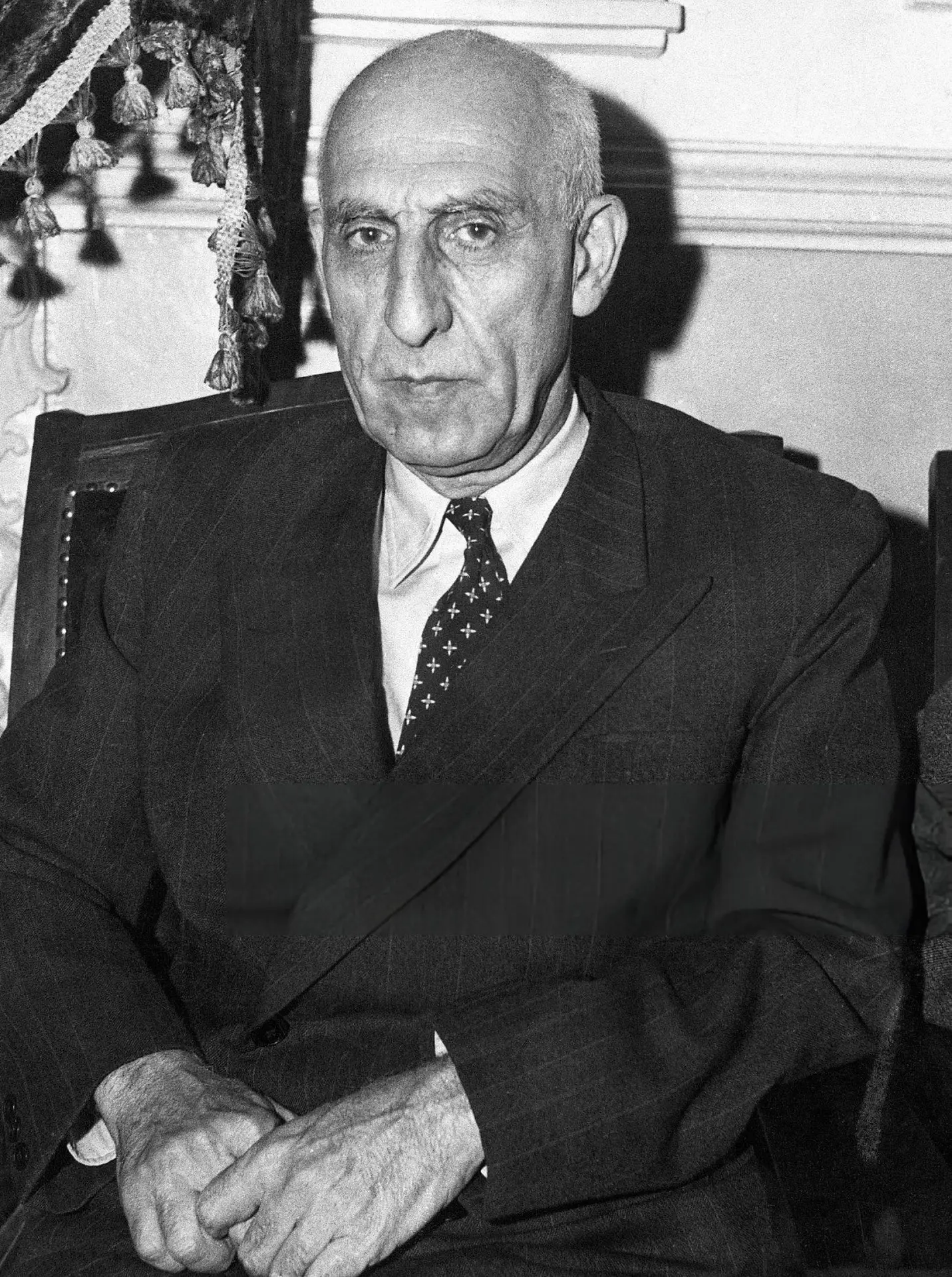
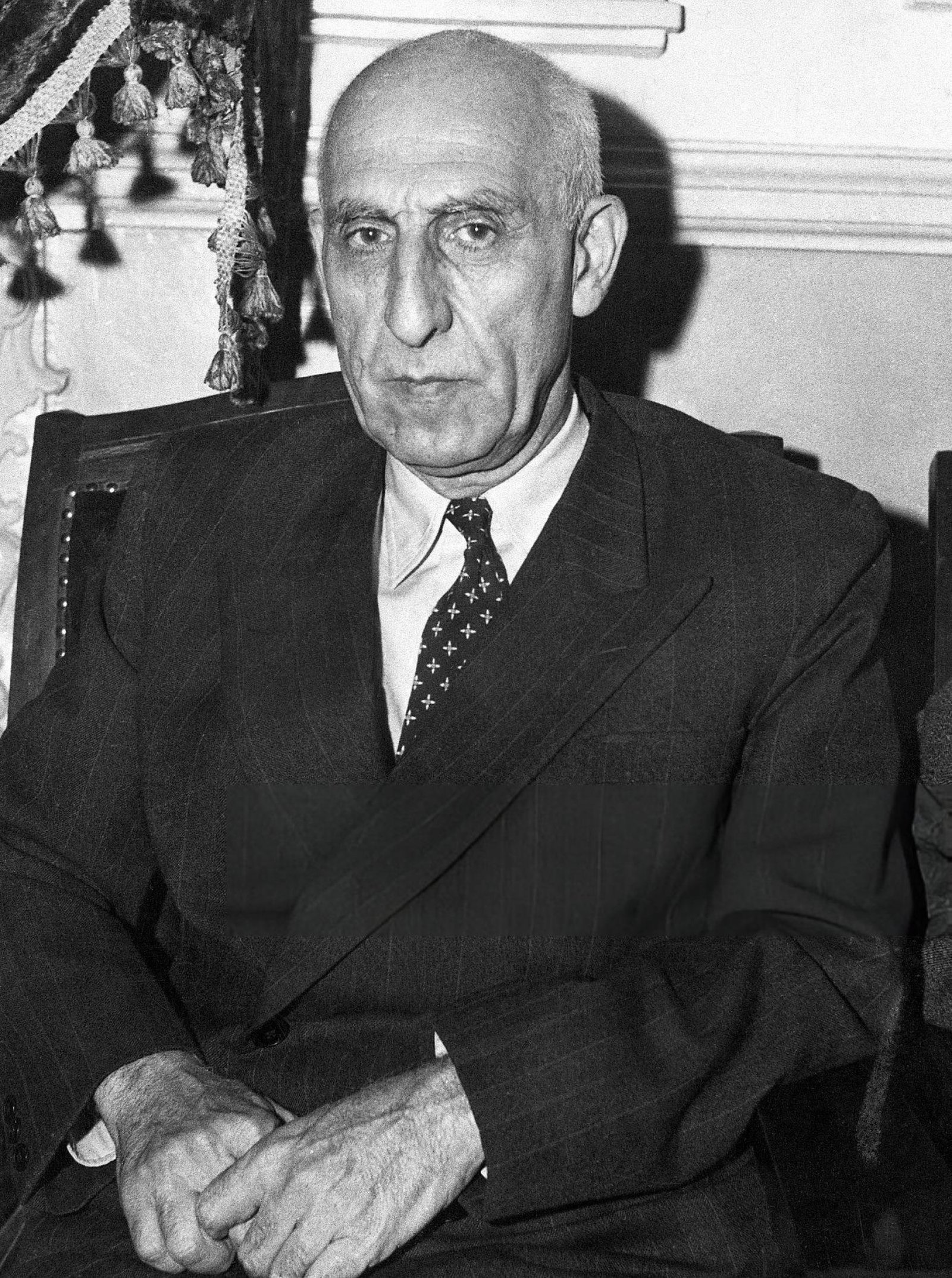
On the seventy-third anniversary of the 1953 coup, a reflection on the arrogance that ended Mohammad Mossadegh’s government, and the different arrogance that must not be allowed to replace it.
Seventy-three years ago today, tanks reached the prime minister’s residence in Tehran and put an end to the government of Mohammad Mossadegh. The anniversary is not an argument. That the coup happened, that it was planned in Washington and London under the codename TPAJAX and carried out with Kermit Roosevelt on the ground, is no longer contested by anyone whose contest is worth answering.[1] What is worth asking, on a day set aside for asking it, is whether the habit of mind that produced 1953 ended with it.
I do not think human beings can be cured of ego. It can be controlled; it cannot be abolished, in a country or a chancellery any more than in a person. But some of what looks like personality in the history of the last century is something more specific than ego, and more improvable. Much of what has passed between Iran and the Western powers for a hundred years, and much of what passed between the West and North Africa and the wider Middle East in the same period, rests on a conviction that post-Enlightenment Europe reached about itself: that reason had, at last, come fully into its own possession there, and only there. The late Mohammed Arkoun spent much of his career naming this conviction for what it was, a tyranny dressed as a discovery, in which the capacity for rational, competent self-government was assumed to run out at the border of the societies that had produced it. A linear, European model of modernity followed from that assumption, and for much of the nineteenth and twentieth centuries it was pressed on everyone else, sometimes at gunpoint and sometimes merely at the negotiating table, which can do nearly as much damage.
The oil crisis of 1951 is a textbook case, not a metaphor. When Mossadegh’s government nationalised the Anglo-Iranian Oil Company, the American diplomat George McGhee floated a fifty-fifty division of profits, the same formula Aramco had extended to Saudi Arabia.[2] The Foreign Office invited Sir Reader Bullard, a former ambassador to Tehran, to answer the Americans’ hesitations, and he obliged with a letter that is worth reading precisely because it is so unguarded. Mossadegh’s objection, Bullard wrote, was never about royalties; it was “neutralism,” and negotiation with him a waste of time, since Iran needed not money but to “face realities.” He went on, at length, about how Britain had civilised Persia in the previous century.[3] A man does not write that sentence about a country he thinks capable of governing itself.
What is less often told is that this complaint did not belong to Mossadegh’s nationalists alone. In September 1951, Aga Khan III, then Imam of the worldwide Nizari Ismaili community, held British, Iranian and Pakistani nationality together. He wrote privately to Richard Stokes, the Lord Privy Seal, on the same dispute.[4] His register could not have been further from a podium. He wrote as an interlocutor, not an agitator, in the vocabulary of equity, not sovereignty. The substance still bites hard. He rejected the fifty-fifty proposal as a fiction of fairness, since Iran, unlike Saudi Arabia, had received nothing like a reasonable share during the decades in which the Company’s fortune was built; equity required Britain to reckon with that unearned increment before it congratulated itself on generosity. He rejected, with more force, the comparison British officials kept drawing between Iran and Bahrain, Kuwait and mandated Iraq, calling it an insult to a country whose independence had run unbroken for several thousand years. A man with every institutional reason for caution, writing in the most cooperative register available to him, still could not accept the premise on which the British case rested. I have argued elsewhere that this letter is the ethic of access at its most exposed, cooperative in form and resistive in substance, and that its interest lies exactly in how little agitation it required to say what needed saying.[5] If the complaint reached that far into the establishment, it was never a nationalist grievance. It was a description of how Iran was being addressed.
Two years later, on 19 August 1953, the postponement ran out. Sherman tanks, driven out of barracks the CIA and MI6 had spent two years quietly courting, converged on the prime minister’s residence; the two light Czech tanks defending it were no match. Mossadegh’s fault, if the record allows the word, was refusing to arm the crowds who might still have saved him. He told an adviser he did not want to pour more fuel into the fire.[6] That single scruple, weighed against everything already done to him, is the whole distance between the two sides of this story. It took until March 2000 for a serving or former American official, Secretary of State Madeleine Albright, to admit the United States had helped remove a popular prime minister, and even then the justification offered was Eisenhower’s, that it had seemed strategically necessary at the time.[7] President Obama repeated the admission in 2009, still inside the frame of the Cold War, still not the frame of the Iranian people the coup was done to. Even the apology, in other words, kept the explaining on the Western side of the ledger. Farhad Diba’s biography records what the coup actually interrupted: a leader chosen, in his words, by a nation “longing to establish its dignity and to make a stand for its rights and sovereignty.”[8] That is the register in which 1953 should be read. Set oil aside, set the Cold War aside: what remains is a demand for dignity that both governments found easier to defeat than to answer.
None of this licenses a second arrogance in its place. The dogmatism that treats reason as a Western monopoly has a mirror image, and Iranians are not exempt from producing it. Political Islamism found much of its early audience by riding this same discontent, and whatever ground it still commands owes less to conviction than to the Eurocentric certainty it claims to oppose. Starve that certainty of its provocations and the appeal thins. The same is true of the harder nationalist and monarchist absolutisms that treat criticism of Iran as treason and criticism of the West as the whole of political thought, an inversion I have traced elsewhere in this series. Karl Popper’s old distinction still does the necessary work here: a closed system that cannot be argued with, whatever flag it flies, is the actual enemy, and colonial paternalism and revolutionary certainty are two dialects of the same closure.[9]
The lesson of the anniversary is therefore symmetrical, and this is the whole of it. No government has the right to decide on behalf of a people and expect that people to live inside the decision indefinitely. Agency is a contract: it holds only as long as autonomy is respected, and it lapses, on both sides, the moment that respect is withdrawn. The West has yet to learn this about Iran. Some Iranians, in their own dealings with each other, have yet to learn it either. Neither excuse is admissible.
Notes
[1] Ervand Abrahamian, Oil Crisis in Iran: From Nationalism to Coup d’État (Cambridge: Cambridge University Press, 2021), 133.
[2] Abrahamian, Oil Crisis in Iran, 62.
[3] Abrahamian, Oil Crisis in Iran, 62.
[4] Aga Khan III to R. R. Stokes, 10 September 1951, reproduced in Francis Williams, A Prime Minister Remembers (London: Heinemann, 1961), 251–54.
[5] Daryoush Mohammad Poor, ‘Ismailis and Politics: Beyond the Apolitical Myth’ (unpublished manuscript, 2026).
[6] Abrahamian, Oil Crisis in Iran, 151.
[7] Abrahamian, Oil Crisis in Iran, 49.
[8] Farhad Diba, Mohammad Mossadegh: A Political Biography (London: Croom Helm, 1986), ch. 8, ‘Prime Minister: Oil and Foreign Policy.’
[9] Karl R. Popper, The Open Society and Its Enemies, 2 vols. (London: Routledge, 1945).
Leave a Reply