
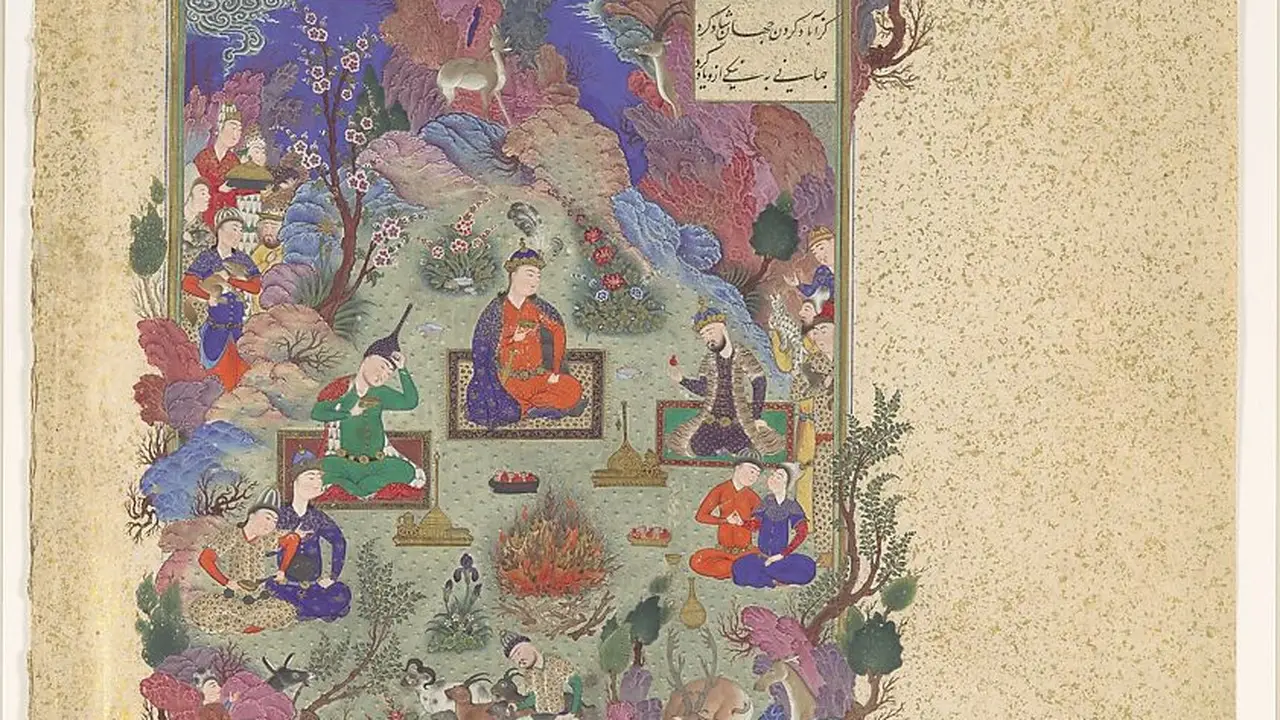
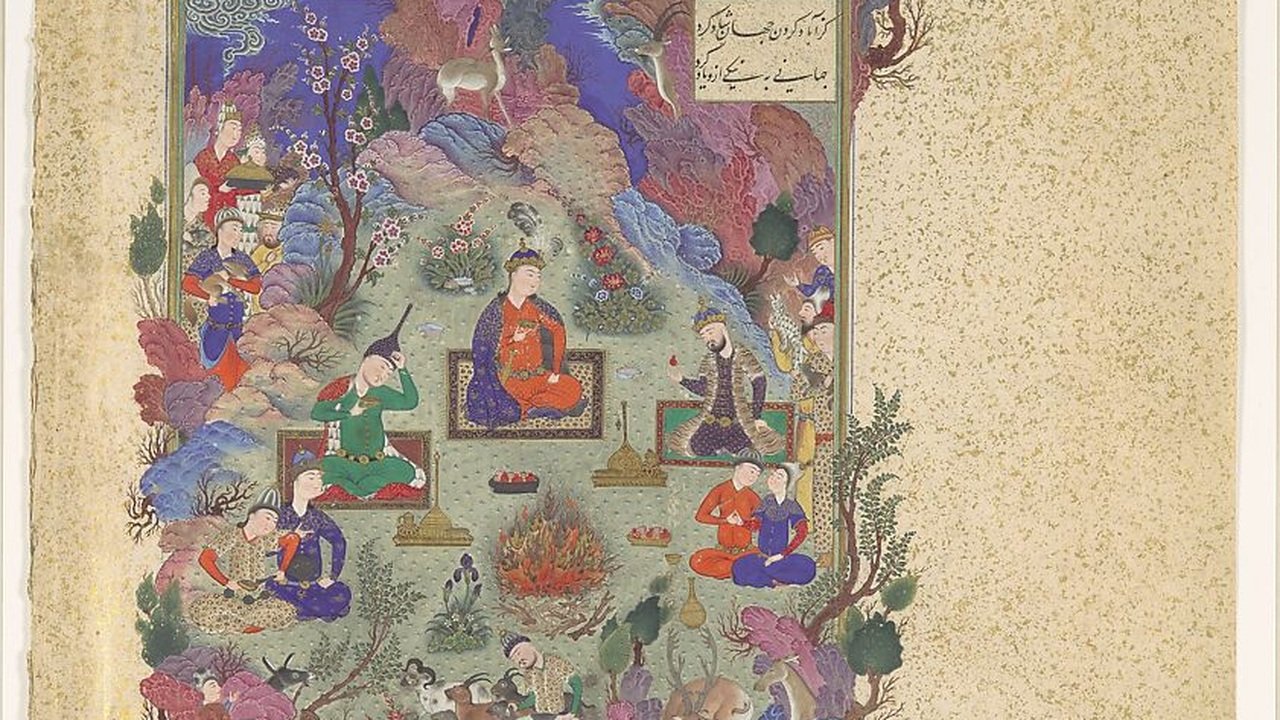
The programme opens in Istanbul, at a reading of the Shahnameh. Fifty thousand couplets, a thousand years old, recited aloud by Iranians far from home. Within two minutes the frame is set: this, we are told, is where Iranians go now, as disillusionment with Islam takes hold. ‘War, God and the Islamic Republic’, an edition of Heart and Soul presented by Emily Wither, broadcast on the BBC World Service on 18 June 2026 and released as a podcast the following day, then spends half an hour with four anonymous voices inside Iran, describing what decades of state religion have done to their faith.
That testimony is real and it should be heard. A woman in her fifties who still prays, privately, and has no further use for the mosque. Her son, who once walked in the Muharram processions and now hears in them traffic and noise. People who lived through an uprising in January, then a war, then a truce that held by its fingernails. I doubt none of it. What I doubt is the frame assembled around them, which makes substitutions the witnesses themselves never make.
Saying It for Them
The title names the Islamic Republic; the half-hour delivers a verdict on Islam. Between the two sits a doctrine, velāyat-e faqīh, which is younger than most of the people interviewed, which was advanced as a comprehensive theory of government only in the twentieth century, and which was dismantled on Shiʿi philosophical grounds by Mehdi Hairi Yazdi in Ḥikmat wa ḥukūmat, a work I translated and have argued through at length elsewhere. None of this reaches the listener. They finish with the mosque and the Supreme Leader fused into one institution, and with the impression that leaving the second requires leaving the first. That is precisely what the clerical establishment in Tehran has always insisted. The BBC has now said it on their behalf.
Conceded, Then Ignored
In a single sentence, the programme’s own commentary concedes that reading Ferdowsi as a weapon against Islam runs ‘contrary to Ferdowsi’s own ideas’ – and then builds the remaining twenty-five minutes on that reading anyway. Ferdowsi was a Shiʿi Muslim. Hafez carries the name every Iranian knows him by because he had the Quran by heart, and his ghazals collapse without it. Take out the Quranic allusion and what is left is decorative noise. Rumi’s Masnavi has been called the Quran in Persian for eight hundred years. Offering these three as the refuge from Islam is a nationalist claim with a documented history, laundered here through a documentary as though it were a finding. I have written about what that amputation costs.
The Shift Has Owners
A deep and largely private turn, self-fashioned, welling up from within: that is how the billing describes it. It is nothing of the kind, and the misdescription does the most damage of all. This shift has an infrastructure, and the infrastructure has owners, budgets and editorial lines. Iran International and Manoto did not report the collapse of religious authority in Iran; they worked at it, nightly, for years, in Persian, into every satellite dish in the country, welded to a monarchist restoration project that needs Islam understood as an Arab imposition on an Aryan nation. Reza Zia-Ebrahimi gave the ideology its name, dislocative nationalism, and I have set out what it does to the people who take it seriously. A programme about Iranian faith that cannot name any of this is reproducing one of its outputs and calling the result evidence.
The War as Weather
The half-hour dates itself by a war, opens in that war’s aftermath, and treats the war as weather. Nobody bombed anyone. The bombs simply fell. Nobody tore up the JCPOA in 2018 while Iran was still keeping to it; the agreement merely lapsed. Nobody spent decades tightening sanctions until cancer patients could not find medicine and a middle class was ground into the dust; hardship simply arrived. Those decisions were taken in Washington, and in the European capitals that went along with them, and every one of them fed the disenchantment the programme finds so moving. The Islamic Republic has brutalised Iranians for forty-seven years. It has never done so alone, and it has never been the sole author of what Iranians now believe about God.
What Survives the Edit
Consider what a listener carries away. Across half an hour, no Iranian is heard saying that Islam is theirs, that they hold it with pride, that they oppose the Islamic Republic in the name of a faith it stole from them. Such Iranians number in the millions, inside the country and outside it, and some have paid for that position with prison. They are absent. What survives the edit is one proposition: faith is the thing you leave, and being Muslim is a condition to be recovered from. Run the substitution on any other religious community – half an hour in which every voice describes the tradition as something they were relieved to shed, with no believer given room to answer – and ask whether it clears the commissioning meeting. Freedom of conscience, on this evidence, runs one way. You are free to leave. Nobody appears to be free to stay.
Flattening the field this way helps nobody. It explains nothing about why a devout household in Tehran and a secular one in Shiraz arrive at the same exhaustion by different roads. It offers no purchase on what should come next, because a situation described with half its causes missing cannot be repaired. And it lands in Britain, in English, at a moment when Muslims here are asked with some regularity to account for themselves. The BBC did not manufacture that climate. On this occasion it fed it.
This Is Already Policy
None of this defends the Islamic Republic. I have spent years arguing that it is a disaster for Iranians and a corruption of the tradition it claims to speak for, and I have paid for saying so. But an account that hands the whole catastrophe to a single culprit does more than mislead. It disarms the people it claims to be listening to. It tells Iranians that the road out of tyranny runs through the surrender of half of what they are, and it tells the rest of the world that a Muslim is something one recovers from. Neither is journalism. Both are already policy.
What Outlasts Them
The wedge being driven between the Quran and Hafez, between Islam and the Shahnameh, will outlast the men who made it feel necessary. Rulers fall. What a people has been persuaded to disown is far harder to get back.
Leave a Reply