
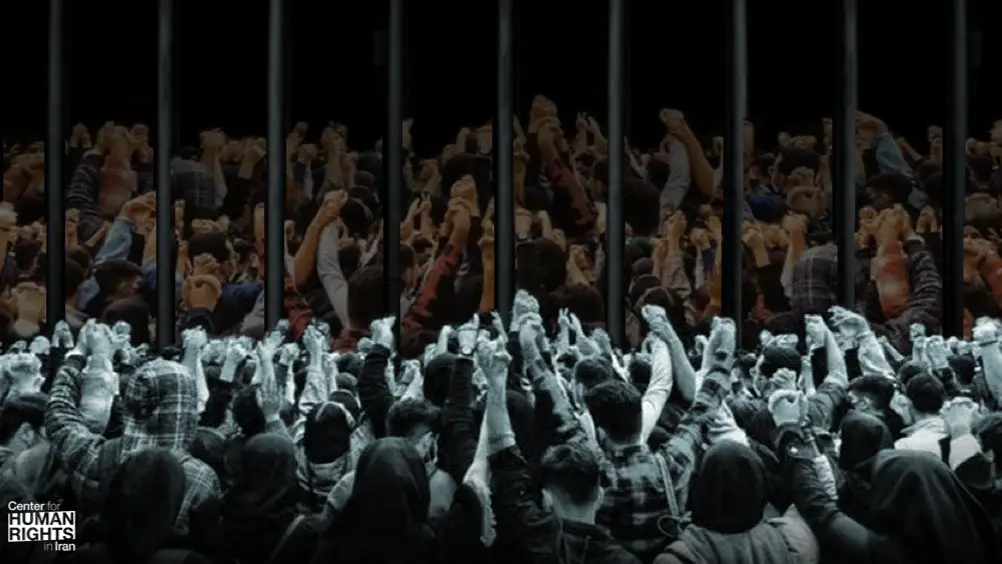
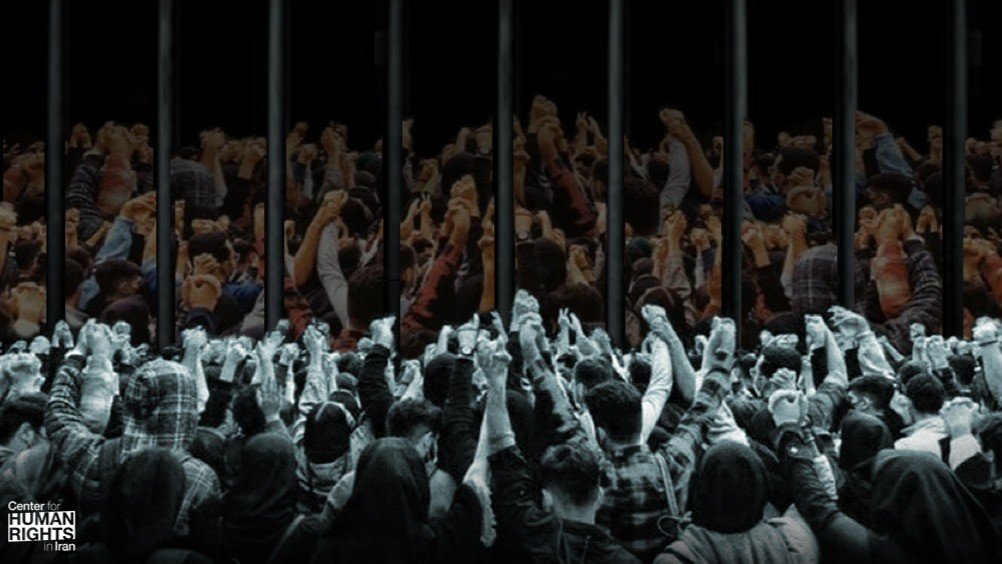
Image credit: Center for Human Rights in Iran
On the Destruction of Humanities in Iran — First by the Republic, Now by Those Who Claim to Oppose It
One of the defining legacies of Ali Khamenei — the second supreme leader of the Islamic Republic — was his obsessive, decades-long campaign against the humanities and social sciences. Much of this is recorded in the social history of post-revolutionary Iran, particularly in the turbulent years following Ayatollah Khomeini’s death. The details are extensive and documented elsewhere. What matters here is the structural consequence: scholars of the humanities and social sciences came under incessant fire the moment Khamenei branded their disciplines a ‘cultural ambush’ — a verdict he never revised, never softened, never reconsidered.
For Khamenei, these intellectuals were not merely inconvenient. They were existential threats — symbols, in his framing, of collusion with the West. Some were targeted in orchestrated smear campaigns broadcast on national television. Others became victims of serial murders originating from within the security apparatus itself. Massive resources were devoted to suppressing anything in the social sciences or humanities that diverged, even slightly, from the political orthodoxy he embodied. Independent thought was not tolerated. It was hunted.
Consider this carefully. One of the principal figures at the forefront of this campaign was Mehdi Nasiri. Nasiri is now a vocal proponent of monarchist ideas. The same species of radicalism he prosecuted under Khamenei’s patronage has been transported wholesale — mutated in form but identical in function — into the monarchist ideological apparatus. The very mistrust Khamenei harboured toward intellectuals and the liberal arts has been reinvigorated, with remarkable fidelity, under the monarchist camp’s sustained campaign against the life of the mind. Scholars and intellectuals who deviate even marginally from their absolutist line are branded as the ‘radical left.’ The machinery of suspicion has simply changed operators. Khamenei’s cultural invasion has found a new voice among his sworn enemies.
This is not coincidence. It is inheritance.
I was reflecting on these five decades of systematic erosion when I encountered a post by Hussein Hamdieh — a social scientist who remains in Tehran, writing under the shadow of war. What he has written reads less like commentary and more like an elegy for the humanities themselves.
Hamdieh opens with a warning that went unheeded: that a fragmented, atomised society would inevitably become vulnerable to foreign predation. This fragmentation, he argues, was not accidental. It was engineered. The state did not want thinkers — it wanted theorists-for-hire, willing to dress pre-approved conclusions in academic clothing. Sociology, political science, and the broader social sciences were treated not as disciplines but as threats. Graduates were systematically silenced, scattered, and economically broken. Without institutional support or public platforms, many became ride-share drivers and minimum-wage labourers — their intellectual capital wasted by design, their voices neutralised before they could be raised.
Those who refused silence were imprisoned. Hamdieh invokes Saeed Madani — a prominent sociologist and genuine patriot — as emblematic: jailed precisely because he spoke truth to power, because the state could not tolerate anyone saying, ‘you are going the wrong way.’
Universities were castrated. Where coercion enters through the front door, knowledge leaves through the back. Ideological conformity tests, faculty purges, the closure of critical journals — these did not merely suppress dissent. They killed the very capacity for social self-understanding. Iranian society was left without the intellectual infrastructure to diagnose its own condition.
In place of rigorous thinkers, the state elevated the ignorant and the servile — giving platforms to crude ideologues who commanded authority not through knowledge but through loyalty. Books were burned. Science was fought. The public sphere was hollowed out until nothing remained but echo and obedience.
Now, Hamdieh writes, Iran stands before its darkest adversaries, its territorial integrity imperilled. The state that dismantled its own intellectual immune system has no one left to explain the crisis — no trusted voice, no shared analytical framework, no reservoir of social knowledge. His diagnosis is unsparing: the Islamic Republic did not merely neglect the humanities. It destroyed them to preserve its own dogma. The consequence is a society rendered blind and defenceless at the hour of its greatest peril.
His closing words — ‘You did wrong. You did wrong.’ — are not a lament. They are a verdict.
I have written elsewhere how Khamenei’s paranoid hostility toward independent media led — with the grim predictability of historical irony — to the creation of its most effective antithesis: outlets like Iran International, born outside Iran’s borders precisely because nothing truthful could survive within them. The state that strangled domestic journalism did not eliminate the demand for information. It outsourced it to actors whose agendas were shaped by entirely different masters.
The same pattern now reproduces itself. The animosity toward the humanities that Khamenei institutionalised has found its structural counterpart in the monarchist camp. The targets have shifted; the grammar of contempt is identical. Where Khamenei saw Western cultural infiltration, the monarchists see leftist subversion. Where the Islamic Republic purged faculties, the monarchist commentariat conducts its purges on social media — branding every scholar who refuses to genuflect before their absolutism as an enemy of the nation. The vocabulary has changed. The architecture of intellectual suppression has not.
This convergence is not a quirk of political psychology. It is a structural feature of authoritarian thinking — regardless of the flag it flies. The theocrat and the monarchist, for all their mutual hatred, share a foundational conviction: that independent critical inquiry is dangerous, that the humanities are a threat to be managed rather than a resource to be cultivated, and that loyalty must always take precedence over truth.
Do we learn from history, or are we condemned to watch its ugliest chapters rewritten by new hands, in new ink, on the same bloodstained page?
Leave a Reply