
Image credit: Source: Unsplash
On Disillusionment and the Refusal to Close the Door
This piece is the product of my reflections on a voice message from a friend, a friend undergoing cancer treatment. But it captures something of what we are all going through—a particular species of exhaustion that transcends any single struggle, any single nation. What began as a meditation on one person’s pain became a window into a broader crisis of hope, one that many of us, in different ways and different contexts, are navigating. I have concluded with some observations that I hope might offer, if not answers, then at least a refusal to accept the inevitability of despair.
* * *
There exists among segments of Iranian society a particular species of exhaustion that has no name in the conventional vocabulary of political science. It is not apathy—apathy suggests the absence of feeling, and these people feel everything with a clarity that borders on the unbearable. It is not cynicism, which retains at least the residual energy of contempt. What we are witnessing is something closer to a completed mourning: the full and final burial of a hope that, in retrospect, appears to have been a delusion all along.
The voice that speaks this truth does so with the formal courtesies of a culture that insists on dignity even in collapse. Medical treatment is ongoing. The body is under siege, and so is the nation, and it is no longer clear which affliction runs deeper. The message begins with apologies—for not writing, for speaking at all, for the presumptuousness of unburdening a heart to someone held in respect. Persian politeness has its own grammar of pain, and this one is impeccable even as it fractures.
“We are living in a bubble,” comes the assessment, and the metaphor lands with devastating precision. Those who speak of democracy, of human rights, of abolishing the death penalty—they have constructed for themselves a fragile sphere of idealism that floats untethered above the machinery of the region. They speak a language the Middle East does not recognize, advocate for values it does not honor, dream of futures it will not permit. And the worst part, the part that corrodes from within, is the knowledge of this. The accounting has been done. The geopolitical landscape surveyed—the Taliban and ISIS and Hezbollah on one side, Saudi Arabia and Israel on the other, and in Iran itself, the Islamic Republic facing off against monarchist opposition—and a conclusion reached so bleak it leaves no room for evasion: they are all savages. Every single one.
The word used—vohush, beasts—is not casual. In Persian, it carries the full weight of moral condemnation, the stripping away of humanity from those who have forfeited it through their actions. And it is applied without discrimination. The regime that has imprisoned, tortured, and executed its own people for decades? Savages. The opposition that dreams of restoration, that speaks in the grammar of bloodlines and divine right? Savages. The regional powers, the global actors, the entire grotesque theater of Middle Eastern politics? Monsters, every one.
And where, in this landscape, do people like this belong? Nowhere. That is the answer, delivered with the calm of someone who has tested every alternative and found them all foreclosed. “We don’t have people in the middle of this”—meaning human beings in the fullest sense, people who understand, who are calm, who possess the capacity for reason and restraint. The entire political spectrum has been evacuated of the humane, and what remains is a Hobbesian wasteland where the only actors are predators and the only logic is domination.
“I had deleted my Instagram,” comes the confession, and then: “I only came back to look for a dog.” These details, seemingly trivial, carry an entire political autobiography. The platform where Iran’s struggles are performed, where outrage is monetized, where every atrocity becomes content and every tragedy an opportunity for brand-building—walking away from it entirely. And returning only to search for a dog. Not to organize, not to amplify, not to bear witness. To find a companion. The scaling down of ambition from the fate of a nation to the comfort of a loyal animal is not retreat; it is the recognition of what remains possible when everything else has been revealed as fantasy.
“These savages are meant for each other,” comes the conclusion, and the sentence has the finality of a door closing. Not slammed in anger—closed with the quiet certitude of someone who has seen what lies on the other side and knows there is nothing there worth the effort of keeping it open. Let them destroy one another. Let the Islamic Republic and its opponents, let the regional powers and their proxies, let the entire blood-soaked infrastructure of Middle Eastern politics cannibalize itself. The accounting is complete. The ledger is closed.
But here we must stop. Here we must resist. Because this is precisely the moment where everything is at stake.
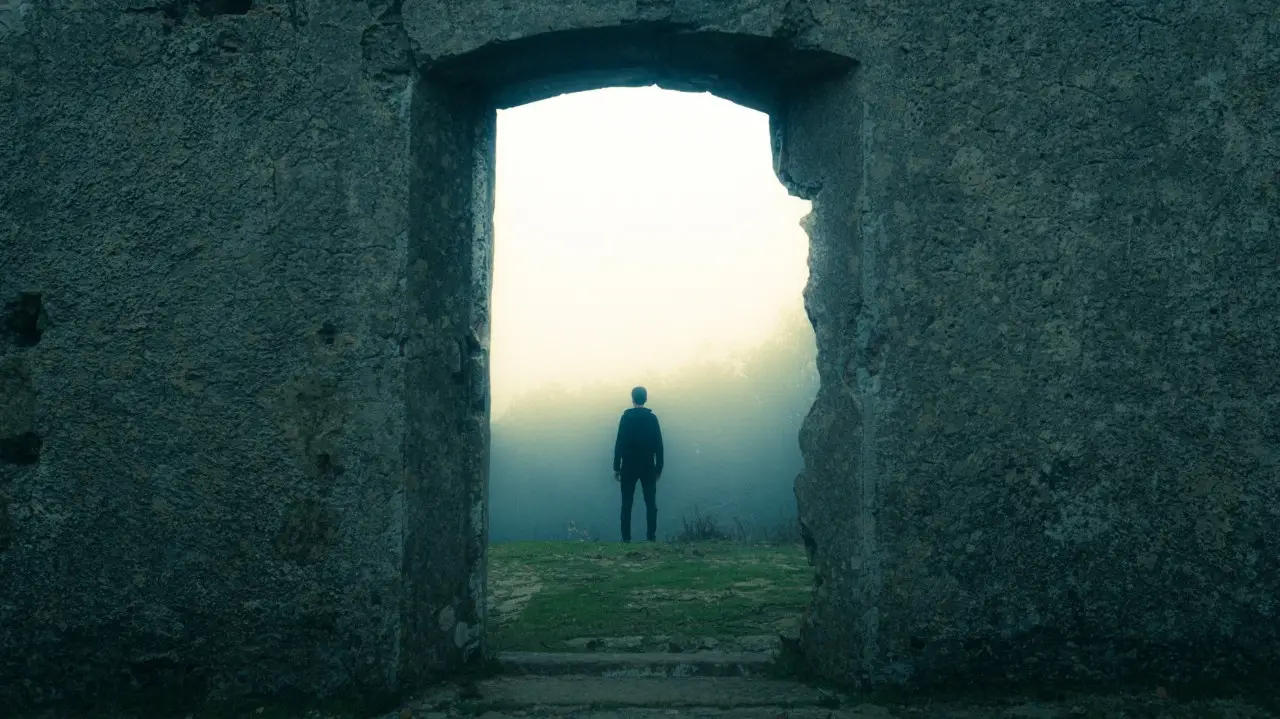
The door is closing, but it has not yet closed. And the difference between the two—between the door closing and the door closed—is the difference between a society that can still heal and one that has surrendered to its worst possibilities. This is not a call to dismiss the exhaustion, to pretend the disillusionment is not real, or to offer cheap consolation about silver linings and brighter tomorrows. The pain is legitimate. The assessment of the political landscape is, in many respects, accurate. The monsters are real, and they do occupy nearly every visible position of power.
But the conclusion—that people who refuse to become beasts themselves must therefore accept their own irrelevance—is the one inference we cannot allow to stand unchallenged. Because it is precisely this conclusion that the savages depend upon. It is the final victory they require: not merely to dominate the landscape of power, but to evacuate it entirely of those who might imagine something different. When the humane declare themselves irrelevant and withdraw, they do not simply step aside from a game they were never winning. They vacate the only space from which transformation has ever emerged.
Every meaningful change in human history has come not from those who accepted the logic of the prevailing brutality, but from those who refused it even when refusal seemed pointless. The end of apartheid in South Africa, the collapse of the Soviet Union, the long march toward civil rights in America—none of these followed from the logic of the existing power structures. They came from people who insisted, against all evidence, that another world was possible, and who kept that insistence alive through decades when it appeared delusional.
The demand to maintain hope in a landscape of monsters is not naive. It is the most difficult work there is. It requires living with a split consciousness: seeing clearly the horror of what is, while refusing to grant it the status of what must always be. It requires absorbing the evidence of brutality without letting it metastasize into a philosophy of inevitability. It requires, above all, the discipline to distinguish between the tactical withdrawal necessary for survival and the existential surrender that forfeits the future.
The voice that speaks of living in a bubble, of being too delicate for this region’s cesspool, of savages meant for each other—this voice is not wrong about the diagnosis. But if it closes the door, if it concludes that the only rational response is complete disengagement, then the monsters will have won not by defeating their opponents but by convincing them that opposition itself is impossible.
So yes, delete Instagram. Search for a dog. Protect whatever fragments of sanity and peace remain available. Survival is not betrayal. But do not—cannot—must not declare the entire project of a humane politics dead. Because the moment that declaration is made, it becomes true. The bubble may be fragile, the idealism may float untethered, the pro-democracy advocates may indeed be out of touch with the machinery of the region. But they are also the only people who remember that the machinery is not natural law. It was built by human decisions, and it can be unmade by them.
The door is closing. The exhaustion is real. The disillusionment is earned. But history will not forgive us if we let it close completely. Change comes not from those who accept the world as it is, but from those who refuse to, even when refusal is the hardest thing they will ever do. Especially then.
Leave a Reply