
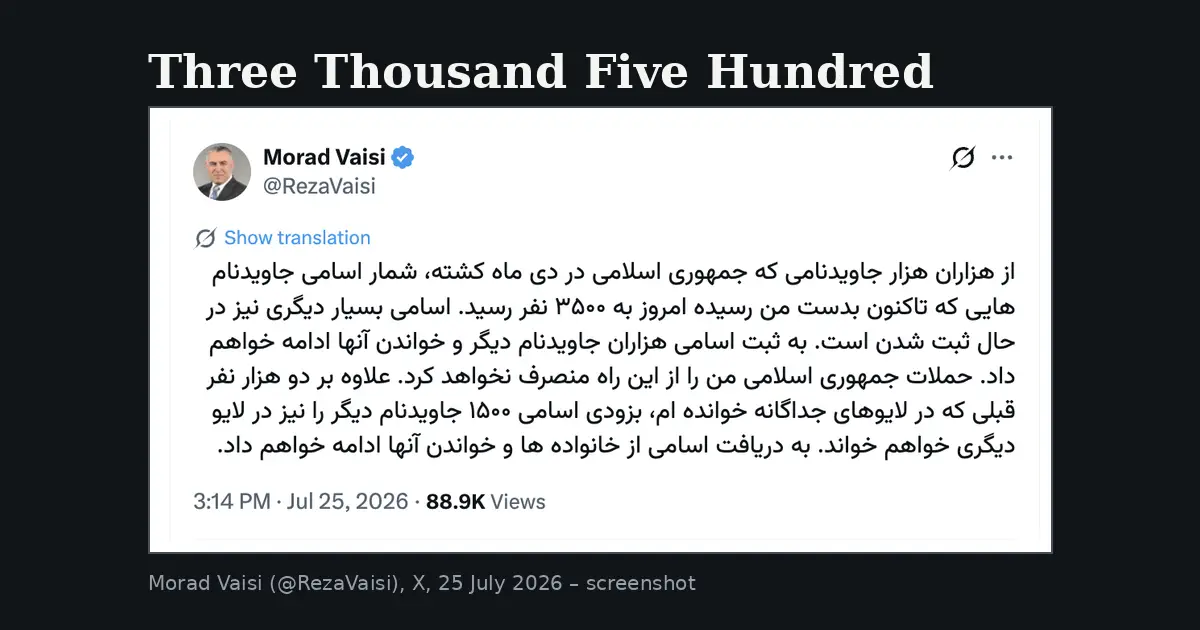
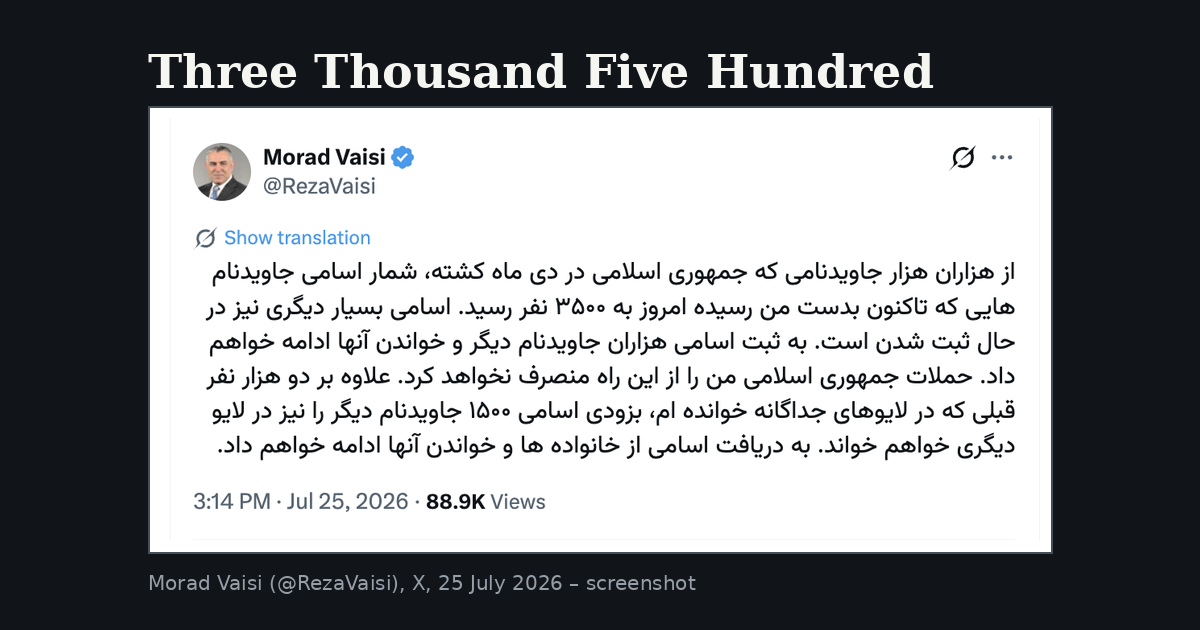
On 25 July 2026, Morad Vaisi published a number.
Vaisi is senior Iran analyst at Iran International and host of its flagship politics programme. Since January he has been collecting the names of the dead and reading them aloud, live, hour after hour. It is honourable work. He has done it under pressure, and he says he will carry on.
The number is 3,500.
Set it beside what his own network broadcast in January: more than 30,000 killed in two days. That figure crossed the world in an afternoon. It was quoted in op-eds and in parliaments, by people demanding that something be done, quickly, and by force.
Three numbers, then. Thirty thousand, broadcast. Around 1,100, verified, conceded later by a senior figure inside the same network. Three and a half thousand names received, six months on, by the man actually doing the counting. Only the first shaped anything.
Read the wording of the tweet. The names have reached him. Received, not verified. Families send, he records, he reads. A ledger of submissions is the loosest count there is, and even at its loosest it stands at roughly one-ninth of what the network told the world. In the same breath he still writes, thousands upon thousands. The rhetoric will not come down to meet the arithmetic. It cannot. Too much has been built on top of it.
That refusal is the machine.
Here is how it runs. A network aligned with the restoration lobby issues a figure. The amplification circuit carries it past the point of correction within hours: the accounts, the hashtags, the diaspora columnists, the press operation of a prince-in-waiting. Foreign desks pick it up on the assumption that an exile broadcaster knows its own country. By the time anyone begins gathering actual names, the political verdict is already in and the case for war already made.
Then the correction arrives. Never on air. Never as an apology. A tweet, from the most credible man in the building, on a Saturday afternoon.
I argued in March that inflation manufactures indifference. This is the mechanism finishing its work. Every family that sent Vaisi a name is now bound to a figure they never uttered. Every journalist in Evin, every mother still waiting outside a prosecutor’s door, is now cheaper to ignore, because the number that made the world look up turned out to be a wish.
The dead of January were counted twice. Once by those who buried them. Once by those who needed them.
Only one of those counts was for the dead.
Leave a Reply