
Source: PBS NewsHour / Reuters
An Assessment of Strategic Contradictions and Diplomatic Opportunities
The Dual-Role Paradox
Pakistan’s deployment of 13,000 troops and fighter jets to Saudi Arabia on April 11, 2026—executed under the Strategic Mutual Defence Agreement (SMDA) signed in September 2025—has thrust Islamabad into the centre of the Iran conflict with a fundamental contradiction. Pakistan now simultaneously serves as a military guarantor of Saudi security and positions itself as a potential mediator between Riyadh and Tehran. This duality, while diplomatically precarious, reflects a strategic logic rooted in Pakistan’s unique regional position.
Pakistan’s Mediating Capital
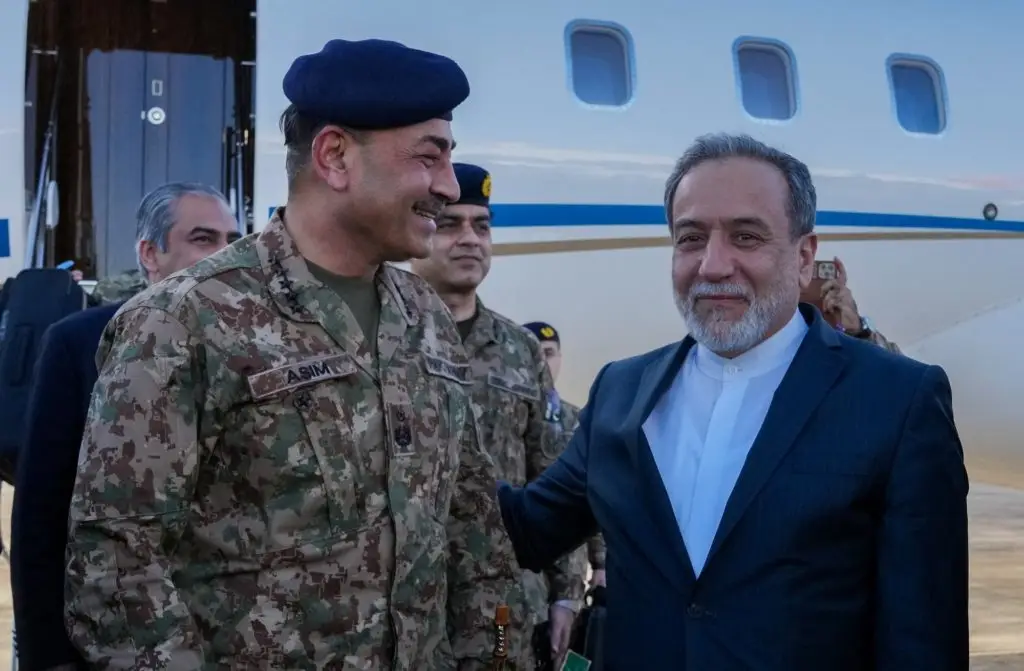
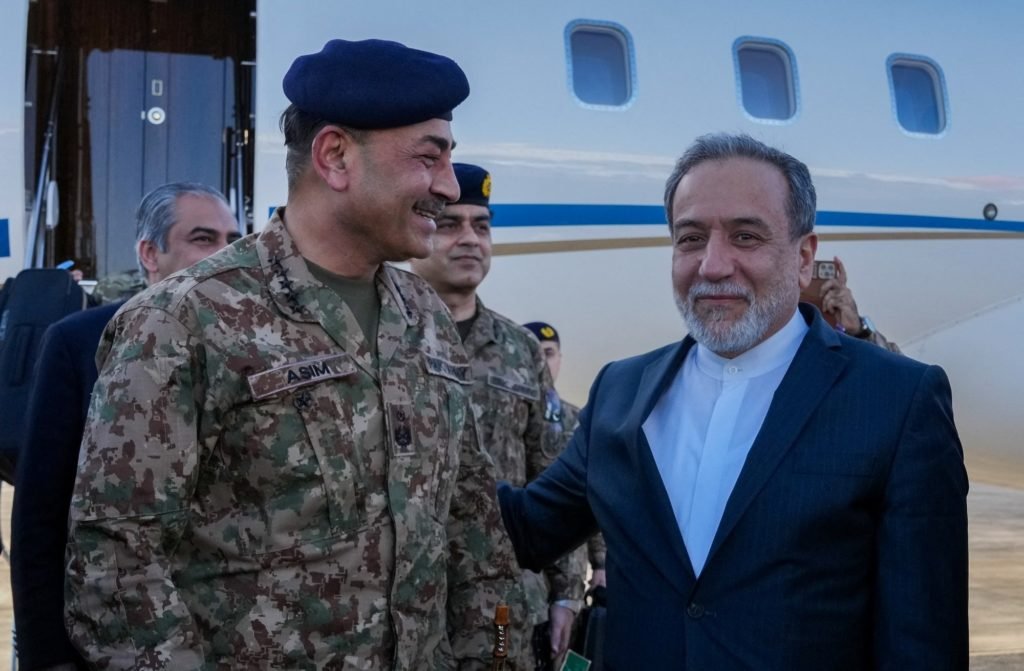
Few states possess Pakistan’s combination of mediating assets. As a nuclear-armed Islamic republic with deep ties to both Saudi Arabia and Iran, Islamabad carries a legitimacy that Western brokers cannot replicate. Foreign Minister Ishaq Dar’s March 2026 visit to Tehran—where he candidly warned Iranian counterparts of Pakistan’s SMDA obligations—demonstrated a transparency that may enhance rather than undermine credibility. The collapse of US–Iran negotiations in Islamabad on April 11–13 underscores the vacuum Pakistan could fill. Notably, it is Islamabad—not Muscat—that hosted this round. In previous cycles, Oman served as the default mediator. That the geography of diplomacy has shifted signals recognition by all parties that Pakistan’s position—straddling both sides of the Gulf divide—gives it leverage Oman does not possess. Pakistan is now mediating not merely between Tehran and Washington, but between Tehran and Riyadh.
What Is Really at Stake
The question Pakistan faces is not merely whether it can maintain good relations with both Saudi Arabia and Iran simultaneously. That is the short-term challenge. The deeper calculus concerns the long-term equilibrium of power across West Asia. Israel’s conduct—from its operations in Gaza and Lebanon to strikes on Iranian nuclear sites and open threats of wider war—has established it as the region’s principal destabilising actor. Pakistan’s planners understand that this is not an isolated Iran–US dispute; it is a structural contest in which an unchecked Israel, armed with undeclared nuclear weapons and shielded by American vetoes, threatens any state that resists its regional primacy. Islamabad is therefore seeking to prevent the Saudi–Iranian rivalry from becoming a permanent fault line that Israel and its allies can exploit indefinitely.
The SMDA Complication
The deployment constrains mediating potential. The SMDA was activated by real threats following Iran’s strikes on Saudi energy infrastructure and US bases during the February–April conflict cycle. With Pakistani fighter jets integrated into Saudi air defence, Tehran cannot view Islamabad as disinterested. Pakistan’s $4.8 billion in external obligations, offset by $5 billion in Saudi–Qatari support, means strategic autonomy is materially circumscribed. Mediation requires perceived independence, and financial dependency erodes precisely that perception.
Impact on Iranian Strategic Calculations
For Tehran, the deployment alters the conflict calculus measurably. A nuclear-capable state’s conventional forces in the Saudi defence architecture raises escalation risks Iran must now factor into military planning. An attack on Saudi Arabia could draw a nuclear power into direct confrontation. The fragile ceasefire following the February 28–April 7 hostilities may be stabilised, counterintuitively, by this escalation of stakes.
The Limits of This Round—and Why It Does Not Matter
The likelihood that this round fails to produce a lasting settlement is not low. Structural spoilers—Israel’s preference for permanent Iranian isolation, Washington hawks, Tehran hardliners—remain formidable. But failure here does not mean failure in perpetuity. The Islamic Republic will not collapse under military pressure. Its institutional depth, mobilisation capacity, and regional strategic depth make regime-change a fantasy. The monarchist exile faction, rallied around a prince who collaborated with forces threatening war crimes against over 90 million Iranians, commands negligible domestic legitimacy. The notion that a population would embrace a figure associated with those who threatened to obliterate their country requires a suspension of political logic no serious analyst can endorse. Peace is therefore inevitable—because the alternatives are permanent war or the collapse of a state that refuses to collapse.
The Path Forward: Stress-Testing Pakistan’s End-State Vision
Three speculative end-state objectives emerge for Islamabad: a demilitarized region, the withdrawal of US forces from West Asia, and a denuclearised region with Pakistan and Iran as anchoring powers. Each deserves scrutiny. Demilitarisation faces the obstacle that Persian Gulf monarchies have built security around foreign military presence; removing it requires a replacement framework that does not yet exist. US withdrawal is plausible only if Washington concludes that the cost of regional hegemony exceeds the benefits—a calculation that shifts with every administration. Denuclearisation is the most ambitious: Pakistan itself is a nuclear state, and asking Iran to forgo nuclear ambitions while retaining its own arsenal creates an asymmetry Tehran would exploit. Yet the logic holds if the framework is mutual—a regional compact in which both states cap and eventually reduce arsenals in exchange for guaranteed sovereignty. This is generational work. What remains clear is that Pakistan will stay an active partner regardless of how the current round concludes. The strategic imperatives—geographic proximity, shared borders, sectarian bridge-building, and the existential threat of an unchecked Israel—guarantee Islamabad cannot disengage. Whether it possesses the institutional discipline to navigate this narrow corridor remains the critical variable.