
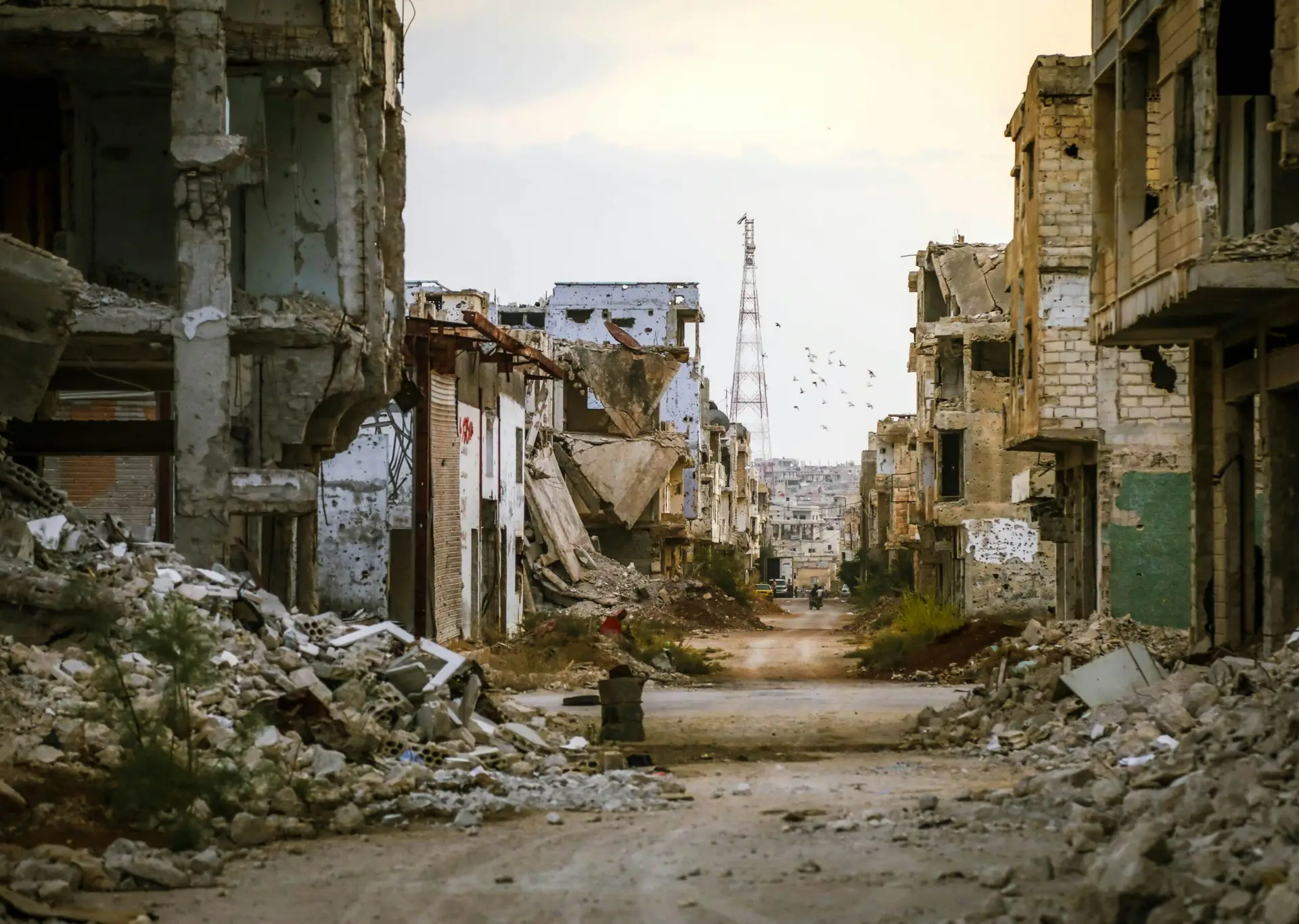

Photographer/Creator: Levi Meir Clancy / Source: Unsplash
The loudest war drums in the diaspora are often beaten by people with no skin in the game at all. No mother in Tehran waiting through blackouts. No brother in Isfahan tracking sirens. No daughter in Shiraz sleeping under glass that could shatter at dawn. Yet they speak with theatrical certainty, as if missiles are aimed at their own roof. This is not courage. It is performance.
What we are watching is shameful hypocrisy: political cosplay disguised as principle. Some commentators have long ago moved every intimate tie out of Iran, but still speak with feverish enthusiasm about escalation, retaliation, and cleansing violence. They borrow grief they do not carry. They convert distance into authority. They narrate catastrophe with the comfort of people who know their own family WhatsApp groups are quiet tonight.
Call it what it is: nostalgia and romanticizing, not real pain. They are in love with an imagined homeland frozen in heroic memory, not with the living country that bleeds. They romanticize sacrifice because they will not be asked to make it. They rehearse hatred because they will not bury the dead. They pretend to stand inside the fire while speaking from climate-controlled safety.
Alireza Abiz’s Facebook post names this hypocrisy with a clarity that slices through euphemism. He writes, War is decisive, it is the winner, it is the blade’s edge. That line is not poetic decoration; it is a warning that once war enters, it overrules everyone else’s script. Those who fantasize about controlled violence forget that violence has its own command chain.
Abiz then grounds the warning in concrete reality: one strike does not politely stop where analysts draw circles on maps. He asks us to see how a port becomes a power station in the next round, how logistics collapse into energy collapse, and energy collapse into civilian punishment. This is the anatomy of escalation: infrastructure first, daily life second, political imagination last.
And then comes his mocking reference to camel-riding bravado, aimed at those who confuse historical costume with contemporary strategy. He ridicules the macho pageantry of distant commentators who speak in epic tones while others count body bags. The point is brutal and simple: war is not a stage for identity theater. It is a machine that grinds ordinary people first and intellectual vanity second.
Abiz is equally unsparing toward another class of voices: those who took money and wrote about sanctions as if strangling civilians were sophisticated policy. For years they sold collective punishment as realism. They published pain with footnotes. They translated hunger into leverage. Now that open war has widened the damage, they want to re-enter the conversation draped in moral language.
He calls this posture pathetic, and the word fits because the smallness is moral before it is rhetorical. They helped normalize harm when harm could still be framed as pressure. Now they ask to be trusted as guardians of restraint. But reputations cannot be laundered with a softer tone. If you profited from cruelty in one register, you do not become humane by changing vocabulary in another.
This is why the outrage at hypocrisy matters beyond personal disgust. Political memory is part of political accountability. A discourse that forgets who advocated what, and for whom, will keep recycling the same architects of disaster. The pathetic move is not merely being wrong; it is insisting on moral authority after financing, narrating, or legitimizing policies that made civilians disposable.
So the necessary pivot is this: if we are against this cycle, what are we for? My answer starts with sequence. Until a permanent ceasefire exists, politics does not begin. Commentary begins. Branding begins. Tactical signaling begins. But politics, in the serious sense of negotiated, revisable, institution-bearing action, does not begin under active bombardment.
Ceasefire-first is not naivete and not cowardice. It is procedural realism. You cannot build credible bargaining while people are running for shelters, while emergency rooms are triaging by generator light, while every actor calculates only the next forty-eight hours. War rewards speed, fear, and spectacle; politics requires duration, trust gradients, and repeat interaction across disagreement.
That is why I reject the seductive lie that violence clears the ground for meaningful change. Violence clears people, not problems. It can topple structures, but it cannot by itself build legitimate replacements that outlast the adrenaline of victory narratives. A permanent ceasefire is the doorway, not the destination: the minimum condition under which hard political work can even be attempted.
War compresses time into impact, reaction, funeral, retaliation. It shrinks the horizon of thought to survival and revenge. Under that compression, every institution becomes an emergency instrument, every message becomes propaganda, and every critic is pressured to choose camp over truth. Compression is useful for generals and demagogues; it is lethal for social repair.
Reform expands time. It asks citizens and institutions to think in budgets, school years, court calendars, municipal plans, and constitutional horizons. It turns panic into procedure and rage into negotiable conflict. Reform is not the opposite of urgency; it is urgency disciplined by design. Where war demands immediate obedience, reform requires sustained accountability.
In diaspora language, people often say sustainable development when they are actually describing reform. Fine. Keep the phrase if it helps build coalitions. But be honest about substance: sustainable development without legal reform, administrative capacity, and political rights is branding, not transformation. The durable future everyone claims to want has a political architecture, and that architecture must be built deliberately.
My commitment is to long-term solutions that can survive beyond personalities, news cycles, and exile-era fantasies: institutions that function, rights that are enforceable, and a rule of law that binds both rulers and rivals. Anything less is temporary management of recurring crisis. Anything less leaves the country vulnerable to the next round of romanticized destruction from afar.
Institutions mean courts that can check power, municipalities that can deliver services, and budgets that can be audited by the public. Rights mean speech that does not require permission, association that is not treated as conspiracy, and due process that is not conditional on political loyalty. Rule of law means predictable limits, not selective punishment dressed up as national necessity.
This agenda is slower than revolution and less glamorous than war footage, which is precisely why it deserves trust. Slow work is how societies stop reliving the same catastrophe under new slogans. Long-term reform is not emotional retreat; it is strategic seriousness. It refuses to confuse catharsis with progress, and refuses to treat civilian suffering as a transitional cost.
So yes: put the blade down. Not because injustice is acceptable, but because the blade cannot build what justice requires. End the war, secure the ceasefire, and then begin the real labor of political reconstruction. The day after the guns fall silent is not epilogue; it is chapter one of responsibility.
When war ends, the performance must end with it. No more borrowed grief from safe distance, no more nostalgic fantasies marketed as destiny, no more moral laundering by yesterday’s sanction hawks. The task is sober and collective: build institutions, defend rights, enforce law, and keep doing it when cameras leave. That is how a country lives past war.