
A VOICE FROM THE FIRE: What the Diaspora Doesn’t Want to Hear
“They killed 168 children in a school. They hit the school twice. TWICE.”
These aren’t statistics from a news ticker. These are the words of a man whose voice cracks between fury and grief, who paid seven million tomans—money he doesn’t have—for a VPN just to tell you this.
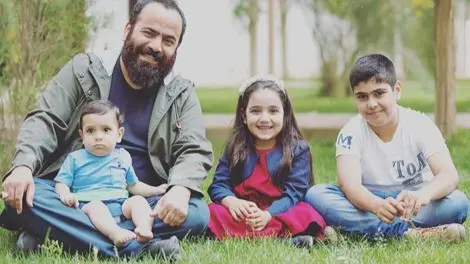
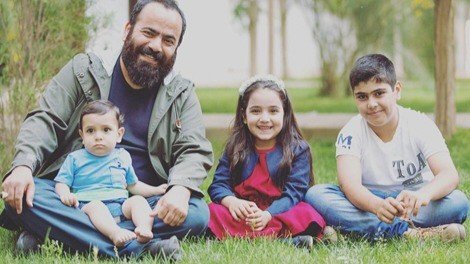
His name is Hasan Aghamiri. He’s inside Iran, under bombardment, with an eight-year prison sentence hanging over him. The Saturday the war started? That was supposed to be his court date. While you debated geopolitics from your apartment in Los Angeles or Berlin, he was dodging missiles in Tehran.
“I sent the photos to Alireza,” he says, his voice trembling. “Look at them if you have the guts.”
Fifty children’s bodies were never found. Pulverized. Second-graders turned to dust. A five-year-old girl sits somewhere in Tehran right now, mute—her speech stolen by a missile that landed in the city center. She has no words left. Neither does her mother.
Here is what Hasan Aghamiri wants you to understand:
You, who cheer from abroad. You, who share celebratory posts with each strike. You, who believe war will bloom into spring.
“War is the most cowardly way to achieve freedom,” he screams into the static. “The ones who start wars are those who don’t have the guts to pay the price of peace.”
He draws the parallel no one wants to hear. The regime once told Iranians that sanctions were a blessing. Now, some in the diaspora say war is a blessing. Both are lies paid for in blood—just not theirs.
“Sanctions killed us! War is killing us now! They said sanctions are a blessing, you say war is a blessing! WE ARE DYING!”
His two sisters’ children died during sanctions. The medicine that could have saved them never arrived. They could have lived.
The reality on the ground:
24 million Iranians are below the poverty line. Industrial towns have been evacuated—not for military reasons, but because everything has been bombed indiscriminately. Hasan Aghamiri’s factory? Food production. Nothing strategic. Gone anyway.
“When they hit the oil depots, they are hitting the people.”
Cancer patients can’t find medication. Pregnant women are helpless—there’s nowhere to go, no hospital that’s safe. A man Hasan Aghamiri called told him: “Where can I go? I don’t even have money for provisions. Should I go be a burden on someone’s family while my wife and kids stay under the fire?”
Three minutes. That’s how close Hasan Aghamiri came to death. He was walking on the next street over when a building was hit. Pedestrians—men, women, children—were torn apart before his eyes.
“If I had gone earlier, I wouldn’t be here now. And you would have said, ‘Where was he?’ I WAS IN THE STREET. A NORMAL STREET.”
What enrages him most isn’t the bombs. It’s the silence.
“Children are being killed and you don’t even offer a single word of condolence! You’re looking for someone to blame. For that mother, what difference does it make who is to blame? Her child went to school. He’s dead.”
He isn’t asking you to support the regime. He has eight years of prison time to prove his opposition. Hezbollahis smashed his car and called him a hypocrite. He has bled for change.
“We’re getting hit from the inside, and we’re getting hit from you.”
He stayed. When others with the means left, he stayed. His conscience wouldn’t let him abandon his workers, his friends, his community.
“I’m not saying you’re without a conscience. You were able to leave. I couldn’t.”
The final plea:
“Don’t fool yourselves. If you have let hatred enter your being, your judgment has become flawed. You see day as night and night as day. Why did you let hatred turn you into the very people you despise?”
Here, extremists beat the drums of war. There, parts of the diaspora beat them too. And in the middle? Ordinary Iranians—workers, mothers, first-graders—shredded in the crossfire.
Over a thousand dead. Ninety percent are civilians. Not officials. Not soldiers. People.
“I swear to God, war will not bring democracy to this country. It won’t bring freedom. This winter will not become spring.”
Before you share your next post celebrating strikes, look at the photos he sent to Alireza.
Second-graders. Little girls in school uniforms. Their bodies—what remains of them.
Ask yourself: Is this your liberation? Is this your spring?
Because it looks like winter to the people bleeding on the streets of Tehran.
And they are asking you—begging you—to see them.
Leave a Reply