
This essay is a response to The Economist article, “Why Ali Khamenei May Have Welcomed the Nature of His Death,” published on 3 March 2026.
This analysis of Khamenei’s death as a masterwork of martyrdom theatre is seductive in its neatness, but it is precisely this neatness that should give us pause. The article constructs a compelling arc — brittle regime, orchestrated sacrifice, ideological resurrection — yet in doing so it commits the error that has plagued Western analysis of Iran for decades: it mistakes a curated narrative for the whole picture.
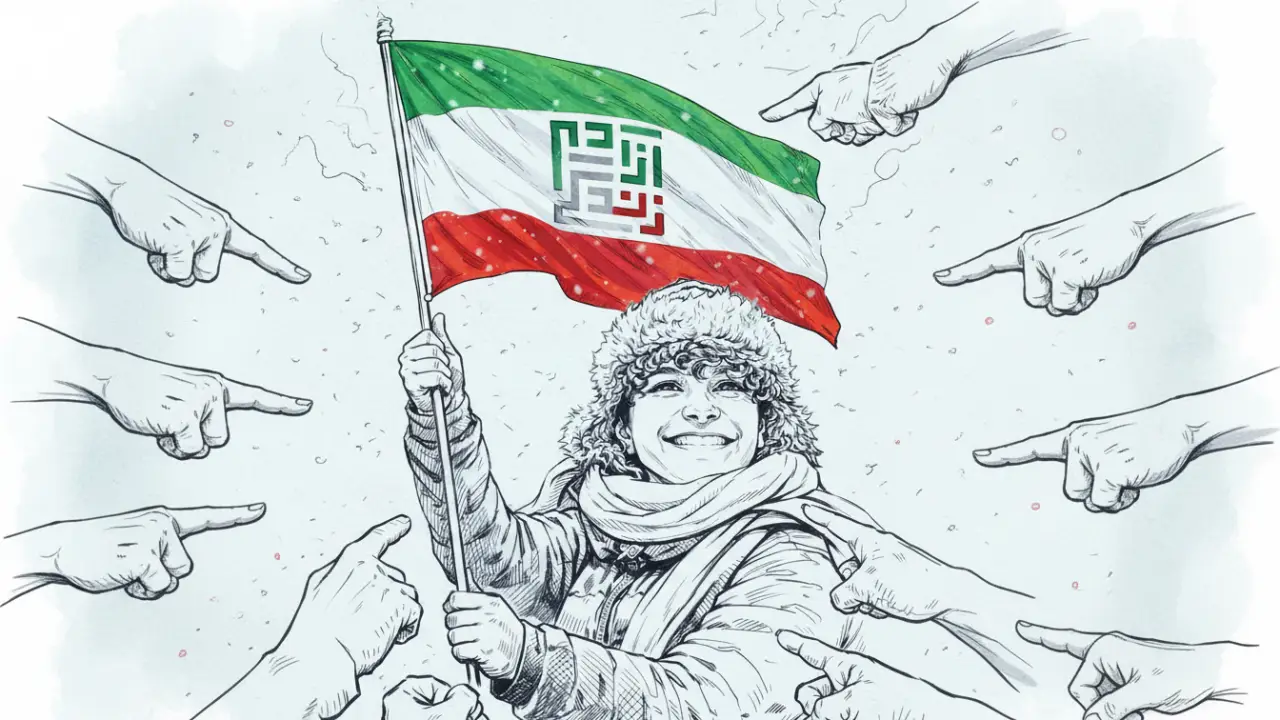
The reality on the ground is far more fractured. What we possess today are two streams of information, neither reliable in isolation. On one side, regime loyalists peddle triumphalism; on the other, a diaspora opposition — increasingly dominated by what scholars describe as neo-fascist exclusivism, openly aligned with Israel and Reza Pahlavi — paints the country as an irredeemable hellhole. Between these poles lies what one might call the grey Iran: over ninety million people about whose opinions we have virtually no data. The internet blackout which is rightly noted does not merely make public opinion “hard to gauge”; it renders the evidentiary basis for sweeping claims about ideological revival essentially speculative. To assert that “the faithful have never been so energised” is to confuse the visible with the representative.
Several realities deserve more careful treatment. First, the disillusionment with Islam inside Iran is not peripheral but tectonic — driven by decades of faith weaponised as political instrument. The Woman, Life, Freedom movement did not import its emancipation from Washington or Tel Aviv; Iranian women effectively dismantled compulsory hijab through sustained agency. This is precisely the kind of indigenous achievement that bombs and sanctions cannot produce — and that the framework of external power dynamics entirely obscures.
Second, the framing of the IRGC’s consolidation as a post-Khamenei hardliner takeover understates its structural permanence. The Revolutionary Guard is not a faction awaiting its moment; it is an economic octopus controlling imports, exports, and illicit networks — a mafia state within a state. Its Iran–Iraq war veterans possess institutional stamina measured in decades. The killing of Ali Larijani — a pragmatist diplomat who prepared the ground for the nuclear deal — eliminated not a placeman but the last credible interlocutor for negotiated settlement. That this assassination occurred during active diplomatic negotiations, for the second time in a year, vindicates the thesis Khamenei spent his career advancing: that the West negotiates in bad faith. The article does not reckon with this inconvenient symmetry.
Third, the closing gesture toward a “post-regime Iran” seeking “reconciliation with the West” is dangerously blithe. The precedents of Libya, Iraq, and Syria — invoked only as foils for Khamenei’s exit — should instead serve as warnings. A fragmented Iran would not yield liberal democracy; it would produce humanitarian catastrophe, regional destabilisation from the Gulf to Central Asia, and a vacuum that neither China nor Russia — already supplying jamming technology and surveillance expertise — would permit to be filled on Western terms.
What I propose is not a reversal of this thesis but a recalibration. The Economist would better serve its readers by interrogating the epistemological poverty at the heart of current Iran analysis — the chasm between curated information and the disparate, ungathered truths of a society under bombardment and blackout. Rather than adjudicating whether martyrdom has “worked,” the more urgent question is: whose account of Iranian sentiment are we privileging, and why? The grey segment — neither regime zealots nor diaspora ideologues — holds the key to any durable settlement, yet remains systematically unheard. Journalism worthy of your tradition would seek those voices rather than amplify the loudest ones on either side.
The stakes are not merely analytical. Every narrative reducing Iran to a binary of regime resilience versus collapse narrows the diplomatic imagination precisely when it must expand. Iran’s people are trapped between a state they distrust and an external assault that promises liberation but delivers destruction. They deserve reporting that honours that complexity.
Leave a Reply