
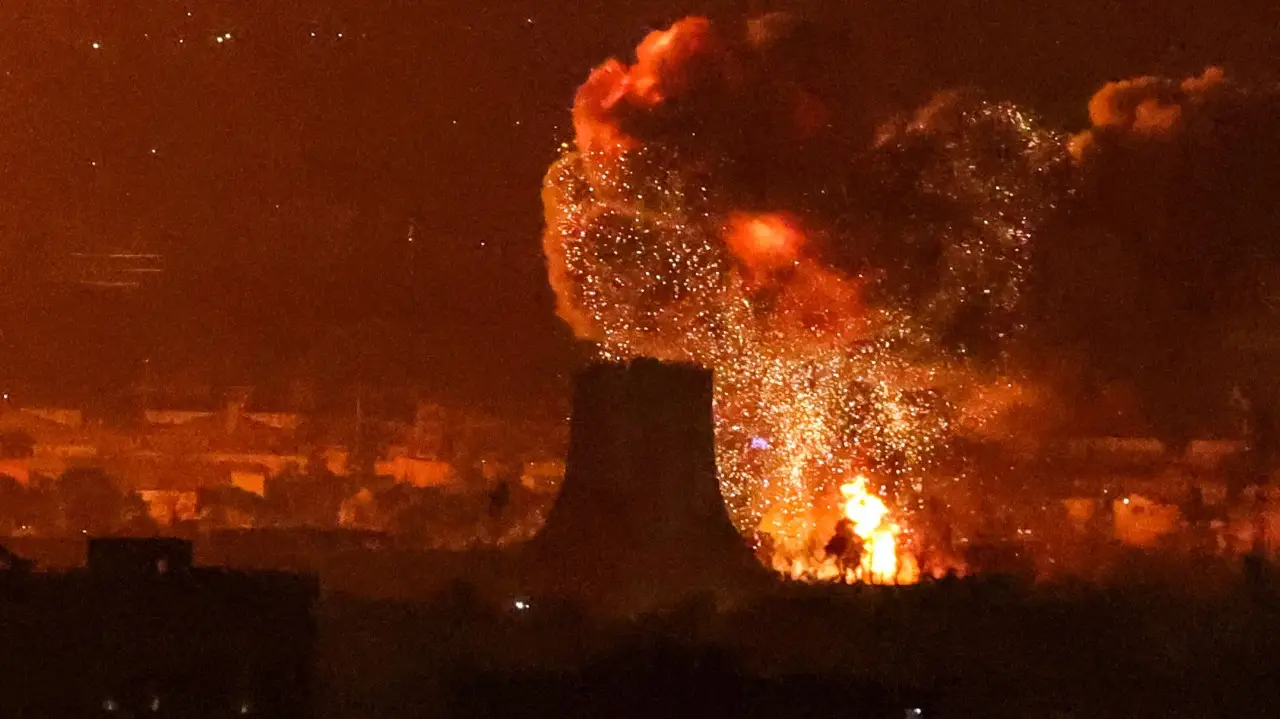
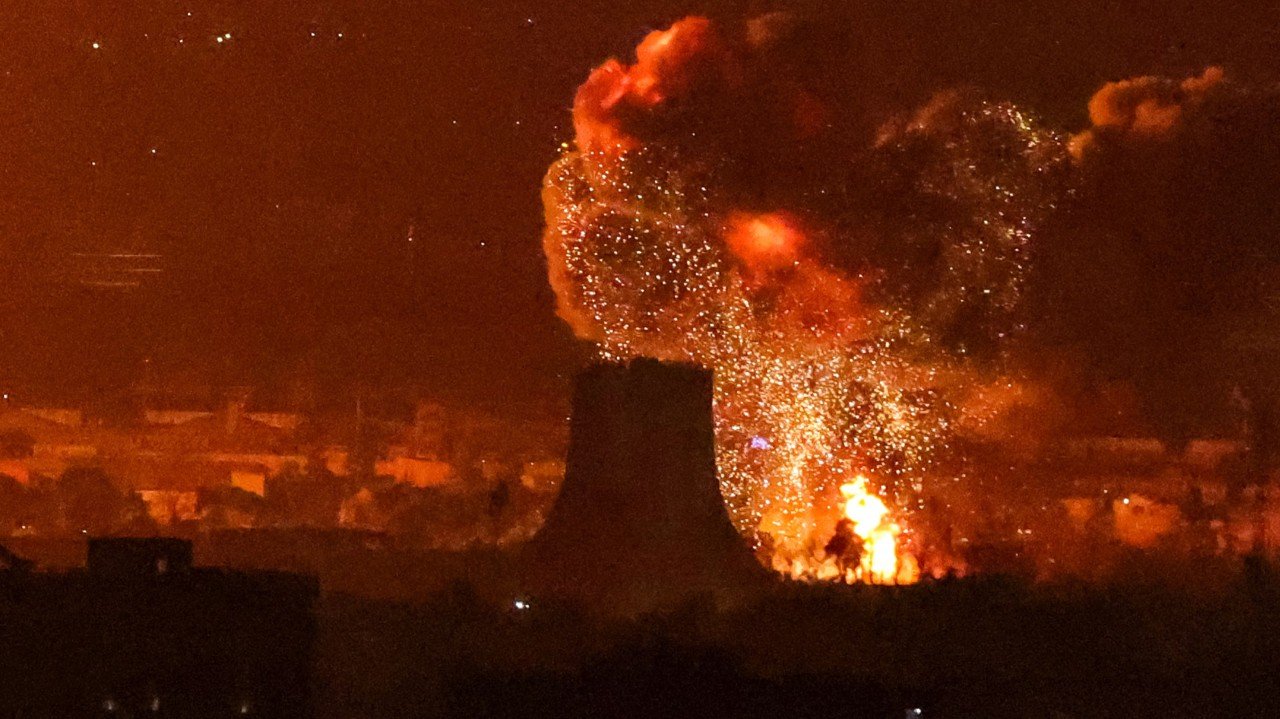
The fracture at the heart of the Iranian crisis is not, at its deepest level, a disagreement about strategy, ideology, or even the legitimacy of the Islamic Republic. It is something far more elemental and far more difficult to resolve: a collision between two entirely different lived realities that have, over decades of displacement and repression, produced two incompatible languages, two irreconcilable hierarchies of suffering, and two mutually exclusive claims to the right to speak about what should come next.
I have spent recent weeks writing about this fracture with an urgency that surprises even me — not because the underlying dynamics are new, but because the current war has brought them to a point of moral crisis from which there may be no easy return. The fall of the Supreme Leader, the decimation of senior military leadership, the bombardment of Tehran’s infrastructure, and the desperate signals of de-escalation from what remains of the regime have produced a moment of maximum volatility. And it is precisely in this moment that a vocal segment of the Iranian diaspora has reached a fever pitch of advocacy for total regime change through continued foreign military intervention — advocacy conducted, with striking consistency, from apartments in Los Angeles, conference rooms in Washington, and living rooms in Berlin.
The asymmetry that defines this moment is absolute, and it must be named plainly. For those inside Iran, the current conflict is not a geopolitical abstraction or a long-awaited historical correction. It is written in a language that admits no euphemism: the language of rubble, of children’s bodies, of cancer patients without medicine, of pregnant women with nowhere safe to deliver. When Hasan Aghamiri — a man with an eight-year prison sentence for opposing the regime, whose anti-regime credentials are paid for in flesh, not rhetoric — spends seven million tomans on a VPN to tell the world that 168 schoolchildren were killed in a single strike, that a five-year-old girl in Tehran has been rendered mute by trauma, that fifty children’s bodies were never recovered because they were pulverised, he is not performing politics. He is bearing witness. And when he screams into the static that “war is the most cowardly way to achieve freedom,” he speaks with an authority that no amount of diaspora commentary can match, because he is standing in the burning building while others watch from the monitoring room.
This metaphor — the burning building and the monitoring room — is not intended as an insult to those in exile. Exile is its own form of destruction: the slow erosion of identity, the grief of severance, the particular torment of watching catastrophe unfold from a position of enforced helplessness. I do not dispute this. What I dispute, and what I believe must be disputed with the full force of moral and intellectual clarity available to us, is the transmutation of that helplessness into a mandate for prescribing violence. The Iranian inside the country inhabits a world defined by the immediate and the mortal. The spectre of arbitrary arrest, economic asphyxiation, state violence, and the daily disappearance of neighbours and colleagues has pushed the collective psyche into what can only be called a psychology of survival. The Iranian abroad, for all the genuine anguish of dislocation, possesses something the other does not: distance. Distance from the immediate threat, and with it, the cognitive space to analyse, theorise, debate, and disagree. When the outsider speaks — even from a place of genuine solidarity — their words arrive inside the burning building as something close to an insult: the composed vocabulary of someone who has the luxury of composing themselves.
From this asymmetry grows one of the most corrosive dynamics in Iranian political life: the transformation of suffering into a form of moral capital. To have stayed, to have endured, becomes not merely a biographical fact but a credential — the credential that supposedly confers the right to determine how resistance should be conducted and whose voice carries weight. The diaspora, in this framework, has forfeited its standing by leaving. And in the grammar of survival, leaving is indistinguishable from abandonment. Yet the insider’s totalising verdict carries its own distortion: the diaspora is vast and heterogeneous, containing the self-promoting and the self-effacing, the cynical and the genuinely devoted. To flatten that complexity into a single figure of the comfortable, complicit exile is to commit precisely the kind of reductive thinking that the insider rightly resents when directed at them.
What I have been compelled to address in recent writings, however, is not the diversity of diaspora voices but a specific and identifiable pattern within them — a pattern that has acquired material influence over policy debates and that poses, I believe, a direct threat to the lives of the very people it claims to champion. This is the phenomenon of diaspora war advocacy: individuals and networks who actively lobby for foreign military intervention, who treat internal anti-war dissent as treason, who ignore or dismiss historical precedents, and who have constructed what can only be described as an economy of outrage in which maximalist demands for military strikes generate social capital within echo chambers.
The political scientist John Keane, in his seminal work Violence and Democracy, observed that “the roads through the lands of violence are typically littered with brazen lying, hubris and corpses.” Across two major books, Keane has documented and protested against precisely this pattern: advocates who champion military intervention from positions of comfortable safety, thousands of miles from the wreckage they prescribe. The historian Reza Zia-Ebrahimi has anatomised a particular variant of this phenomenon in The Emergence of Iranian Nationalism, identifying what he calls “dislocative nationalism” — an ideology that rhetorically removes Iran from its geographical and cultural reality and drives some toward an embrace of external violence as vicarious revenge. Benedict Anderson’s concept of “long-distance nationalism” provides a further lens: the observation that distance from consequences does not diminish political passion but can, perversely, intensify it while stripping it of the moral weight that proximity to suffering provides.
These are not abstract scholarly concepts deployed for rhetorical effect. They describe, with uncomfortable precision, the dynamics visible in the current crisis. When parts of the diaspora share celebratory posts with each military strike, when they frame bombardment as liberation, when they dismiss the testimony of people like Aghamiri as “regime propaganda,” they are enacting a pattern that history has catalogued with devastating regularity. The Iraqi diaspora’s role in building the case for the 2003 invasion produced not democracy but state collapse, sectarian slaughter, and a regional conflagration whose consequences are still unfolding. Libya’s post-intervention landscape features not pluralism but slave markets. Syria’s external opposition claimed to represent a people it had largely lost contact with, entered geopolitical games with the confidence of a government-in-waiting, and was seen from inside the rubble as simply another set of actors using Syrian blood as a bargaining chip.
The lesson these cases offer is stark and unambiguous: when the diaspora mistakes its platform for a mandate, it does not merely fail to help — it actively deepens the wound. And the mechanism of that deepening is worth examining, because it operates not only at the level of policy but at the level of information itself. We are witnessing, yet again, the dynamics of what is often described as a post-truth environment: selective framing, partial narratives, and at times outright fabrication shaping public perception in real time. The impact of this informational distortion is profound. It not only influences international understanding but affects communities directly connected to the conflict. It is particularly painful to observe how prolonged experiences of repression and political frustration can lead some to interpret war through lenses of desperation, inadvertently normalising or endorsing outcomes that are neither lawful nor humanitarian.
What William Cavanaugh called “the myth of religious violence” — the self-serving narrative that frames Western violence as rational while casting the Other’s violence as fanatical — finds its mirror image in the discourse of diaspora war advocacy. These advocates have constructed their own myth: that external military force represents liberation rather than destruction, that the current bombardment is a surgical correction rather than what it demonstrably is — the indiscriminate devastation of civilian infrastructure, industrial towns evacuated not for military reasons but because everything has been bombed, oil depots whose destruction does not weaken the regime but starves the population.
The regime once told Iranians that sanctions were a blessing. Now, segments of the diaspora say war is a blessing. Both are lies paid for in blood — just not the blood of those telling them. Twenty-four million Iranians live below the poverty line. Aghamiri’s factory — food production, nothing strategic — was destroyed. Cancer patients cannot find medication. When Aghamiri draws the parallel that “sanctions killed us, war is killing us now,” he articulates a truth so simple and so devastating that it should function as an indictment of every comfortable exile who frames this catastrophe as opportunity.
I have been asked, with some irritation, what I propose instead. The implication is that criticism of war advocacy is itself a form of complicity with the regime — that to oppose bombing is to endorse tyranny. This is a false binary of breathtaking moral poverty. A history of tyranny does not justify the emergence or endorsement of another form of it. The critical question is not whether the Islamic Republic deserves to fall — few serious analysts dispute the depth of its illegitimacy — but whether foreign military intervention has ever, in the modern history of the Middle East, produced the democratic outcome its advocates promise. The evidence is not ambiguous. It has not. Not once. The appropriate response to this evidence is not to insist that this time will be different, but to ask why the same prescription keeps being offered by people who will never pay its price.
There is a line that must be drawn, and I draw it here: between the right to speak and the advocacy of policies that will kill people the advocate will never bury. Diaspora communities can and do serve as essential conduits for information when internal voices are constrained by communication restrictions and internet shutdowns. This function is legitimate, necessary, and deserving of protection. But amplification becomes something else entirely when it operates selectively — when it amplifies only those internal voices that align with pro-intervention narratives while branding anti-war testimony from people who have bled for the cause of freedom as “regime propaganda.” This is not information filling a void. It is narrative enforcement. It is the replacement of testimony with war cries.
I write these words knowing they will be met with hostility from those who have let hatred enter their being to such a degree that their judgment has become flawed — who see day as night and night as day, who have, in Aghamiri’s devastating formulation, let hatred turn them into the very people they despise. I write knowing that I have already been the target of smear campaigns so virulent, so calculated, and so devoid of mercy that friends have whispered to me to retreat. I have chosen instead to keep a record — not for the courts of men, but for the sanctuary of my own conscience. I hold every word, every toxic profiling, and every betrayal in the light of my own memory, not for the sake of vengeance, but for the ultimate test of my own soul: that when the dust of this era has finally settled, I can look every friend and every foe in the eye and say that I refused to be defined by their hatred.
The fracture between Iranians inside and outside the country is, in the end, the fracture of a society that has been under sustained, extreme pressure for more than half a century. It is the product of collective trauma, of histories of betrayal, of languages that have drifted apart under the pressure of incompatible circumstances. From Belgrade to Santiago, from Damascus to Tehran, this fracture has followed the same grammar in every society shattered by authoritarian violence and mass displacement. In Pinochet’s Chile, the exiled left spent years in mutual suspicion with those who had remained, yet it was ultimately the accumulated networks, legal expertise, and international relationships of that same diaspora that helped make Chile’s democratic transition possible. In the former Yugoslavia, diaspora communities simultaneously gave voice to victims and, in some cases, amplified the ethnic hatreds that produced them — before, in later years, contributing meaningfully to documentation, reconciliation, and the slow reconstruction of civic trust.
The common thread is this: the gap between inside and outside does not close through argument, and it does not close through the assertion of superior suffering. It closes, where it closes at all, through a specific and difficult discipline — the willingness of each side to recognise the other’s pain not as a competitor to its own, but as a different expression of the same rupture. For the Iranian outside the country, this means something more demanding than the standard repertoire of diaspora activism. It means asking, with genuine honesty, whether any given act of political engagement serves the people inside or primarily serves the actor’s own need for relevance, absolution, or identity. There is a meaningful difference between amplifying the voice of an unknown prisoner and placing one’s own name on the poster. There is a meaningful difference between making resources available to those at direct risk and using those same resources to sustain one’s own political infrastructure. The most important thing the diaspora can do is to disentangle its own visibility from its usefulness — to understand that the two are not the same thing, and that confusing them is precisely what has eroded trust for so long.
For those inside, the corresponding discipline is equally demanding: to resist the temptation of the totalising verdict, to recognise that not everyone who left did so lightly, and that exile is also a kind of devastation — different in texture but not necessarily lesser in weight. This recognition does not diminish the insider’s claim. It enlarges the conversation.
I do not pretend to offer a programme. Programmes are cheap, and the current crisis is too grave for the pretence that any single voice holds the blueprint. What I offer instead is a moral orientation: that when internal voices urge restraint, the diaspora’s role is to listen — not to replace their testimony with war cries. That when the call for war comes from those who will never fight it, never flee it, never bury its victims, the appropriate response is not action but suspicion. That the speculators in other people’s suffering should be recognised for what they are. And that the sentence which has been the first stone of every bridge that was ever actually built between fractured communities — “you have lived a different kind of hell, and that hell was real” — remains, in its devastating simplicity, the only place from which reconstruction can begin.
The children of Tehran cannot wait for our conferences and our communiqués. But they deserve, at the very minimum, that those who claim to speak for their future do not do so while advocating for their destruction. That is not a high bar. It is the lowest bar imaginable. And the fact that so many cannot clear it is the true measure of the moral crisis we face.
Leave a Reply