
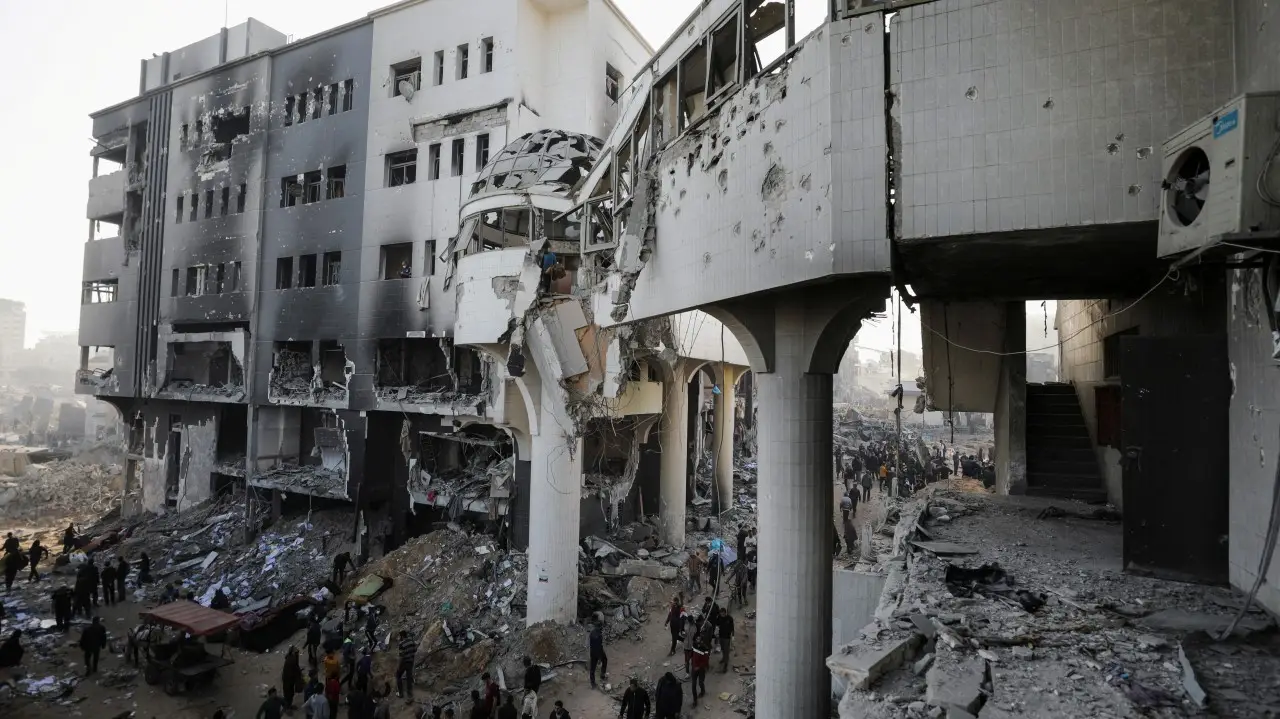
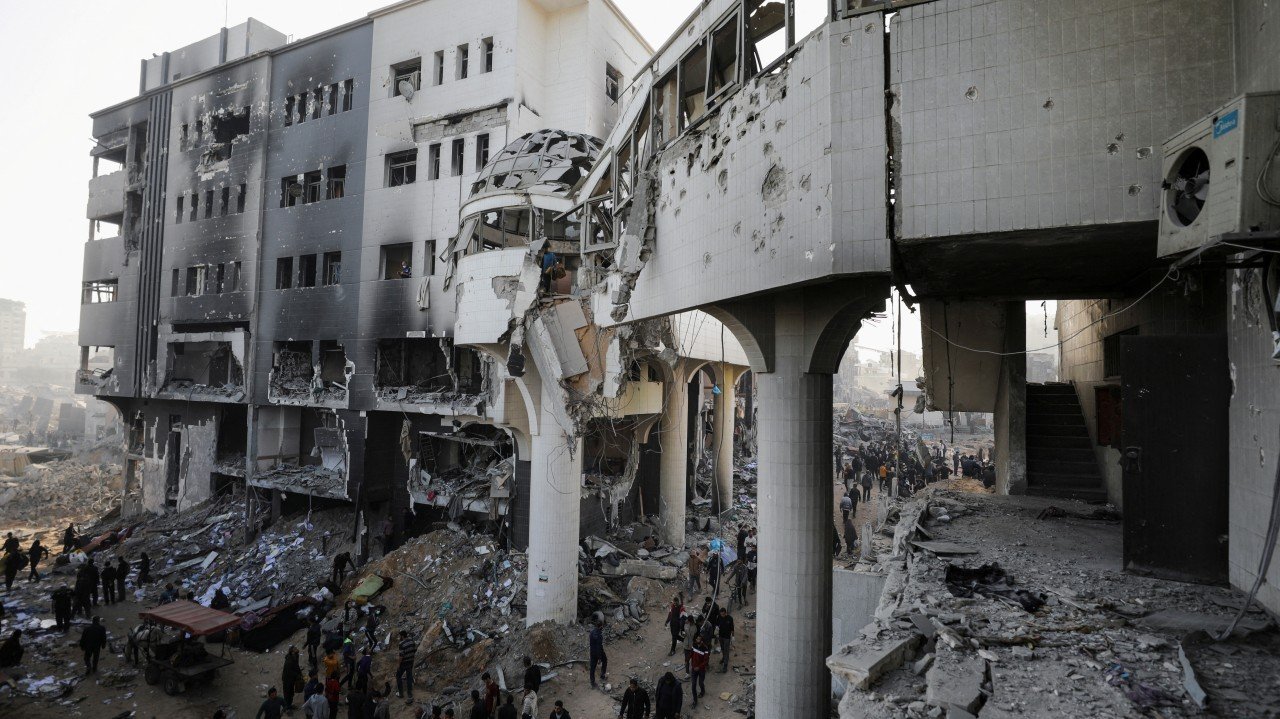
There is a peculiar species of political actor that emerges from every fractured nation—those who, having escaped the inferno, appoint themselves firefighters from across the ocean and prescribe gasoline as the cure. They populate the comment sections, the conference panels, the corridors of foreign capitals, advocating with remarkable enthusiasm for missiles to rain down on neighbourhoods they will never see reduced to rubble. John Keane, the prominent political scientist and democracy expert at Sydney University, observed in his work Violence and Democracy that “the roads through the lands of violence are typically littered with brazen lying, hubris and corpses.” Across two major books—Violence and Democracy and The Life and Death of Democracy—Keane has extensively documented and protested against precisely this pattern: advocates who champion military intervention from positions of comfortable safety, thousands of miles from the wreckage they prescribe. His scholarship stands as a sustained warning against those who would cheer for journeys through violence they will never themselves undertake.
The phenomenon represents what I have elsewhere called a failure to nurture “critical thinking across self-other dichotomies”—a moral dislocation so profound it resembles a clinical condition. One observes individuals who fled oppression now demanding that those who could not flee be subjected to the infinitely greater oppression of aerial bombardment. They speak of “liberation” while history’s catalog overflows with evidence that foreign military intervention invariably produces not democracy but state collapse, sectarian slaughter, and humanitarian catastrophe. Iraq, Libya, Syria—these names should function as cautionary epitaphs. Instead, they are forgotten footnotes in the ongoing performance of what Benedict Anderson termed “long-distance nationalism”: an intense political engagement with the homeland that remains conveniently insulated from the consequences of its advocacy.
Reza Zia-Ebrahimi, the King’s College historian, has anatomised a particular variant of this phenomenon in The Emergence of Iranian Nationalism, identifying what he calls “dislocative nationalism”—an ideology that rhetorically removes Iran from its geographical and cultural reality. This worldview, he argues, drives some toward an embrace of external violence as vicarious revenge, a “graduation ceremony” in what he acidly terms “the curriculum of whiteness.” The suffering of others becomes not tragedy but karma; destruction becomes purification. What Zia-Ebrahimi describes is the endpoint of a psychology in which the advocate’s identity has become so entangled with grievance that the nameless millions who would pay the price have been abstracted into raw material for someone else’s political performance.
Keane’s concept of “monitory democracy,” articulated in The Life and Death of Democracy, offers a framework for understanding what is lost when such voices dominate. Healthy democracies depend upon institutions that scrutinise power, that force accountability upon those who would exercise violence in the public’s name. The diaspora war advocate inverts this logic entirely. They demand violence while evading all scrutiny of their own claims. They call for accountability for the regime they oppose while accepting none for the catastrophic consequences of the policies they promote. They function as lobbyists for destruction without portfolio—accountable to no constituency that will bear the costs of their advocacy.
More troubling still is the treatment of dissent. Any voice from within the suffering population that urges caution, that points to catastrophic precedents, that suggests perhaps those who will actually die deserve a voice—such perspectives are met with vilification. They are branded regime sympathisers, traitors, cowards. The dynamics mirror what Keane identified in his analysis of “communicative abundance” and its pathologies: in our media-saturated age, the loudest voices often drown out the most informed ones, and the performance of militant certainty becomes more valuable than the substance of wise counsel. The exile sitting safely in Los Angeles or London arrogates to themselves the exclusive right to define liberation and who may question its terms.
What William Cavanaugh called “the myth of religious violence”—the self-serving narrative that frames Western violence as rational while casting the Other’s violence as fanatical—finds its mirror image here. The diaspora war advocate has constructed their own myth: that external military force represents liberation rather than destruction, that they speak for the oppressed population rather than about them, that their comfortable distance provides moral clarity rather than moral blindness. The pattern of dehumanisation Keane documented in his studies of “uncivil war”—where civilians become abstractions, where destruction loses its human dimension—infects not only those who drop bombs but those who call for them.
In my own work on extremism and education, I have argued that the problem of violence cannot be addressed by projecting responsibility onto the Other. The same principle applies with devastating force to diaspora politics. The advocate who locates all evil in the regime they oppose, all virtue in the intervention they demand, has abandoned the critical rationality that makes genuine political analysis possible. They have embraced, in Popper’s terminology, a theory immunised against refutation—one where every failure of intervention proves only that more intervention was needed, where every civilian death proves only that the enemy was worse.
History’s verdict on diaspora-backed intervention is written in the rubble of a dozen failed states. The evidence is not ambiguous. Those inside the burning building watch with rage and bewilderment as comfortable exiles demand still more gasoline. They cannot fathom how anyone could be so detached from reality, so immunised against shame, so willing to gamble with lives not theirs to wager. When the call for war comes from those who will never fight it, never flee it, never bury its victims, the appropriate response is not action but suspicion. These are not freedom fighters. They are speculators in other people’s suffering, and they should be recognised as such.
Leave a Reply