
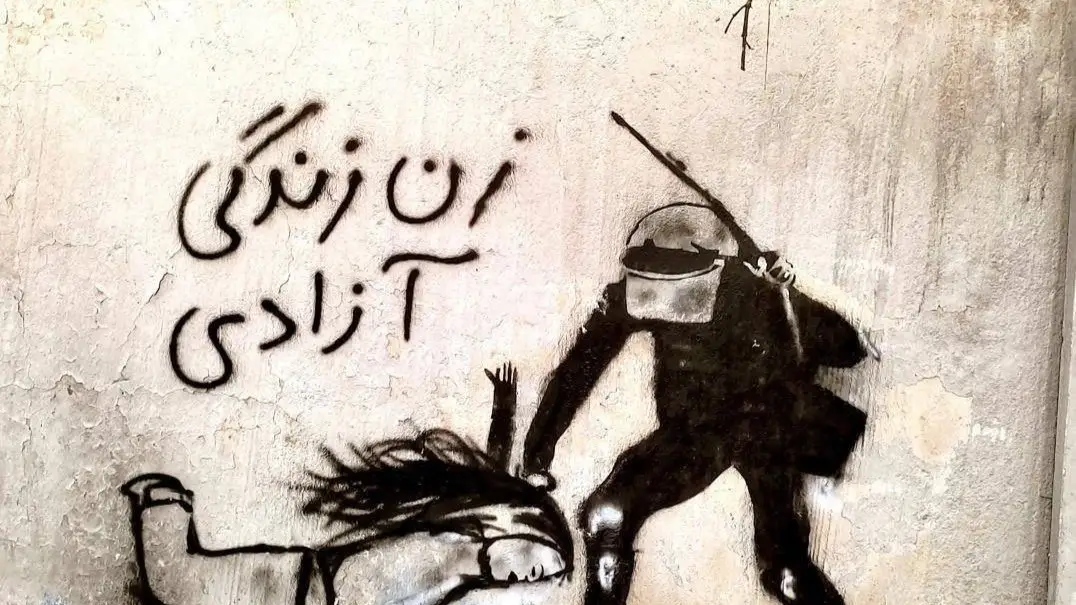
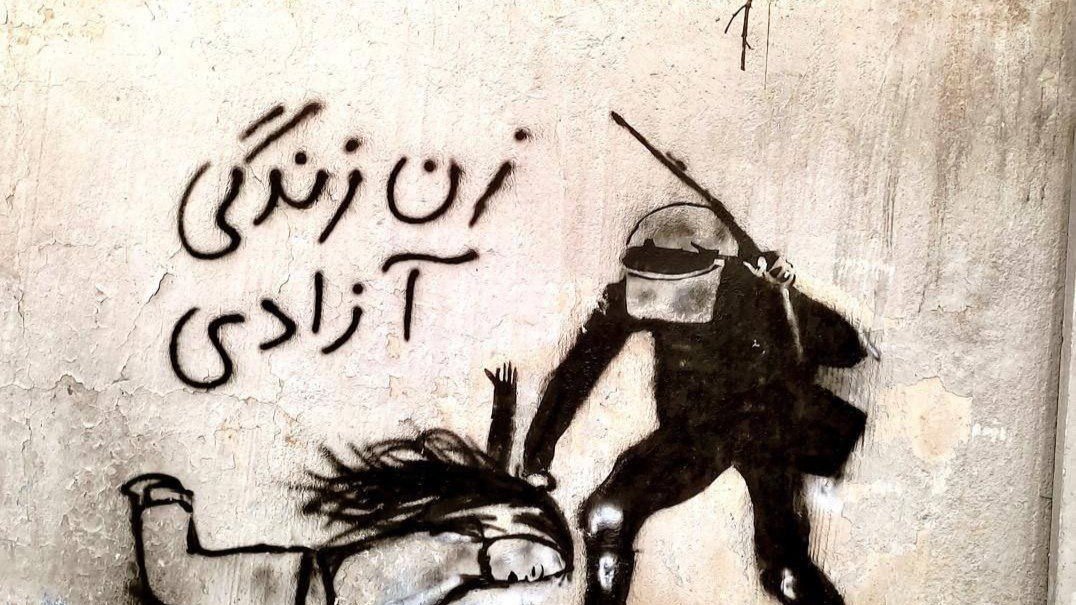
Something broke in Iran after 2009 — not in the corridors of power, where repression merely recalibrated, but in the interior of a society that had maintained a fragile compact with the state. The Green Movement did not fail because it was crushed. It failed because the crushing proved, beyond evasion, that the Islamic Republic regarded its own population not as a constituency but as a threat. What died that summer was the last residue of the belief that this order could be reformed from within. What replaced it was something colder: mutual estrangement. The state stopped pretending to serve the people; the people stopped pretending to believe it.
That fracture has since metastasised into something far more dangerous than the political opposition typically admits: a wholesale renegotiation of Iranian identity itself, conducted not through deliberation but through collective rage, historical romanticism, and cultural purging. A growing segment of Iranian society — inside and in the diaspora — is not merely rejecting the Islamic Republic as a political system. It is rejecting Islam as a constituent element of Iranian civilisation, attempting to amputate fourteen centuries of cultural, linguistic, and spiritual inheritance.
The symptoms are legible. The Quran quietly removed from the Haft Seen table at Nowruz — replaced by the Shahnameh, or by nothing at all. The word javidnam, evoking ancient Persian heroism, adopted as a conscious repudiation of shahid, with its Arabic etymology and its capture by the theocratic state. Wedding ceremonies stripped of Islamic juridical formulas, reconstructed — sometimes authentically, sometimes fancifully — from Zoroastrian tradition. Each act is simultaneously an assertion and an erasure: a reaching backward that requires a cutting away.
Reza Zia-Ebrahimi identified this as “dislocative nationalism” — an ideology that extracts Iran from its actual context, reimagining it as a displaced Aryan civilisation temporarily contaminated by Arab-Islamic conquest. In this framework, fourteen centuries are not evolution but interruption — a parenthesis to be closed. It is seductive because it offers what the moment craves: a clean origin story, unburdened by the ambiguities of a civilisation that has always been, in Hamid Dabashi’s formulation, a site of contest between the nomocentric, the logocentric, and the homocentric — between law, reason, and human-centred ethics.
I understand the rage. I share it. Living under or in the shadow of a regime that has brutalised its people in the name of God produces a visceral revulsion toward anything the regime claims to own. The instinct to tear away from it — all of it — is not irrational. It is human. But here is what must be said plainly: the trajectory many Iranians have chosen is not liberation. It is self-mutilation dressed as defiance.
To flatten the magnificent, contradictory inheritance of Iranian civilisation into a binary — Persian good, Islamic bad — is not to recover an identity. It is to fabricate one. The Shahnameh, now elevated to nationalist scripture, was composed by Ferdowsi — a devout Shi’i Muslim who wrote not against Islam but within it, producing a work that is simultaneously pre-Islamic celebration and Islamic Persian achievement. To brandish it as a weapon against Islam is to misread the very text you claim to venerate. Hafez’s ghazals are saturated with Quranic allusion and Sufi metaphysics. You cannot have Hafez without Islam any more than you can have Dante without Christianity. The attempt is not scholarship. It is taxidermy — preservation of form from which the animating substance has been ripped out.
And this brings me to what I find not just intellectually lazy but genuinely dangerous — a point the current discourse refuses to confront. There is a species of intellectual cowardice operating here, masquerading as sophistication. Iranians who rightly despise the Islamic Republic have, in staggering numbers, taken the path of least resistance: conflating the regime with the entirety of Islamic heritage. This is not critical thinking. It is the abandonment of critical thinking. It is the same totalising logic the mullahs use — just inverted. The theocrats say Islam is the state; the neo-nationalists say Islam is the enemy. Both are catastrophically wrong, and both serve the same function: they spare you the harder, messier work of actually reckoning with your own civilisation.
Let me put my own stakes on the table. My identity — as an Iranian, as someone shaped by Islamic intellectual tradition, as someone who rejects theocracy absolutely — is not a contradiction. It is the inheritance of a civilisation that held these tensions together for a millennium. I refuse the obscene false choice being peddled in living rooms and Twitter threads and diaspora conferences: that to be modern, secular, and democratic, I must disown fourteen centuries of who I am. I refuse the equally grotesque insinuation that opposing the Islamic Republic requires me to genuflect toward Israel, or to adopt the cultural postures of people who could not locate Persepolis on a map. It is degrading. It is intellectually bankrupt. And it is beneath us.
What Iran needs — what Iranians owe themselves — is not the archaeology of a lost golden age. It is the courage of a third path: neither the theocratic stranglehold that has bled the country for forty-seven years, nor the rootless secularism that would strip us of depth in pursuit of a hollow modernity. The task is harder than either camp admits. It means building a political and cultural framework that is democratic without being amnesiac, secular without being spiritually barren, modern without being derivative. It means recognising that Iranian civilisation was shaped by Zoroastrian depth and Islamic brilliance, by Persian poetry and Arabic philosophy, by Turkic dynamism and Kurdish resilience — and that the erasure of any element does not purify the national identity but impoverishes it.
If Iranian identity is defined as essentially pre-Islamic and Persian, what becomes of the Azeris, the Kurds, the Baloch, the Arabs of Khuzestan? What becomes of devout Muslims who despise the Islamic Republic but for whom Islam is not imposition but lived faith? The dislocative nationalist framework offers them nothing, because it has defined them as remnants of contamination. What Zia-Ebrahimi calls the “curriculum of whiteness” — the desire to align Iranian identity with European civilisational narratives and distance it from the Islamicate world — is not liberation. It is a path toward ethnic chauvinism that calls itself progress.
The fracture between state and people in Iran demands resolution. But that resolution cannot be built on mythology — not Islamic purity, not Persian purity, not any purity at all. Iranian civilisation, in all its glorious, contradictory, syncretic complexity, has always been what purists of every stripe cannot tolerate: a meeting place. It must be rebuilt as one — or it will not be rebuilt at all.
Leave a Reply