
Think about this situation carefully—don’t run away. Be honest with yourself and with your conscience. This is not an easy test. It is not meant to be. The measure is simple and merciless: beyond our political divisions—whatever they may be—can we refuse to forget that we are human?
Here is the test.
Imagine you are in the middle of a war—one that has spilled out of battlefields and into cities, into ordinary civic life. You are given two real options, and the means to carry either one out.
First situation: You have a weapon. More precisely, you have the means to settle a score. In front of you stands someone from the opposing political camp—someone you may even believe, perhaps rightly, to be responsible for crimes. You have the power to take his life. What do you do?
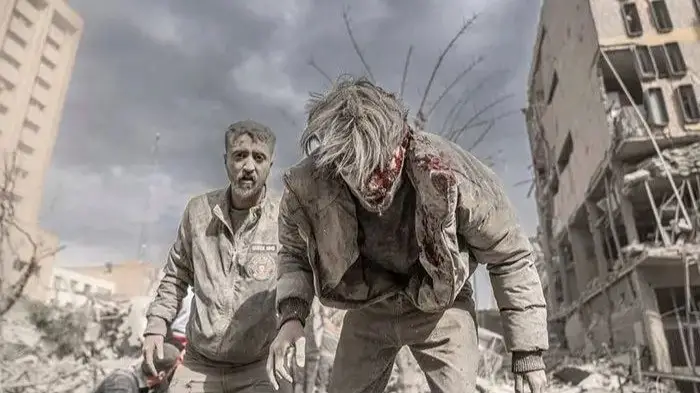
Second situation: You stand among the wounded after a recent attack. Or in the long aftermath of war, where suffering continues without spectacle. One person has no medicine. Another is starving. Another is bleeding. Someone has just lost family. Instead of securing weapons, instead of satisfying the urge for retribution against someone you call your enemy, are you willing to bring medicine? To feed the hungry? To offer even a moment of solace to someone who is suffering now—if doing so means refraining from killing a man you believe might, perhaps, cause more deaths if he lives?
Notice: you hold both possibilities at once. What do you choose?
If you choose the second—if you are willing to spare the life of someone whose continued existence might perhaps lead to further harm, in order to save a child, to feed someone dying in front of you—what path have you taken?
Pay attention to that word: perhaps. In many cases, those who choose the first path quietly replace perhaps with certainly. They harden uncertainty into inevitability. And with that single substitution, they grant themselves moral permission.
How far are you willing to go in turning your “maybes” into the steel of “without a doubt”?
Remember this: in the second situation, if you withhold medicine, if you refuse bread, the likelihood of a human being dying rises sharply—immediately, tangibly, almost beyond question.
So what do you do?